
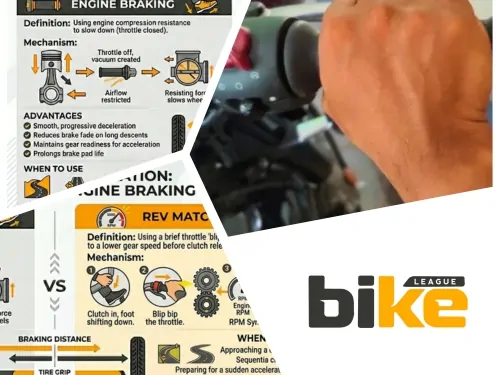
Long story short: Engine braking helps you slow down your motorcycle smoothly and safely by using the engine’s resistance instead of relying only on the brakes—improving control, reducing brake wear, and making riding in India’s challenging conditions safer and more efficient.
Riding a motorcycle in India can be tricky because of unpredictable traffic, different types of roads, and changing conditions. Learning advanced control techniques is important for staying safe and confident. One useful but often misunderstood skill is engine braking.
Engine braking lets you use the engine’s resistance to slow down, working alongside your regular brakes and giving you better control. This guide explains why engine braking is important in India and shares practical tips, benefits, and easy steps to help you use it in your daily rides.
Key Takeaways
- Engine braking reduces speed by closing the throttle while the bike is in gear, allowing the engine’s internal friction and vacuum to slow the vehicle down.
- When the throttle is closed, the engine’s RPM (revolutions per minute) increases due to the engine drag, which helps slow down the bike.
- This effect can be enhanced by downshifting to a lower gear, which increases the engine’s suction and braking effect.
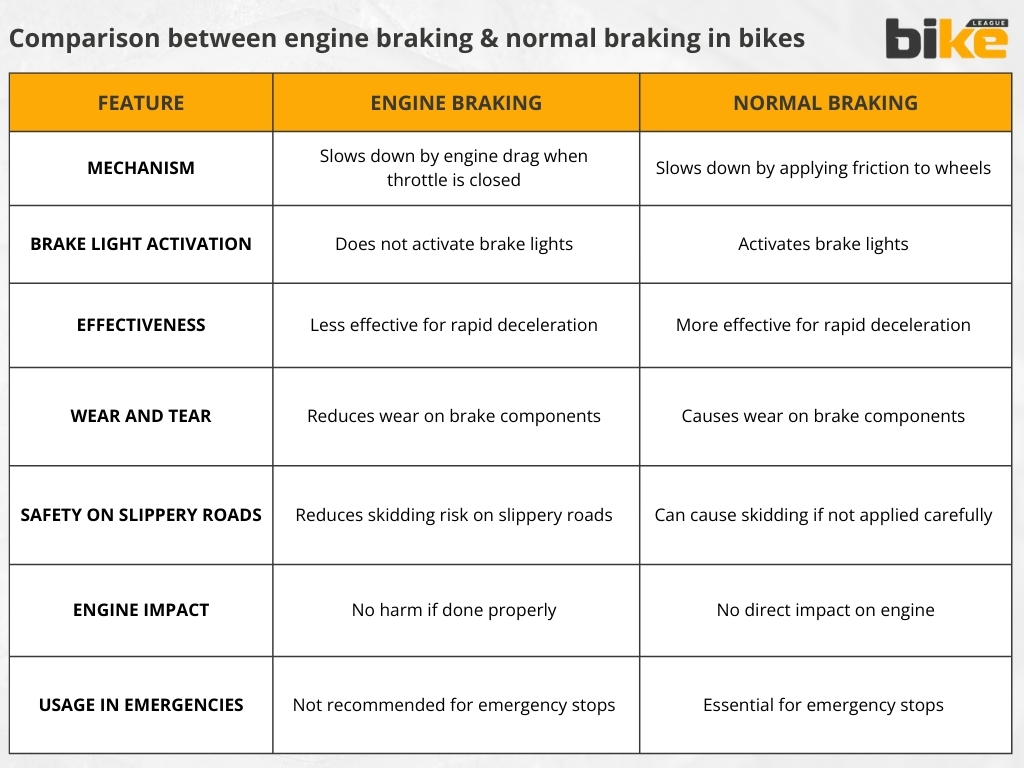
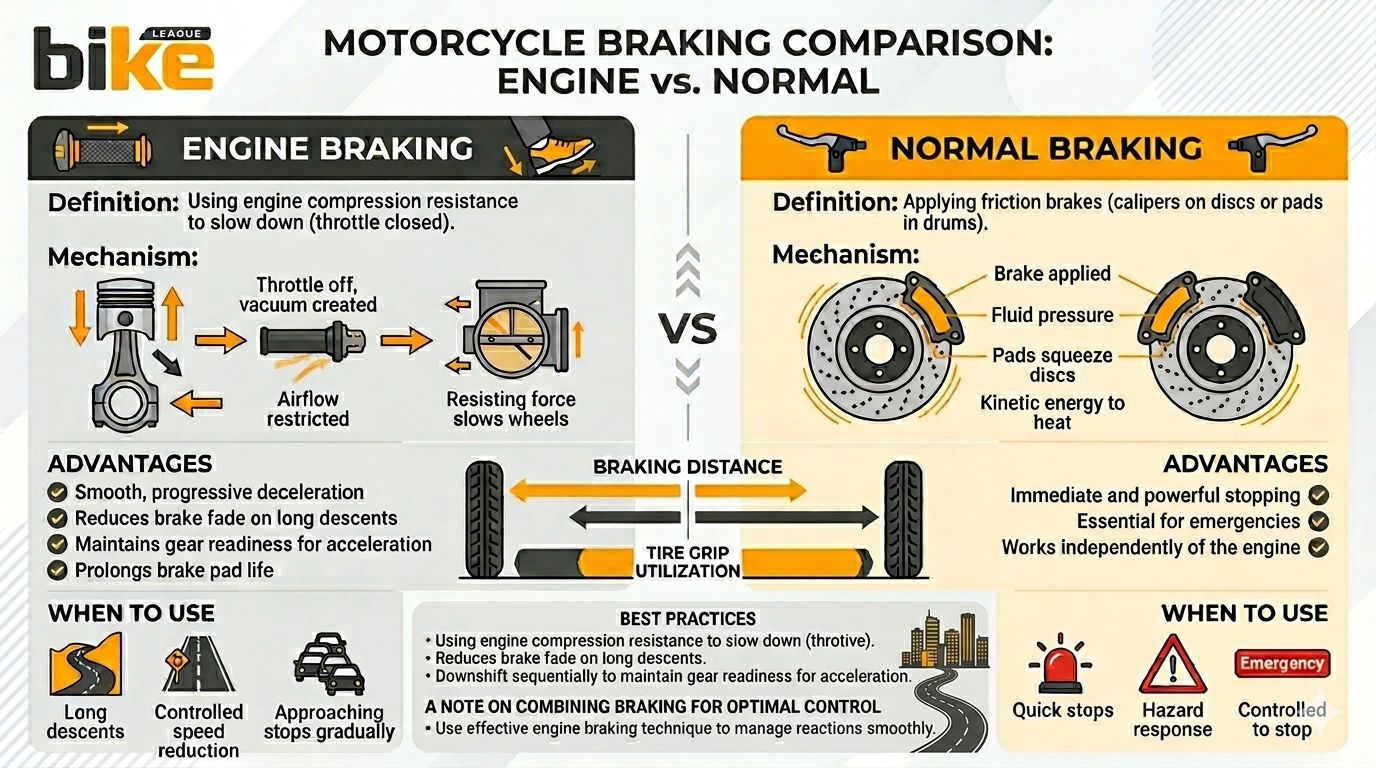
- Engine braking is beneficial for controlled speed reduction and the preservation of brake components. In contrast, normal braking is crucial for making quick stops and responding to emergencies.
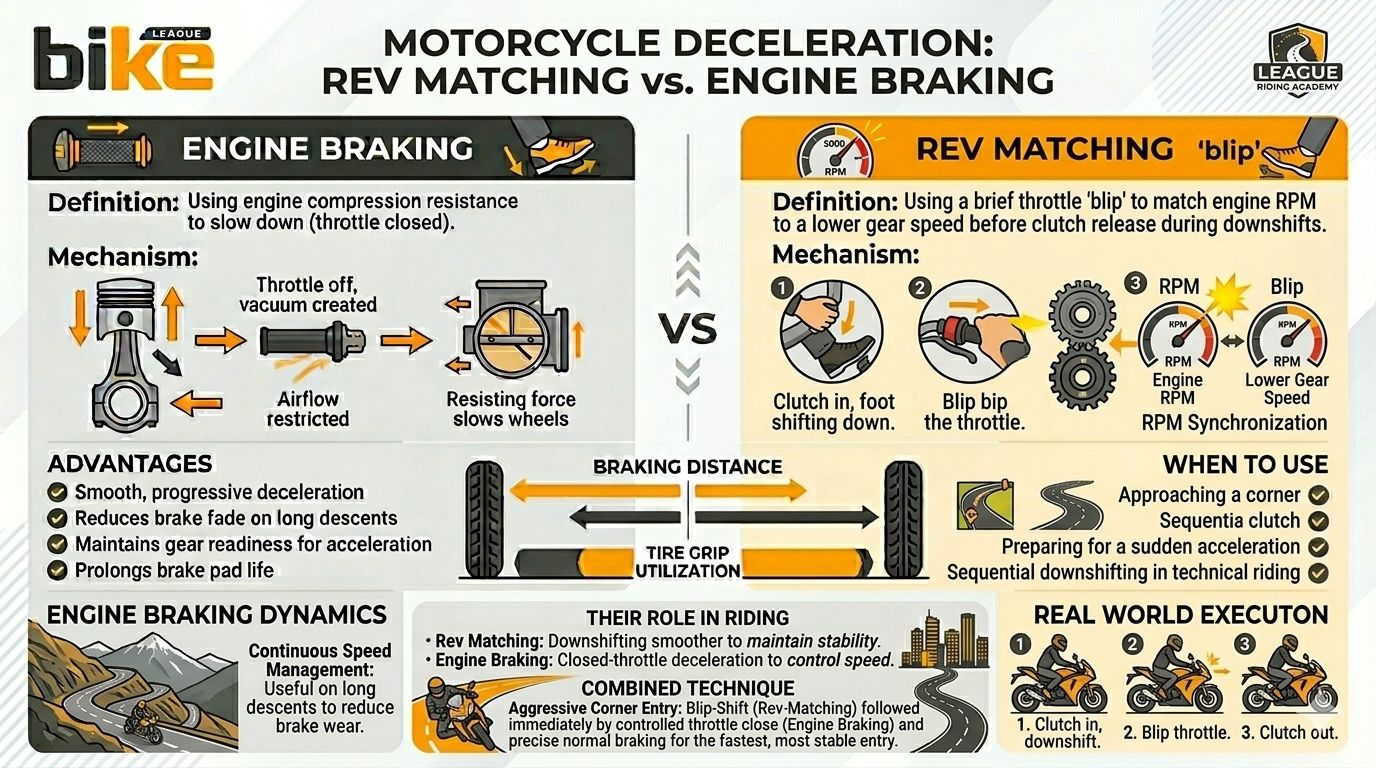
- Rev matching in motorcycles is a technique used during downshifting where the rider briefly blips the throttle to increase the engine RPM to match the speed of the lower gear before releasing the clutch.
Understanding Engine Braking In Bikes
What Is Engine Braking?
Engine braking happens when you close the throttle while the bike is still in gear. The throttle controls how much fuel and air go into the engine. When you close it, the engine’s resistance and the low pressure inside help slow the bike. The resistance comes from the engine parts moving, and the vacuum forms when the throttle is closed. Together, these slow you down.
Engine braking works best on motorcycles with manual transmissions, where you shift gears yourself. It is less noticeable on bikes with automatic transmissions. When you use engine braking, the engine’s resistance is transmitted through the drivetrain, which connects the engine to the wheels, slowing the wheels.
How Engine Braking Works?
When you close the throttle, the engine’s RPM (how fast it spins) rises because of engine drag. This drag helps slow the bike as the engine resists turning the wheels. Shifting to a lower gear intensifies this effect.
Downshifting means moving to a lower gear, which increases the engine’s braking effect. But be careful not to downshift too quickly, as this can cause the engine to rev too high and might make the bike skid or lose control.
What Is Rev-matching In Motorcycles?
Rev-matching is a technique for downshifting. The rider quickly blips the throttle to raise the engine RPM to match the lower gear’s speed before releasing the clutch. This helps prevent jerks, lurching, or the rear wheel locking up, making gear changes smoother and giving you better control.
To rev-match, pull in the clutch, shift to a lower gear, give the throttle a quick blip, and then release the clutch. This lets the engine run at the right speed for the new gear. When done correctly, rev-matching reduces wear on the clutch and powertrain, helps keep the bike stable, especially in corners or during quick downshifts, and boosts your confidence as a rider.
It takes practice to get the timing right between the clutch, throttle, and gear shifts, but rev-matching is a useful skill for safer and smoother riding. It’s especially helpful on bikes without advanced features like slipper clutches or quick shifters.
Is Rev-matching And Engine Braking Related In Motorcycles?
Yes, rev-matching and engine braking are related but distinct techniques used during downshifting on motorcycles. Engine braking occurs when the rider rolls off the throttle, causing the engine to slow the bike naturally through engine resistance, without using the brakes.
Rev-matching is a technique used during downshifting to smooth the transition between gears. It involves briefly “blipping” the throttle to increase engine RPM to match the lower gear’s speed before releasing the clutch. This synchronises engine speed with wheel speed, preventing jerks, sudden engine braking jolts, or rear wheel lockup.
In short, rev-matching helps control and smooth out engine braking during gear changes. It reduces stress on the bike and keeps things stable by matching engine and transmission speeds when you downshift. This is especially useful during quick downshifts or when entering corners, where smooth slowing and stability matter most.
So, rev-matching makes engine braking safer, easier to control, and more comfortable when you slow down.
Benefits Of Bike Engine Braking
1. Safety And Control
Engine braking is a safe way to slow your motorcycle without relying solely on the main brakes. It’s especially helpful on long downhill rides or in wet weather, as it helps you stay in control and lowers the risk of your brakes overheating or failing.
2. Reduced Wear And Tear
Using engine braking puts less strain on your brake pads and discs, so they last longer. If you do it correctly, it won’t harm your motorcycle’s engine.
3. Fuel Efficiency
Engine braking can help your motorcycle use less fuel when you slow down. This is especially helpful on long rides when saving fuel is important.
4. Enhanced Riding Experience
Techniques like rev-matching, which match engine speed to wheel speed during downshifts, make your ride smoother and more enjoyable. They also help you get ready to speed up again if needed.
Considerations And Risks Of Engine Braking
1. Lack Of Brake Light Signal
One downside of engine braking is that your brake light doesn’t turn on, so drivers behind you might not notice you’re slowing down.
2. Risk Of Rear Wheel Lock
If you downshift suddenly, especially on wet or slippery roads, the rear wheel can slip and cause a skid. Downshifting means quickly moving to a lower gear. Many modern bikes have slip-assist clutches that help prevent the rear wheel from locking up during hard downshifts, making this less of a problem.
3. Skill Requirement
To use engine braking well, you need some skill to avoid going too fast or damaging your bike, especially when choosing gears and rev-matching.
Techniques For Effective Engine Braking In Bikes
1. Steps To Apply Bike Engine Braking
- Disengage the Throttle: Let go of the throttle to initiate deceleration.
- Downshift Smoothly: Shift into lower gears gradually, ensuring a smooth transition to avoid jerks.
- Rev Match: Learn to rev match to ensure smooth downshifting and maintain control.
2. Combine With Traditional Braking
Use engine braking along with gentle use of your front and rear brakes for the best control. This helps you balance your braking and maintain strong grip and control.
3. Practice In Various Conditions
Practising in different situations, such as on wet roads or hills, helps you become better and safer at engine braking. It’s important to notice how each situation is different so you can adjust your technique.
What Are The Best Practices For Downshifting Effectively During Engine Braking In Motorcycles?
The best practices for downshifting effectively during engine braking on motorcycles in India include the following key points:
- Release the throttle gradually rather than snapping it shut. This allows the engine to resist slowing the bike smoothly without sudden jerks.
- Downshift smoothly and progressively to lower gears, one gear at a time. Avoid skipping multiple gears to prevent jolts or wheel lock.
- When downshifting, use the clutch to disengage power temporarily, then give a small throttle blip to match engine speed to the wheel speed before releasing the clutch. This rev-matching avoids jerks and ensures smooth deceleration.
- Maintain a balanced posture and relaxed grip during engine braking to help control stability and weight shifts.
- Use engine braking primarily as a gradual deceleration method, especially effective in traffic or when descending slopes, to reduce brake wear.
- Practice downshifting and engine braking in controlled environments like empty road sections or parking lots to build skill and muscle memory.
- As you slow down near a stop, downshift sequentially until the bike is near stationary, then pull in the clutch fully and shift to first gear while holding the clutch.
- Use both front and rear brakes complementarily with engine braking for controlled and effective speed reduction.
- Avoid overusing engine braking at very high speeds or emergency stops, where primary reliance on brakes is safer.
By following these tips, you’ll brake more smoothly and safely, reduce wear on your brakes, and have better control of your bike’s speed and stability on Indian roads.
How Can A Motorcycle Rider Improve Their Engine Braking Technique With Practice?
A motorcycle rider in India can improve their engine braking technique with practice by following these steps:
- Practice rev-matching: This involves softly blipping the throttle when downshifting to match engine speed to wheel speed, making deceleration smooth and jerk-free.
- Gradual throttle release: Avoid snapping the throttle closed suddenly; instead, release it smoothly to allow controlled engine resistance and avoid unsettling the bike.
- Downshift progressively: Practice downshifting one gear at a time rather than skipping multiple gears to reduce stress on the drivetrain and avoid abrupt declines.
- Practice in safe environments: Use empty parking lots or low-traffic roads to develop smooth clutch and throttle coordination with downshifts and engine braking.
- Maintain relaxed and balanced posture: A calm grip and stable body position help maintain control and manage weight transfer during deceleration.
- Combine with braking: Use engine braking along with the front and rear brakes for efficient slowing, especially in traffic or downhill scenarios.
- Learn your bike’s response: Spend time understanding how your particular bike reacts to engine braking at different speeds and gears.
- Avoid overuse in emergencies: Use engine braking mainly for gradual slowing and rely on regular brakes for quick stops.
If you practice these techniques often and build muscle memory, you’ll get better at smooth engine braking, save your brakes, and ride more safely and confidently on Indian roads.
What Specific Techniques Can Be Employed To Practice Rev-matching Effectively In Motorcycles?
Specific techniques to practice rev-matching effectively on motorcycles include:
- Start in a safe, open area like a parking lot or empty stretch of road with enough space.
- Begin riding at moderate speeds, around 30 mph in 2nd or 3rd gear, keeping engine RPM in the lower to middle range to avoid over-revving.
- Practice the sequence: close the throttle smoothly, pull in the clutch, downshift one gear, briefly blip the throttle to raise engine RPM to match the lower gear speed, then smoothly release the clutch.
- Focus on making the entire process quick and smooth, aiming for minimal speed loss and no jerking.
- As skill improves, combine rev-matching with braking for controlled deceleration.
- Repeat the manoeuvre slowly at first, gradually increasing speed and quickness while maintaining smoothness.
- Develop muscle memory for coordinating throttle blips, clutch pull, gear shift, and clutch release.
- Learn the feel of your bike’s engine, transmission, and throttle response to judge correct rev levels for different speeds and gears.
- Avoid abrupt throttle blips or fast clutch releases that cause jerks or wheel hop.
- Consistent practice helps make rev matching natural and enhances smoothness, control, and riding confidence.
Practising regularly helps riders in India get better at rev-matching, making riding safer and more enjoyable.
Myths And Doubts About Engine Braking In Bikes
Myth 1: Engine Braking Damages The Bike Engine
Many people think engine braking can damage the motorcycle’s engine. But if you do it correctly, it won’t harm your bike. The gearbox and clutch are made to handle engine braking, and the engine still gets enough oil during the process, so there’s no risk of damage.
Myth 2: Engine Braking Wears Out The Transmission
Some riders worry that engine braking wears out the transmission. In fact, the transmission is built to handle both speeding up and slowing down. However, using engine braking too much can wear out the chain and sprocket faster.
Myth 3: Engine Braking Is Not Useful
Engine braking is sometimes overlooked, but it’s great for controlling your speed on hills and slowing down smoothly. It’s not as strong as emergency brakes, but it’s very useful for regular riding.
Myth 4: Engine Braking Is Difficult To Master
Engine braking takes some practice, but it’s not hard to learn. You just roll off the throttle and let the engine slow the bike. You can make it stronger by downshifting, but don’t downshift too quickly or you might over-rev the engine.
Myth 5: Engine Braking Should Not Be Used In Emergencies
You shouldn’t rely only on engine braking in emergencies because it doesn’t stop the bike as quickly as the brakes. In urgent situations, use both the brakes and engine braking, but mostly depend on your brakes.
What Are The Common Beginner Mistakes In Engine Braking And How To Fix Them?
1. Downshifting Too Early
One of the most common mistakes is shifting to a lower gear at high speed, which causes a sudden spike in engine RPM. This can lead to jerks, instability, or even rear-wheel hop.
Quick Fix: Downshift only when your speed matches the lower gear range. If unsure, slow down slightly using the brakes before shifting.
2. Skipping Multiple Gears
Many beginners try to jump gears (e.g., 5th to 2nd) to slow down faster, which can overload the drivetrain and increase the risk of wheel lock.
Quick Fix: Always downshift one gear at a time. This keeps the deceleration smooth and controlled.
3. Poor Clutch-throttle Coordination
Releasing the clutch too quickly without matching engine RPM results in jerking and sudden engine braking.
Quick Fix: Practice rev-matching by giving a small throttle blip before releasing the clutch. Focus on smoothness rather than speed.
4. Abrupt Throttle Closure
Snapping the throttle shut suddenly creates harsh engine braking, especially on high-compression bikes.
Quick Fix: Roll off the throttle gradually instead of closing it instantly. This ensures smoother weight transfer and better stability.
5. Ignoring Road Conditions
Applying aggressive engine braking on wet, sandy, or uneven roads can cause the rear tyre to lose traction.
Quick Fix: Be gentler with downshifts in low-grip conditions and rely more on controlled braking.
6. Not Using Brakes Alongside Engine Braking
Some riders rely solely on engine braking, which is insufficient for quick or precise deceleration.
Quick Fix: Use light front and rear braking, along with engine braking, for balanced, effective slowing.
7. Panic During Rear-wheel Hop Or Skid
If a downshift is too aggressive, the rear wheel may hop or skid, causing panic.
Quick Fix: Immediately pull in the clutch to disengage the engine force and stabilise the bike. Then reapply controls smoothly.
8. Staying In The Wrong Gear While Slowing
Riders sometimes forget to downshift progressively, ending up in a high gear at low speed, which can lead to poor control.
Quick Fix: Downshift step by step as speed reduces, so you are always in the correct gear for acceleration if needed.
9. Over-reliance On Engine Braking
Excessive engine braking, especially at high speeds, can reduce overall braking efficiency.
Quick Fix: Treat engine braking as a support technique, not a replacement for brakes—especially in emergency situations.
10. Lack Of Practice And Feel
Many beginners struggle simply because they haven’t developed muscle memory or understanding of their bike.
Quick Fix: Practice regularly in low-traffic areas. Learn how your specific motorcycle responds at different speeds and gears.
Faq About Engine Braking In Bikes In India
1. What Is Engine Braking?
Engine braking reduces speed by closing the throttle while the bike is in gear, using the engine’s internal friction and vacuum to slow the bike. This technique is more pronounced in vehicles with manual transmissions, such as motorcycles, than in those with automatic transmissions.
2. What Is The Difference Between Engine Braking And Normal Braking In Bikes?
Engine braking is beneficial for controlled speed reduction and for preserving brake components. In contrast, normal braking is crucial for making quick stops and responding to emergencies. Riders should understand and utilise both methods to enhance safety and riding efficiency.
3. What Are The Benefits Of Bike Engine Braking?
Engine braking offers several benefits, including reduced brake pad wear, smoother bike downshifts, and better fuel economy. It also allows riders to maintain a gear that enables quick acceleration.
4. Are There Any Risks Associated With Engine Braking?
While engine braking is generally safe, it can pose risks if not done correctly. Abrupt downshifts, especially on wet surfaces, can cause rear-wheel slip and potential skidding. Additionally, because the brake light does not illuminate during engine braking, other drivers may not realise the bike is slowing.
5. Does Engine Braking Damage The Motorcycle?
When performed correctly, engine braking does not damage the motorcycle’s engine. It is a safe method to reduce speed without affecting engine performance.
6. How Can I Improve My Engine Braking Technique?
Riders can practice “rev matching ” to enhance engine braking, which involves blipping the throttle to match engine revs during downshifts. This technique ensures smoother transitions and reduces stress on the clutch plates.
7. When Should I Use Engine Braking?
Engine braking can be used when you must slow down without applying the main brakes. It is beneficial on long descents, such as mountain passes, where continuous braking could lead to overheating.
8. What Are The Cons Of Engine Braking?
Potential downsides include additional stress on the clutch if downshifts are not performed with rev-matching and the risk of rear-wheel lock if downshifting occurs too early. Additionally, the lack of brake light activation can be a safety concern.
9. Is Engine Braking Suitable For All Riding Conditions?
Engine braking is a versatile technique used in most motorcycle riding conditions. However, it is essential to be cautious on slippery surfaces and to ensure smooth downshifts to prevent skidding.
10. How Do I Stop Engine Braking?
To counter engine braking, smoothly shift to a higher gear and gradually release the clutch. This action disengages the engine from the transmission, allowing the bike to coast.
Other Related Articles From Bikeleague India
- Braking in motorcycle – All expert tips for bikers
- What is Motorcycle ABS? – Doubts, Queries and FAQ
- Bajaj partnerships in India: What you need to know
- The ultimate guide to defensive driving for bikers in India
- Ducati Scrambler Icon
Conclusion
Engine braking is a key skill that can improve your riding experience, especially on India’s diverse and unpredictable roads. By learning and practicing this technique, you’ll boost your safety and control, and also make your motorcycle’s brake parts last longer.
Remember, good engine braking is about being smooth, planning ahead, and using it together with your regular brakes for the best results. With regular practice and careful downshifting and rev-matching, you can handle tough conditions with confidence and enjoy a more controlled, efficient ride every time you’re on the road.
If you have more questions, you can email us at bikeleague2017@gmail.com or share your thoughts in the comments below. We’re always happy to help. You can also connect with us on Bikeleague India’s social media pages.