Introduction
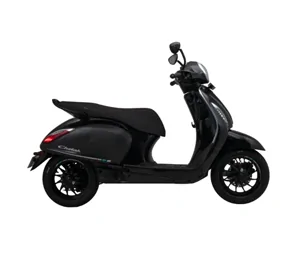
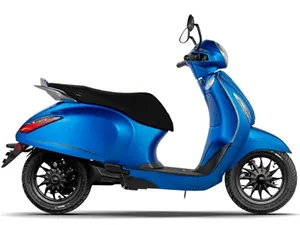
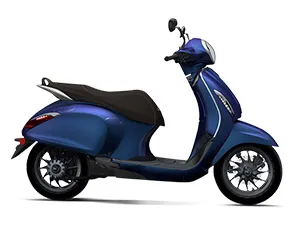
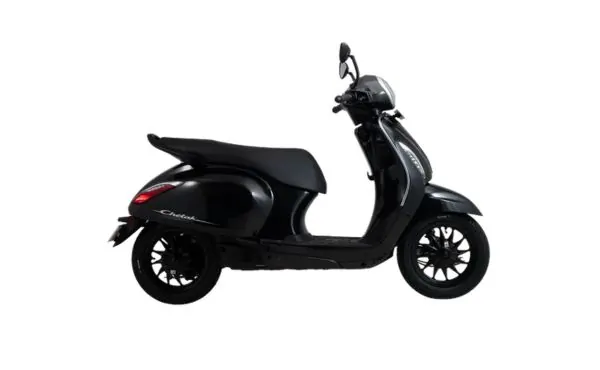
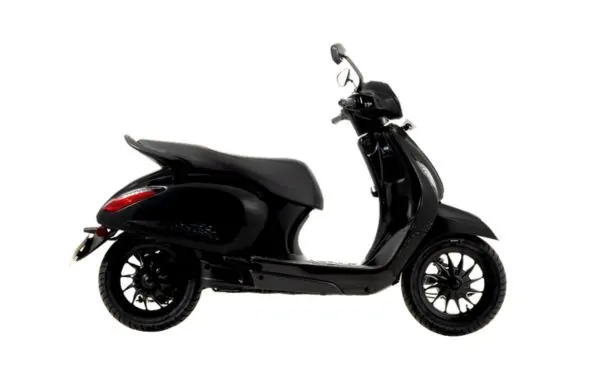
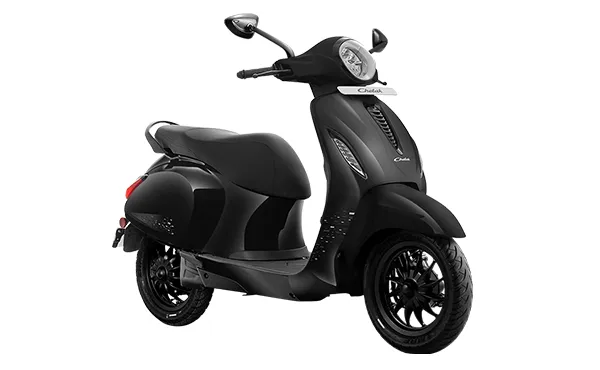
The 2026 Chetak C2501 is Bajaj’s latest step toward affordable electric mobility in India. It combines the classic metal body with a hub-mounted motor designed for city rides. With a 2.5 kWh lithium-ion battery, it features Eco and Sport ride modes, reverse assist, and hill hold for daily convenience. Launched in early 2026 as part of the 2025 updates, it competes with the TVS iQube and Vida VX2 in the sub-₹1 lakh range.
Gallery
Key Specifications
Battery Type
Lithium Ion
Range
80-95 Km/c
Power
4000W
Torque
114 Nm
Max Speed
55 km/h
Charging Time
2hrs 25m
Rear Suspension
Monoshock
Kerb Weight
108kg
Ratings
- 90%
Performance
- 95%
Features
- 90%
Handling
- 95%
Comfort
- 100%
Build Quality
- 100%
Styling
- 95%
Value for Money
- 95%
Total
Price
Special Features
1
Performance Mode
2
Lithium-ion Battery
3
Wheelbase
4
Ride Modes
5
Touchscreen Display
6
25l Boot Space
7
Keyless Entry
8
Tecpac Compatibility
9
Hill Hold Assist
10
Handlebar Control
11
Tail Light
12
Reverse Mode
Full Specifications
| City | 80–90km/full charge |
| Highway | 90–95km/full charge |
| Engine Type | Hub motor |
| Power | 2.2 kW |
| Charger Type | Off-board portable |
| Cooling System | Air-cooled |
| Transmission | Automatic |
| Fuel Supply | Electric |
| Speedometer | Digital |
| Odometer | Digital |
| Tripmeter | Digital |
| Battery Charge | 2.5 kWh capacity |
| Low Battery Indicator | digital |
| Start Type | Electric |
| Kill Switch | Electronic switch |
| Clock | yes |
| Pass Light | LED |
| ABS | No |
| Stand Alarm | Digital/ |
| Charging Point | Under the seat |
| DRLs | LED |
| Type | Steel metal body |
| Front Suspension | Twin Telescopic Suspension |
| Rear Suspension | Monoshock |
| Kerb Weight | 108 kg. |
| Tyres (F) | 90/90-12 (Tubeless) |
| Tyres (R) | 90/100-12,Tubeless |
| Brakes (F) | Disc brake |
| Brakes (R) | Drum brake |
| Brakes Type | Disc brakeSystem |
| Battery | Lithium‑ion |
| Charging Time | 3 hours 45 minutes |
| Head Lamp | LED |
| Tail Lamp | LED |
Overview
Performance And Motor
The C2501 uses a hub-mounted BLDC motor that gives 1.8 kW of continuous power and 2.2 kW at its peak. This setup offers quick acceleration for city traffic, reaching up to 50 kph in Sport mode. It manages slopes well, with a gradability of about 10-12 degrees and a responsive throttle. While it’s not built for high speeds, reviews mention its smooth, jerk-free power delivery, helped by its light 108 kg weight.
The C2501 uses a direct-hub motor drive system with a single-speed automatic transmission, a common setup in electric scooters. This means there are no gears, so acceleration is smooth and instant from a stop. The automatic setup also means less maintenance and makes it easy to ride in busy Indian city traffic.
The Chetak C2501 has a top speed of 55 km/h, which is electronically limited for safety and efficiency in city use. In real-world tests, it easily maintains 50-55 km/h in Sport mode. Sometimes the display shows up to 62-63 km/h in perfect conditions, but the scooter prioritises range over speed.
Range
Bajaj claims an IDC-certified ARAI range of 113 km per charge for the 2.5 kWh battery under standard test conditions. This figure accounts for controlled urban cycles, making it competitive for daily commutes in Indian metros.
In everyday city use, most riders get about 90-95 km per charge. This can drop to 80-90 km if you accelerate hard, carry extra weight, or use Eco mode. Traffic and carrying a passenger also affect the range. Still, reviews confirm that 90 km is realistic for most Indian city commutes.
Charging Time
Charging from 0 to 80% takes 2 hours and 25 minutes with the standard 750W charger, making it easy to top up overnight at home. A full charge from 0 to 100% takes about 3 hours and 45 minutes, so you can recharge quickly using regular sockets found in most Indian homes.
Features And Technology
The Bajaj Chetak C2501 is an affordable option in the Series 25 electric scooter lineup. It focuses on practical features for Indian city riders, such as fast charging and a robust build.
- Battery: 2.5 kWh lithium-ion battery Powers the scooter for reliable daily commutes, supporting quick top-ups suitable for home charging in India.
- Range: Up to 113 km (claimed) IDC-certified for urban cycles, ideal for city errands without frequent recharges.
- Charging Time: 0-80% in 2 hours 25 minutes Uses a standard 750W off-board charger, enabling fast daily usage with common Indian sockets.
- Top Speed: 55 km/h Electronically governed for safe city riding, reaching comfortably in Sport mode.
- Ride Modes: Eco and Sports Eco optimises range for efficiency, while Sports boosts acceleration for traffic navigation.
- Hill Hold: Assists on inclines common in Indian cities, preventing rollback during starts.
- Reverse Mode: Simplifies tight parking in congested urban spaces
- Braking: Front disc and rear drum Ensures reliable stopping power with a balanced setup for wet and dry Indian roads.
- Wheelbase: 1225 mm Compact dimensions enhance manoeuvrability in traffic-heavy areas.
- Seat Height: 763 mm Low stance suits a wide range of Indian riders, including shorter individuals.
- Boot Space: 25L Ample under-seat storage for helmets, bags, or daily essentials
- All-Metal Body: Full metal construction Delivers premium durability, scratch resistance, and a robust feel for longevity in Indian conditions.
- Display: Vibrant full-colour LCD console Shows speed, battery status, and navigation at a glance for intuitive use.
- Tail Light: Ice cube design Enhances nighttime visibility with a modern, futuristic look.
- Handlebar Controls: Manage calls and music Allows hands-free call handling and music control to minimise distractions.
- Design:Neo-classical styling with decals – Timeless Chetak aesthetics updated for bold, expressive urban appeal.
- Warranty:5 years or 70,000 km (whichever comes first) – Comprehensive coverage for peace of mind in India’s varied usage patterns.
- TecPac Compatibility: Music play/pause, guide-me-home lights Optional upgrade adds smartphone-linked features for enhanced convenience.
Build Quality
The C2501 keeps Chetak’s well-known all-metal body, which is more durable, safer, and more scratch-resistant than the plastic used in many budget EVs. Reviewers like its solid build and quality finish, with no parts that feel cheap, even though it’s priced as an entry-level model. There are some small gaps near the handlebar plastics, but overall, the finish is impressive for this segment. Its 108 kg weight shows smart design that keeps it light but strong, which is great for tough Indian roads and weather.
Handling
With a compact 1225 mm wheelbase, slim tyres, and 170 mm ground clearance, the C2501 handles easily. It feels light, making it great for moving through heavy Indian traffic. It stays stable even at higher speeds. The new frame, telescopic front forks, and twin rear shocks help absorb bumps, though the front can hit hard on sharp potholes. The tyres grip well on different surfaces. Testers say it feels stable and easy to overtake, which helps new EV riders feel confident in city traffic.
Comfort
The 763 mm seat height is low enough for shorter riders, which is common in India. The seat is well-cushioned, with plenty of knee room and a flat floorboard for comfort on long rides. The rear suspension handles potholes well, and the riding position is upright and relaxed. The front suspension is a bit soft, but overall, the ride is among the best in its class and not as stiff as some rivals. Fold-out footpegs are practical, and the seat is comfortable enough for a passenger
Styling
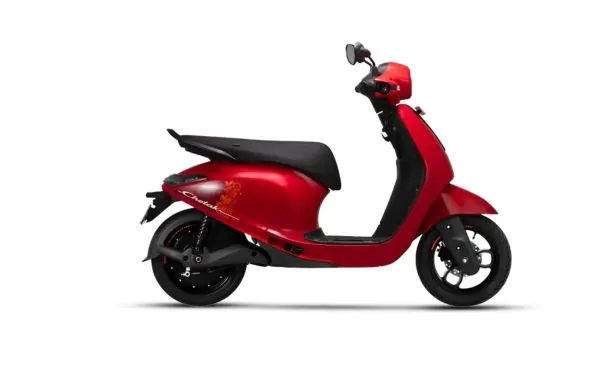
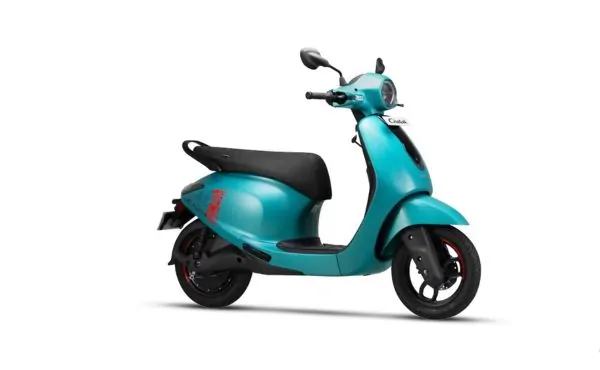
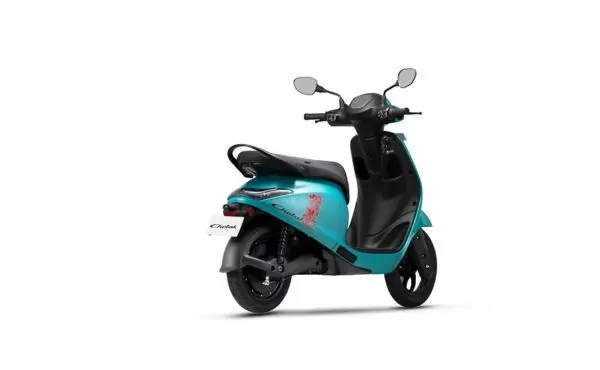
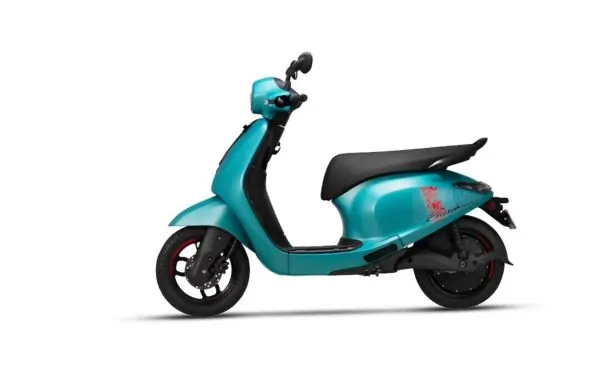
The C2501 has a neo-classical look with modern touches, such as unique decals and a compact shape that stand out in the city. Highlights include a stylish ice-cube tail light for better visibility, a bright full-colour LCD display, and an all-metal body that keeps the classic Chetak feel with improved bodywork. The new single-piece grab rail, horseshoe-shaped LED headlamp with DRL, and updated handlebar indicators give it a fun, youthful style that makes it different from bigger models.
Colour Options And Variants
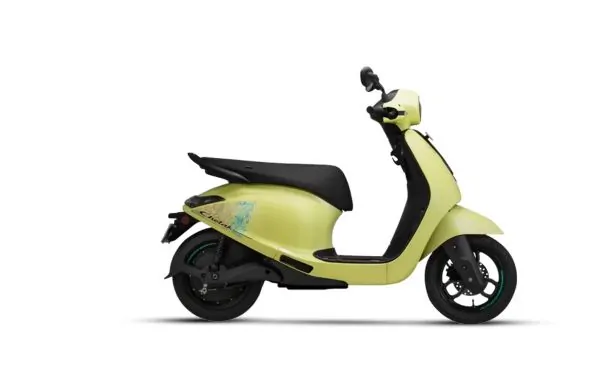
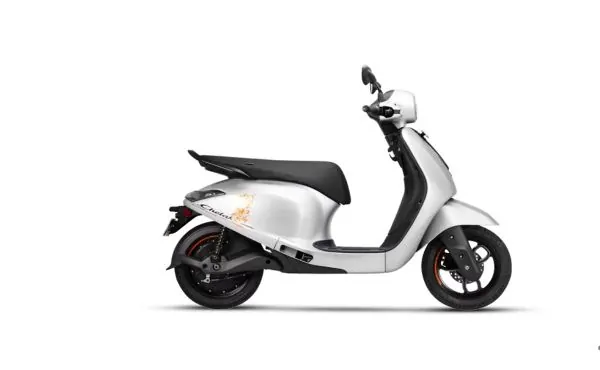
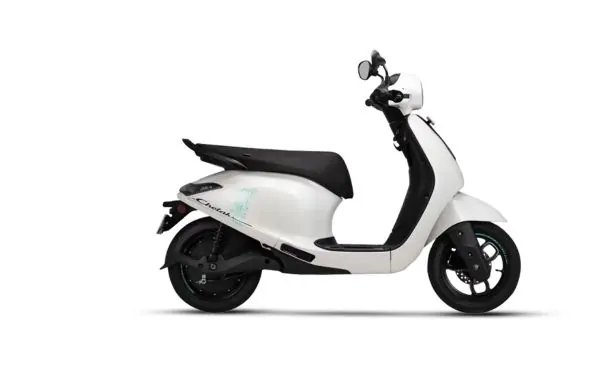
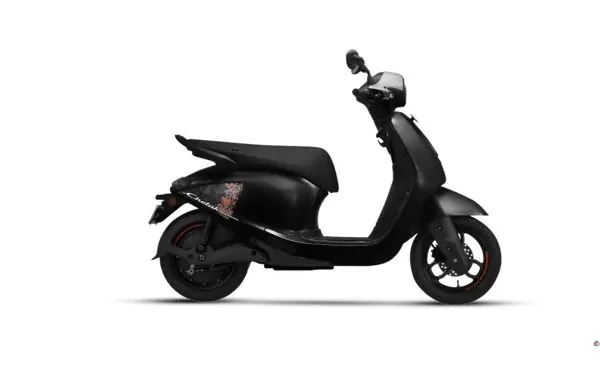
The C2501 comes in six eye-catching colours, each with modern graphics that give it a unique personality.
- Ocean Teal
- Racing Red
- Active Black
- Opalescent Silver
- Classic White
- Misty Yellow
Racing Red combines bold graphics with a shiny finish, while lighter colours like Ocean Teal and Opalescent Silver look more subtle, though their graphics are less noticeable. Misty Yellow and Classic White are brighter choices that stand out. These colour options suit different tastes, offering both vibrant and understated styles for Indian buyers.
The C2501 is sold in India as a single base model with a 2.5 kWh battery and no sub-variants. You can add the optional TecPac for extras like a higher top speed (55 km/h instead of 45 km/h), music controls, and guide-me-home lights. Compared to higher Series 25 models like the 3001 (3.0 kWh, 127 km range, Bluetooth) and the 3501/3502/3503 (3.5 kWh, up to 153 km, full app features, sequential blinkers), the C2501 has a shorter 1225 mm wheelbase, drum/disc brakes, and no standard app connectivity.
Value For Money And Pricing
The Chetak C2501 starts at ₹ 91,430 ex-showroom in Delhi. Bajaj also offers a scooter exchange program for upgrades, with quick estimates and dealer checks. The 5-year/70,000 km warranty adds to its appeal for buyers.
The C2501 stands out with its strong metal body, 25L storage, fast 2.25-hour charging to 80%, and a real-world range of 90-95 km. This makes it a good value for short city trips compared to petrol scooters. The optional TecPac adds features such as music controls and higher speeds without significantly increasing the price. Reviewers say it’s a smart choice for first-time EV buyers who want practicality, a solid build, and low running costs (about ₹0.15/km). While it doesn’t have app connectivity like more expensive models, it keeps key features like hill hold and reverse, making it a good budget pick for families or students.
- TVS iQube
- Vida VX2 Go
- Ather Rizta S
The C2501 undercuts rivals like
It offers a bigger 2.5 kWh battery and a metal body at a lower starting price. The C2501 beats the iQube and VX2 in range and battery size and matches them in charging speed, though the Rizta has a bigger battery. The TVS Orbiter, its main rival, has fewer features for a similar price. For buyers looking for value, the C2501 is more durable than plastic-bodied competitors without costing more.
The Bajaj Chetak C2501 stands out as an entry-level electric scooter with a strong metal build and useful features. Reviews praise its value for city use in India, offering good durability with only a few minor drawbacks.

Verdict
The Bajaj Chetak C2501 is a great option for budget-minded city commuters in India. It combines Bajaj’s well-known metal durability, a practical 113 km range, fast 2.25-hour charging, and easy handling at a price lower than rivals like the TVS iQube and Vida VX2. It also offers strong build quality and features like hill hold, reverse mode, and 25L storage.
While it has some minor downsides, such as a 55 km/h speed limit, no standard app connectivity, and a softer front suspension on sharp bumps, its value is hard to beat. The 5-year/70,000 km warranty, low running costs, and bright colour choices make it a smart first EV for riders in smaller cities who want reliability without extra frills. It’s a solid upgrade from petrol scooters as electric mobility grows in India.
Pros
- Affordable Pricing:The lowest in the Series 25, and flexible finance options make EV entry accessible for tier-2/3 buyers.
- Robust All-Metal Body:Signature Chetak construction – Superior durability, safety, and premium feel over plastic rivals; resists scratches and holds value well on Indian
- Decent Claimed Range:113 km IDC-certified – Real-world 90-95 km suits daily city commutes; 2.5 kWh battery outperforms more miniature packs in the sub-₹1 lakh segment.
- Rapid Charging: 0-80% in 2 hr 25 min – Standard 750W charger fits home sockets; quicker than many rivals like Ather Rizta, minimising downtime.
- Practical Storage:25L boot space – Fits helmet, bags, charger; compact yet functional for shopping/grocery runs in crowded markets.
- Nimble Handling:1225 mm wheelbase, 108 kg weight – Excellent for traffic dodging; stable with good bump absorption via telescopic forks/twin shocks.
- Low Seat Height:763 mm – Rider-friendly for Indians, easy flat-footing; comfortable upright posture for long rides.

- Comprehensive Warranty: 5 years/70,000 km – Covers battery/motor; longer than most, boosting long-term confidence.
- Useful Features:Hill hold, reverse, Eco/Sport modes – Tackles inclines/parking,call/music controls add convenience.
- Vibrant Display:Full-colour LCD – Clear info on speed/battery; intuitive for all users.
Cons
- Limited Top Speed: Capped at 55 km/h – Adequate for cities but sluggish on highways; TecPac needed for full unlock in some cases.
- No Standard App Connectivity: Basic Bluetooth absent – Lacks navigation/remote monitoring, unlike higher variants/iQube, TecPac partial fix at extra cost.
- No Sequential Blinker:Standard omission – Reduces style/safety cues; available only on pricier siblings.
- Modest Real-World Range: 80-95 km max – Drops with AC/hot weather/pillion; not for inter-city without planning.
- Front Suspension Softness:Thuds on sharp potholes – Handles most bumps well, but jars on deep ones common in India.
- No Document Storage:Lacks a dedicated pocket – Minor inconvenience for papers; higher models include it.
- Basic Brakes:Disc/drum setup – Effective but lacks ABS; adequate for speed limits, yet rivals offer more bite.
- Compact Size Limits Pillion Comfort:Tight for two adults – Fine for short hops; less family-oriented than larger EVs.
- No Standard TecPac Features:Music/guide lights extra – Paywall for conveniences reduces out-of-box appeal.
Other Related Links From Bikeleague India
List Of All Bajaj Bikes In India
About Bajaj Company
Bajaj Auto, a flagship company of the Bajaj Group, is a prominent name in the Indian automotive industry. Founded by Jamnalal Bajaj in 1926, the Bajaj Group has diversified into various sectors. Bajaj Auto has become a significant player in the global two- and three-wheeler market, offering a range of new Bajaj motorcycles known for their reliability, performance, and competitive price. Bajaj bikes in India are popular for their impressive mileage, catering to a wide audience looking for cost-effective and fuel-efficient options. With attractive Bajaj bikes prices, the company continues to attract customers, solidifying its presence in both domestic and international markets.
Early Beginnings
Bajaj Auto was established on November 29, 1945, as M/s Bachraj Trading Corporation Private Limited. Initially, the company imported and sold two- and three-wheelers in India. In 1959, Bajaj Auto obtained a license from the Government of India to manufacture these vehicles, marking the beginning of its manufacturing journey.
Expansion And Iconic Models
The 1960s and 1970s were transformative decades for Bajaj Auto. The company launched its first vehicle, the Vespa 150, in 1960. By 1970, Bajaj had rolled out its 100,000th vehicle. Introducing the iconic Chetak scooter in 1972 became a significant milestone, making Bajaj a household name in India.
Diversification Into Motorcycles
In the 1980s, Bajaj Auto began diversifying into motorcycles, including the introduction of the new Bajaj motorcycle range. The company partnered with Kawasaki to launch the KB100 motorcycle in 1986, which was one of the first Bajaj motorcycles in India. This move marked Bajaj’s transition from a scooter manufacturer to a comprehensive two-wheeler manufacturer with a growing lineup of new Bajaj motorcycles. The 1990s saw further expansion with the launch of models like the Bajaj Sunny and the M-50, establishing Bajaj motorcycles in India as reliable choices for consumers. Today, the competitive Bajaj bikes price continues to attract customers, and the brand remains committed to releasing new Bajaj motorcycle models that cater to various segments while keeping the Bajaj bikes price accessible.
The Pulsar Revolution
The early 2000s marked a revolutionary period for Bajaj Auto, with the launch of the Bajaj Pulsar in 2001. The Pulsar series redefined sports biking in India, offering a blend of performance and affordability. The Pulsar 150 and 180 variants became immensely popular, followed by upgrades and new models like the Pulsar 200 and 220-Fi.
Strategic Partnerships And Innovations
Bajaj Auto has strategically partnered with global brands to enhance its product offerings, particularly in the segment of Bajaj motorcycle in India. In 2007, Bajaj acquired a stake in KTM, which led to the introduction of KTM models in India. The partnership with Triumph Motorcycles in 2017 aimed to develop mid-capacity motorcycles, further expanding Bajaj’s portfolio.
Recent Developments
In recent years, Bajaj Auto has continued to innovate and expand in the Indian market with a strong focus on new Bajaj motorcycles. The company launched the all-electric Chetak scooter in 2020, marking its entry into the electric vehicle market. Bajaj bikes in India are known for their impressive mileage, and the company is constantly enhancing this reputation by offering models with competitive Bajaj bike prices. Investments in new manufacturing units and partnerships with brands like Triumph highlight Bajaj’s commitment to growth and innovation. Bajaj bikes’ mileage remains a key selling point, ensuring they are a popular choice among consumers. With a variety of Bajaj bikes in India and continuous innovation in new Bajaj motorcycle models, the brand is poised to maintain its strong market presence.
Other Related Links From Bikeleague India
User Reviews
There are no reviews yet. Be the first one to write one.


Hiran Narayanan
Founder & CTO at Bikeleague India
Hiran Narayanan is the Founder and CTO of Bikeleague India, bringing over 15 years of experience in motorcycle technical writing. He develops detailed analyses, tools, model overviews, and blogs that contribute to bikeleague.in's improving rankings.