
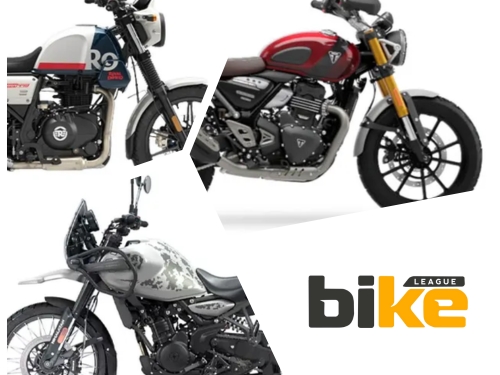
Long story short: In short, this guide will help you find the best bike for your needs. Scramblers bring vintage style and agility, while adventure bikes are great for off-road riding and comfort. We’ll look at the pros and cons of each and more.
India’s motorcycle market offers many choices, with scrambler and adventure bikes being especially popular. Each type suits different riding styles and preferences. This article compares the two, highlights their strengths, and helps you decide which best fits your needs.
Key Takeaways
- Scrambler motorcycles offer stylish retro looks, agility, and urban versatility, but are best suited for city commutes and light off-roading rather than long-distance touring.
- Adventure bikes excel in long-distance comfort, luggage carrying, and serious off-road capability, making them ideal for riders who prioritise touring and varied terrains.
- Fuel economy and practical range generally favour adventure bikes over scramblers, with ADVs providing more kilometres per litre and longer distances between fill-ups.
- Both categories cater to distinct rider profiles: scramblers appeal to style-conscious city riders, while adventure bikes attract those seeking multi-day journeys and exploration.
- When choosing between the two, consider your main riding needs, maintenance expectations, and the type of riding experiences you value most—there is no one-size-fits-all answer.
Scrambler Motorcycles
Scrambler motorcycles have a retro look, with semi-knobby tyres, high mudguards, ribbed seats, and motocross-style handlebars. This setup makes them good for both city roads and light off-roading. Many riders enjoy scramblers for their sense of freedom and fun, as well as their stylish design.
1. Examples Of Scrambler Motorcycles
| Bike Model | Engine (cc) | Price(₹ Lakh) | Ground Clearance (mm) | Mileage Range (kmpl) |
|---|---|---|---|---|
| Keeway SR125 | 125 | ₹ 1,18,000 | 150 | 45-50 |
| Jawa 42 Bobber | 125 | ₹ 1,93,132 | 140 | 25-30 |
| Yezdi Scrambler | 334 | ₹ 1,95,345 | 170 | 28-35 |
| Royal Enfield Scram 440 | 411 | ₹ 2,23,121 | 180 | 30-34 |
| Triumph Scrambler 400 X | 398 | ₹ 2,67,731 | 180 | 25-30 |
| Husqvarna Svartpilen 401 | 399 | ₹ 2,97,741 | 210 | 25-29 |
| Brixton Crossfire 500 X | 500 | ₹ 4,74,000 | 200 | 21-24 |
| Royal Enfield Bear 650 | 650 | ₹ 3,75,374 | 190 | 25-30 |
| Triumph Speed Twin 900 | 900 | ₹ 9,71,300 | 220 | 20-24 |
| Triumph Scrambler 900 | 900 | ₹ 17,28,077 | 210 | 20-23 |
| Ducati Scrambler 2G Icon | 803 | ₹ 10,39,000 | 200 | 20-25 |
Pros Of Scrambler Bike
- Retro styling appeal: Scrambler motorcycles offer a distinctive classic design with modern performance, standing out in urban traffic and appealing to riders who value aesthetics over conventional commuter looks.
- Lightweight and agile: Generally lighter than full adventure bikes (around 170–190 kg), making them easier to handle in city traffic, flick through corners and manage at low speeds.
- Versatile for mixed use: Capable of daily commuting, light off-roading and weekend trails with upright ergonomics, long-travel suspension and dual-purpose tyres suitable for India’s varied roads.
- Low-end torque: Strong low to mid-range power delivery ideal for urban overtakes, gravel paths and relaxed cruising without constant gear changes.
- Comfortable riding position: Upright posture with wide handlebars reduces fatigue for medium-distance rides while maintaining good visibility in dense Indian traffic.
- Affordable maintenance:Service costs are often comparable to those of mainstream bikes (e.g., Triumph Scrambler 400 X first service ~₹2,200), and parts are reasonably priced for popular models.
- Customisation friendly: Easy to personalise with retro accessories like tail tidies, tank pads and compact luggage while preserving the classic silhouette.
Cons Of Scrambler Motorcycles
- Limited extreme off-road capability: Not designed for serious trails—suspension travel, ground clearance and tyres fall short compared to true ADVs or dirt bikes, struggling on deep mud or rocks.
- Poor long-distance comfort: Smaller fuel tanks (12–13L) and basic ergonomics lead to fatigue on 400+ km days; lacks full touring features like large windscreens or pillion support.
- Stiff ride quality: Firm suspension handles light trails well but transmits road imperfections harshly on broken Indian surfaces, especially at the rear on some models with dual springs.
- Lower fuel efficiency: Real-world mileage of 25–30 kmpl lags behind that of commuters, resulting in a shorter range (250–350 km per tank) and more frequent stops.
- Subpar braking in some models: Brakes often feel average for spirited riding, lacking the progressive feel needed for confident trail or highway stops.
- Heat management issues: Air-cooled engines can get hot in traffic or on slow trails, with some models, like Yezdi, experiencing excessive heat in Indian summers.
- Pillion compromise: Rear seat space and grab rails are minimal, making these less family-friendly than touring-focused adventure bikes.
Adventure Motorcycles
Adventure motorcycles are versatile and can handle long-distance touring, commuting, and off-road adventures. They typically feature larger fuel tanks, advanced suspension, and ergonomic designs for rider comfort. Adventure bikes are built to perform well on various terrains, making them ideal for exploration and extended journeys.
Examples Of Adventure Motorcycles
| Bike Model | Engine (cc) | Price (₹ lakh) | Ground Clearance (mm) | Mileage Range (kmpl) |
|---|---|---|---|---|
| Suzuki V-Strom SX 250 | 249 | ₹ 1,98,018 | 200 | 30-36 |
| KTM 250 Adventure | 248 | ₹ 2,40,010 | 200 | 32-41 |
| Hero Xpulse 200 4V | 199 | ₹ 1,40,043 | 190 | 30–32.9 |
| Hero Xpulse 210 | 210 | ₹ 1,62,065 | 195 | 35–40 |
| Yezdi Adventure | 334 | ₹ 1,98,110 | 210 | 30-35 |
| Royal Enfield Himalayan 450 | 452 | ₹ 3,05,722 | 200 | 27-32 |
| Benelli TRK 502 | 500 | ₹ 6,62,000 | 200 | 30-33 |
| KTM 390 Adventure | 399 | ₹ 3,94,699 | 200 | 30-35 |
| CFMoto 650MT | 649 | ₹ 6,01,247 | 220 | 20-25 |
| Triumph Tiger Sport 660 | 660 | ₹ 17,16,854 | 220 | 25-28 |
| Moto Guzzi V85 TT | 853 | ₹ 16,45,802 | 220 | 20-25 |
| KTM 890 Adventure | 889 | ₹ 15,80,000 | 220 | 18-22 |
| Triumph Tiger 900 | 888 | ₹ 13,95,000 | 220 | 22-25 |
| Ducati DesertX | 937 | ₹ 18,33,200 | 250 | 19-21 |
| Ducati Multistrada V4 | 1158 | ₹ 24,56,300 | 230 | 13-15 |
Pros Of Adventure Bike
- Versatile terrain handling: Adventure motorcycles excel across highways, potholed city roads, gravel tracks and light off-road trails, making them ideal for India’s diverse conditions from Ladakh passes to urban commutes.
- Touring comfort:Upright ergonomics, wide handlebars and long-travel suspension reduce fatigue on multi-day rides, with neutral seating perfect for 300–500 km days.
- Extensive luggage options: Robust ecosystems for panniers, top boxes, tank bags, and racks support practical multi-day packing for solo or group tours.
- Larger fuel range:13–17 litre tanks deliver 350–450 km practical range at 28–40 kmpl, minimising fuel stops on long Indian journeys.
- Strong resale value: Popular models like the Himalayan and KTM Adventure hold their value well due to high demand in the growing adventure-touring segment.
- Community and tours: Access to organised adventure groups, rentals and guided tours across India, plus growing aftermarket support for protection and navigation.
- Confidence-inspiring: Tall ground clearance and wide tyres provide stability with luggage or pillion, boosting rider confidence on broken rural roads.
Cons Of Adventure Motorcycles
- Higher price point: Entry-level ADVs start at ₹1.7–2.5 lakh, with mid-segment models (Himalayan 450, KTM 390) at ₹2.8–3.5 lakh, making them 2–3x costlier than commuters.
- Poor city manoeuvrability: Tall seats (800–850 mm) and heavy weight (170–220 kg) make low-speed handling challenging in dense traffic, especially for shorter riders.
- Lower fuel efficiency: 28–35 kmpl real-world mileage lags behind commuters (45–60 kmpl), leading to higher running costs for daily use.
- Intimidating for beginners: Steep learning curve for off-road skills, weight management and luggage loading; not ideal for absolute novices.
- Expensive maintenance: Premium parts, specialised service needs and off-road wear increase ownership costs compared to mainstream bikes.
- Limited pillion comfort: Touring-focused design often compromises rear seat space and suspension for solo/off-road use, making family rides less enjoyable.
- Bulkier parking/storage: Larger dimensions and taller stance complicate garage parking and urban storage compared to compact commuters or sportbikes.
Key Differences Between Scrambler Vs Adventure Bike
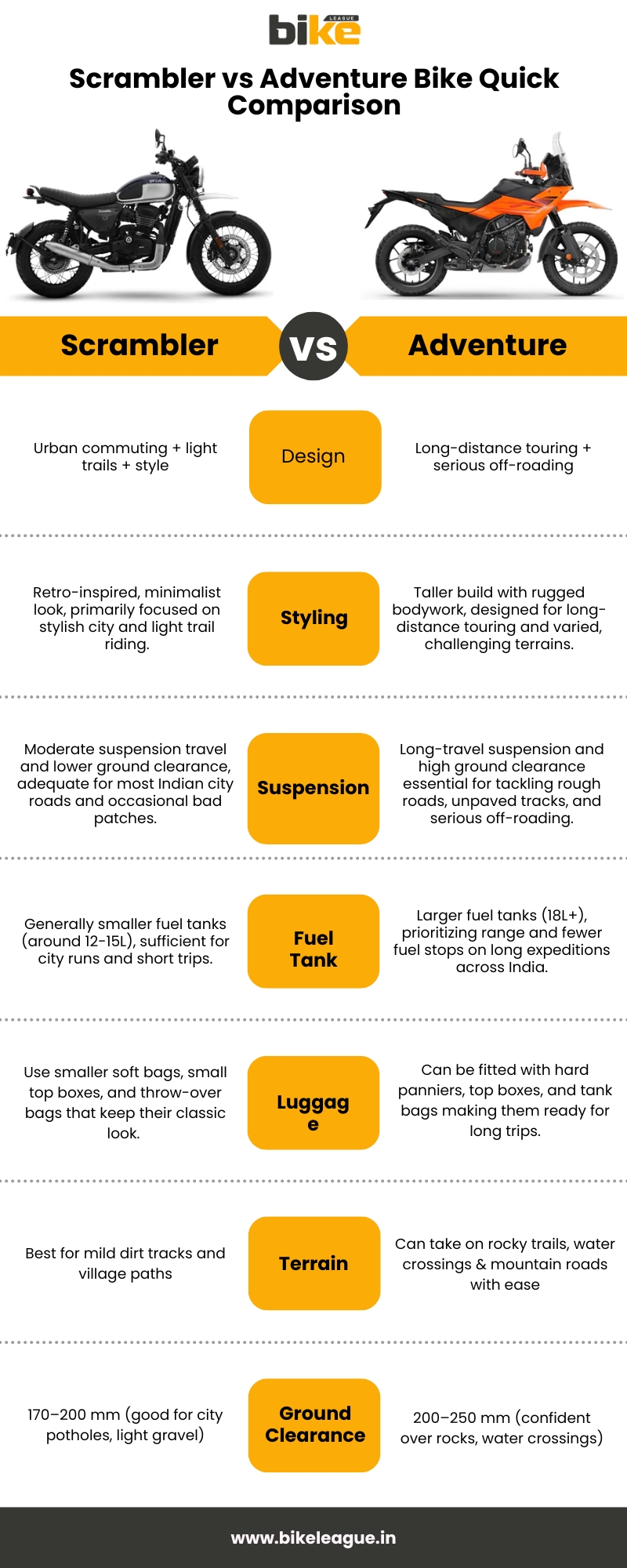
Scrambler and adventure motorcycles each have their own place in India’s premium bike market. Both handle mixed terrain better than regular commuter bikes. Scramblers are all about retro style and city riding, while adventure bikes are made for long journeys and real off-roading.
1. Design Philosophy
Scramblers have a classic, simple look inspired by rally bikes from the 1960s and 70s. They feature round headlights, ribbed seats, knobby tyres, and exposed frames, which attract city riders who want a unique bike. Adventure bikes, on the other hand, look rugged and ready for long trips, with tall windscreens, beak-shaped fairings, handguards, and tank pads. These features make them suitable for tough journeys, such as crossing the Himalayan passes or riding through deserts.
2. Intended Usage
Scramblers work well as lifestyle bikes for city rides, café meetups, and light weekend trails, such as trips from Mumbai to Lonavala or exploring Bengaluru’s backroads. Adventure motorcycles are made for longer journeys, high-altitude rides like Ladakh or Spiti, and real off-road sections. They can carry luggage and handle 500+ km days across India’s varied landscapes.
3. Terrain Capability
Both scramblers and adventure bikes deal with potholes and rough roads better than sportbikes. Scramblers are best for mild dirt tracks and village paths. Adventure bikes, with their longer suspension, higher ground clearance, and tubeless spoked wheels, can take on rocky trails, water crossings, and mountain roads with ease.
4. Luggage And Touring
Adventure bikes can be fitted with hard panniers, top boxes, and tank bags from brands like Zana, Hexa-GT, and Bikester Global, making them ready for long trips. Scramblers usually use smaller soft bags, small top boxes, and throw-over bags that keep their classic look. This setup is better for short weekend trips than long tours.
5. Quick Difference Comparison Table
| Aspect | Scrambler Motorcycles | Adventure Motorcycles |
|---|---|---|
| Primary Purpose | Urban commuting + light trails + style | Long-distance touring + serious off-roading |
| Design Aesthetic | Retro/classic (round lights, ribbed seats, minimal bodywork) | Rally/expedition (windscreens, beak fairings, rugged protection) |
| Seat Height | 790–830 mm (manageable for most riders) | 820–870 mm (taller, better for rough terrain) |
| Ground Clearance | 170–200 mm (good for city potholes, light gravel) | 200–250 mm (confident over rocks, water crossings) |
| Suspension Travel | 130–150 mm (firm for trails, stiff on roads) | 180–220 mm (plush absorption for rough terrain) |
| Weight (kerb) | 170–190 kg (agile in traffic) | 180–220 kg (stable when loaded) |
| Fuel Economy | 25–30 kmpl (shorter range, 250–350 km/tank) | 28–40 kmpl (longer range, 350–450 km/tank) |
| Tank Capacity | 12–13 L (adequate for day rides) | 13–17 L (touring optimised) |
| Luggage Ecosystem | Compact soft bags, small top boxes (style-focused) | Full hard panniers, top boxes, racks (touring-ready) |
| Price Range | ₹1.8–3.5 lakh (Triumph 400 X, Yezdi Scrambler) | ₹1.7–4.5 lakh (Himalayan 450, KTM 390 Adv) |
| Best For | City + weekend trails, style-conscious riders | Multi-day tours, high-altitude, off-road adventures |
| Rider Profile | Beginners to intermediates, urban 20–40s | Experienced tourers, 25–45+, adventure enthusiasts |
| Pillion Comfort | Average (minimal rear space) | Better (touring ergonomics, grab rails) |
| Maintenance Cost | Moderate (similar to premium commuters) | Higher (off-road wear, premium parts) |
What Is The Fuel Economy Or Mileage For Scramblers And Adventure Bikes In India?
Adventure and scrambler bikes in India have different fuel mileage, which also depends on tank size and riding habits. Usually, adventure bikes are a bit more fuel-efficient and can travel farther on a tank. Scramblers use a little more fuel but give you extra performance and style.
1. Fuel Economy In India – Adventure Bikes
Most mainstream adventure bikes in India return roughly 28–40 kmpl, depending on engine size and usage.
- Smaller ADVs like the Hero Xpulse and similar 200 cc-class machines often fall in the 35–40 kmpl range in real-world conditions, especially at moderate speeds.
- Mid‑segment ADVs such as Royal Enfield Himalayan 450 and KTM 390 Adventure typically deliver around 28–32 kmpl; for instance, published figures cite about 30 kmpl for Himalayan 450 and roughly 29–30 kmpl for KTM 390 Adventure.
- KTM 250 Adventure is relatively efficient for its class, with claimed/overall figures around 35–38 kmpl in mixed riding.
Given typical tank sizes of 13–15 litres on popular ADVs, the practical touring range usually falls in the 350–450 km window between fuel stops if ridden sensibly.
2. Fuel Economy In India – Scrambler Bikes
Scramblers in India usually return lower mileage than equivalent ADVs, especially in mid‑to‑high capacity segments.
- Yezdi Scrambler 334 cc is quoted in different sources between about 24–29 kmpl (expert tests around 24–25 kmpl, ARAI/claimed figures closer to 29–32 kmpl).
- Triumph Scrambler 400 X and 400 XC have real‑world or ARAI figures around 27–28 kmpl, with summaries placing the 400 X at about 28.3 kmpl and the 400 XC at roughly 27 kmpl.
- Bigger imported scramblers like Triumph Scrambler 900 and 1200 often sit in the low‑20s kmpl range (roughly 22–24 kmpl in Indian conditions according to compiled mileage tables).
Tank sizes in this segment are typically 12–13 litres, so usable range often lands between 250–330 km per tank, depending on displacement and riding style—respectable, but usually lower than comparable ADVs.
3. Fuel Economy – Adv Vs Scrambler Comparison
Head‑to‑head comparisons reinforce that ADVs generally do better on fuel economy than scramblers built on similar or even smaller engines.
- Yezdi Adventure vs Yezdi Scrambler (same 334 cc base): Adventure is rated around 32 kmpl while the Scrambler sits closer to 26 kmpl, showing a clear advantage for the ADV in efficiency.
- KTM 250 Adventure vs Triumph Scrambler 400 X/400 XC: the 250 Adventure records roughly 35–38 kmpl overall, whereas the Triumph Scrambler twins hover around 27–28 kmpl despite similar or higher power, again favouring the ADV on mileage.
- KTM 390 Adventure vs Triumph Scrambler 400 XC: summary figures show about 27.5–30 kmpl for the 390 Adventure versus about 26–27 kmpl for the Scrambler 400 XC.
4. What Does This Mean For Range And Usage?
For Indian riders, adventure bikes are a better choice if you want good fuel economy and a longer range between fill-ups. They usually give you a few more kilometers per liter and about 50–100 km more per tank than scramblers. Scramblers use a bit more fuel because they focus on performance and style, which works well for people who mostly ride in the city or take short weekend trips.
What Kinds Of Riders Might Prefer Adventure Or Scrambler Motorcycles In India?
Adventure and scrambler motorcycles in India attract slightly different rider profiles, but there is significant overlap as more riders mix touring, light off‑roading, and daily use. Both categories now cater to a wide demographic, from new riders in their 20s to experienced tourers in their 40s and beyond, across all genders.
Adventure Bikes – Who They Suit
Adventure (ADV / adventure‑tourer) motorcycles are built for distance, luggage and mixed terrain, so they naturally appeal to riders planning serious travel.
1. Experience Level
Newer riders often start with entry‑level ADVs like Hero Xpulse 210, Suzuki V‑Strom SX 250 or Royal Enfield Himalayan 450, which combine manageable power with forgiving ergonomics. Intermediate and experienced riders gravitate to mid‑segment machines (e.g., Himalayan 450, KTM 390 Adventure, BMW G 310 GS) for faster highway cruising and tougher trails.
2. Height And Body Type
Because many ADVs have taller seats (often 800–850 mm), they naturally suit average‑to‑taller riders, though narrow seats and lower seat options make them increasingly accessible to riders around 5’5″–5’7″ as well. Shorter riders who are comfortable tip‑toeing or using lower seats often still prefer ADVs for their commanding view and confidence on rough roads.
3. Age Group And Gender Inclusivity
The core ADV audience is 25–45, but the market is broadening: millennials and Gen‑Z riders are driving demand for entry‑level adventure bikes, while many 40+ riders upgrade from commuters or cruisers for touring comfort. Growing numbers of women riders are joining mixed‑gender riding clubs, choosing ADVs for their stability with luggage and better suspension on rough roads.
4. Riding Goals
Ideal for riders focused on:
- Multi‑day touring, Ladakh/Spiti/Arunachal rides, and Western Ghats trips.
- Regular highway use plus broken rural roads or mild trails.
- Carrying luggage, using panniers/top boxes and riding year‑round in varied weather.
Scrambler Bikes – Who They Suit
Scramblers mix retro styling with mild off‑road ability (longer travel suspension, ribbed seats, dual‑purpose tyres), so they tend to attract riders who value style and urban versatility as much as trails.
1. Experience Level
Many scramblers (Yezdi Scrambler, RE Scram 440, Triumph Scrambler 400 X, Keeway SR 125/250) work well for beginners and intermediates, because power is usable and the riding position is natural and upright. More powerful options like Ducati Scrambler 800 or big‑bore imports target experienced riders who already understand weight, power and premium running costs.
2. Height And Body Type
Scramblers typically have slightly tall but not extreme seat heights, so they suit a wide range of Indian riders, including those who find full‑size ADVs intimidating. The narrow mid‑section and flat seat make them friendly for shorter riders and easier to manoeuvre in cities.
3. Age Group And Gender Inclusivity
The scrambler audience in India spans from early‑20s riders who want a “cool retro” daily bike to 30–45‑year‑olds upgrading from commuters but not ready for full‑fledged ADVs or superbikes. Design‑driven riders of all genders often choose scramblers as lifestyle machines—something that looks distinctive at a café meet but can still handle rough patches and weekend trails.
4. Riding Goals
Best suited for riders prioritising:
- Daily city riding plus weekend backroad exploration, with an eye on style.
- Occasional off‑roading, mud tracks and rough village roads without heavy luggage.
- Retro aesthetics, customisation and social rides more than hardcore long‑distance touring.
What Are The Available Accessories For Both Adventure And Scrambler Bikes, And How Easy Is Each Bike To Personalise?
Adventure and scrambler motorcycles in India come with plenty of accessories, but each type is customised differently. Adventure bikes are easier to set up for long trips, while scramblers are simpler to personalise for style and daily riding.
1. Luggage And Panniers
Adventure bikes support far more serious luggage setups. Popular ADVs like the Himalayan, KTM Adventure range, and V‑Strom have ready-made hard pannier and top‑box kits from brands such as Bikester Global, Bandidos Pitstop, HTRZ Modz, Custom Elements, Hexa‑GT, and Primo Customs, including model‑specific racks, aluminium boxes, and quick-release mounts. These systems are designed for multi‑day touring and heavy loads, so building a full luggage rig is largely plug‑and‑play.
Scramblers, by contrast, usually get lighter solutions: compact side racks, throw‑over saddlebags, small hard-top boxes, and retro‑styled soft panniers that preserve the classic silhouette. Triumph’s Scrambler 400 X catalogue plus Indian aftermarket lines from Zana, Mototorque and Auto Engina focus on neat luggage rails, small racks and tasteful bags rather than huge expedition panniers.
2. Riding Gear Ecosystem
On the gear side, adventure bikes are the main driver of India’s technical riding‑gear boom, with strong demand for armoured textile suits, off‑road boots, knee braces, hydration packs and modular helmets aimed at long-distance touring. Gear brands like ViaTerra, Bandidos, and others shape their product ranges heavily around ADV and touring users.
Scrambler riders also invest in protection but often choose more style-forward pieces: retro leather or heritage‑look textile jackets, casual‑looking helmets and short boots that complement the bike’s aesthetic. Many still step up to full touring gear for long rides, yet day-to-day choices tend to prioritise an urban/retro vibe as much as pure function.
3. Navigation And Electronics
Both categories heavily use smartphone-based navigation, but adventure riders are more likely to run a full electronics stack. ADVs commonly sport robust bar‑mounted phone or GPS cradles, auxiliary LED lights, 12V/USB power sockets and Bluetooth intercoms—often integrated into touring luggage setups marketed alongside panniers and top boxes.
Scramblers usually keep the cockpit cleaner: a single low‑profile phone mount, sometimes a small flyscreen and compact aux lights or headlight guards. Even when the same navigation tools are used, wiring and mounting solutions tend to be more discreet to avoid spoiling the minimalist, retro look.
4. How Easy Is Each Bike To Personalise?
Adventure motorcycles are the easiest to personalise for functionality. The market offers model‑specific racks, crash guards, sump guards, tall windscreens, wide footpegs and hard/soft luggage systems for almost every popular ADV, letting riders assemble near‑expedition setups with off‑the‑shelf parts. For riders whose goals are touring range, luggage capacity and protection, ADVs are clearly the better base.
Scramblers, on the other hand, are the easier canvas for cosmetic and light‑duty functional customisation. Tail tidies, custom seats, tank pads, mirrors, compact racks, headlight and radiator guards, and small top boxes are widely available for mainstream scramblers, especially the Scrambler 400 X. This makes it simple to build a unique, stylish machine that still carries enough luggage for weekend trips without turning into a fully loaded adventure rig.
Faq Related To Scrambler Vs Adventure Bike
1. What Is The Main Difference Between A Scrambler And An Adventure Bike?
Scramblers are designed for urban riding with retro styling and light off-road capabilities, while adventure bikes are built for long-distance touring, comfort, and handling tougher terrains.
2. Which Type Is Better For City Commuting?
Scramblers are generally better for city commuting due to their lighter weight, agility, and straightforward design, making them easier to handle in urban traffic.
3. Are Adventure Bikes More Comfortable For Long Rides?
Yes, adventure bikes offer superior comfort for long journeys, with upright ergonomics, advanced suspension, and the ability to carry more luggage.
4. How Do Fuel Economy And Tank Range Compare?
Adventure bikes typically offer better fuel economy and a longer range per tank (350–450 km) compared to scramblers (250–330 km), making them more suitable for extended trips.
5. Can Scramblers Handle Off-road Adventures?
Scramblers can handle light off-roading and rough village roads, but are not meant for extreme off-road conditions like adventure bikes, which have higher ground clearance and better suspension.
6. What Kind Of Rider Should Choose A Scrambler?
Scramblers suit riders who value retro style, city versatility, easy customisation, and occasional weekend trail rides. They appeal to both beginners and style-conscious urban riders.
7. What Kind Of Rider Should Choose An Adventure Bike?
Adventure bikes are ideal for riders who prioritise touring, want to explore diverse terrains, carry luggage, and value comfort over long distances. They’re popular among experienced tourers and those seeking adventure.
8. How Do Maintenance And Ownership Costs Compare?
Scramblers often have lower or similar maintenance costs to premium commuters, while adventure bikes can be more expensive to maintain due to specialised parts and off-road wear.
9. How Easy Is It To Customise Each Type?
Adventure bikes are easier to customise for functionality (luggage, protection, electronics), while scramblers are simpler to personalise for style and urban use (seats, mirrors, soft luggage).
10. Is There A Clear Winner Between The Two?
There’s no universal “best” choice. The right bike depends on your riding style, primary use, comfort needs, and personal preferences. Both categories offer unique strengths and memorable experiences.
Here Are Some Related Articles From Our Team
- Adventure bikes vs Touring bikes which one is the best
- Aprilia SR 160
- Royal Enfield Classic 350
- KTM 390 Adventure
- KTM 250 Adventure
Conclusion
In the end, choosing between a scrambler and an adventure bike comes down to the kind of riding you want to do. If you love vintage looks and spontaneous city rides, a scrambler will make your daily commute more enjoyable. But if you dream of open highways, wild landscapes, and the freedom to take long trips whenever you want, an adventure bike is the better choice.
There’s no single “best” choice—just the one that feels right for you. Consider where you like to ride, what excites you, and what fits your lifestyle. Whichever you choose, you’ll enjoy memorable experiences that only life on two wheels can bring.
If you have any questions, you can email us at bikeleague2017@gmail.com. We’re always happy to help. You can also follow Bikeleague India on social media for more updates and information.