Triumph Bonneville T4

Home > Triumph > Triumph Bonneville T4

Last Updated: November 6, 2026

Triumph Bonneville T4

Introduction

The Triumph Bonneville T4 blends classic looks with modern features in a 350cc motorcycle made for India. It has a liquid-cooled single-cylinder engine that makes 29 PS and 31.2 Nm, matched with a six-speed gearbox and a slip-and-assist clutch. Its teardrop tank, spoked wheels, and peashooter-style silencer give it a traditional style, while a colour LCD display, LED lighting, ABS, and traction control bring it up to date. The T4 comes in three colours and sits above many other retro-styled bikes.

Gallery

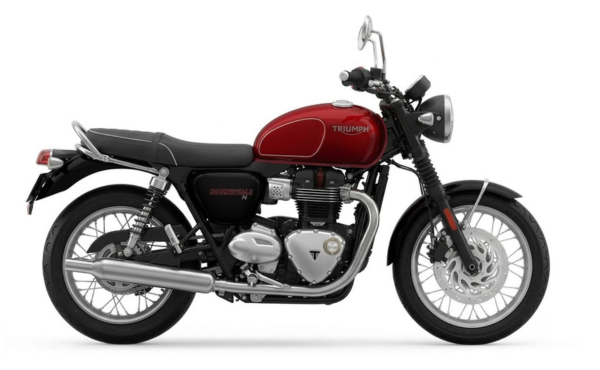
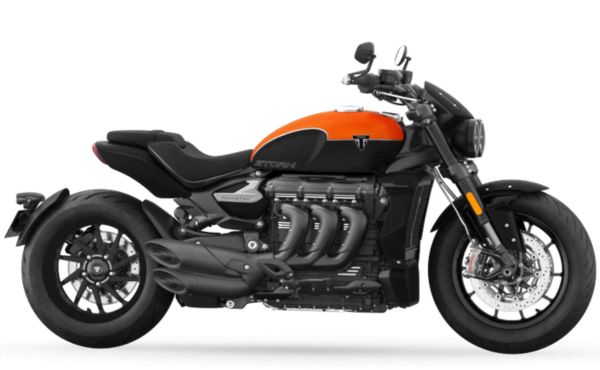
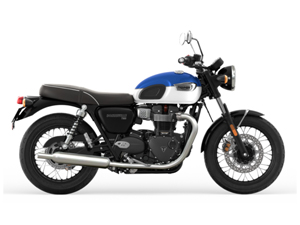
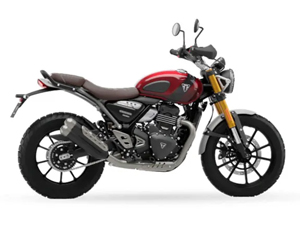
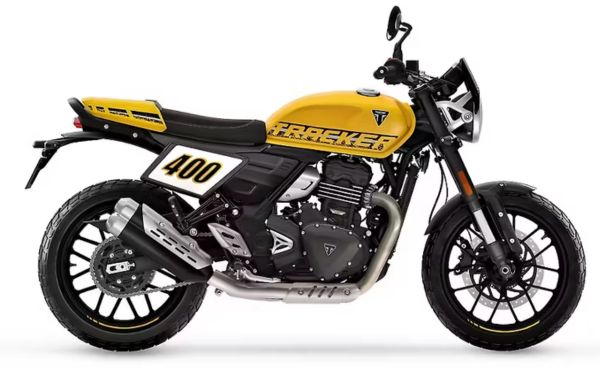
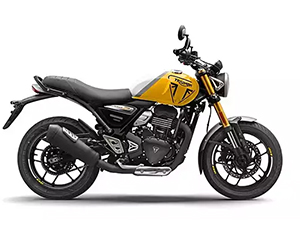
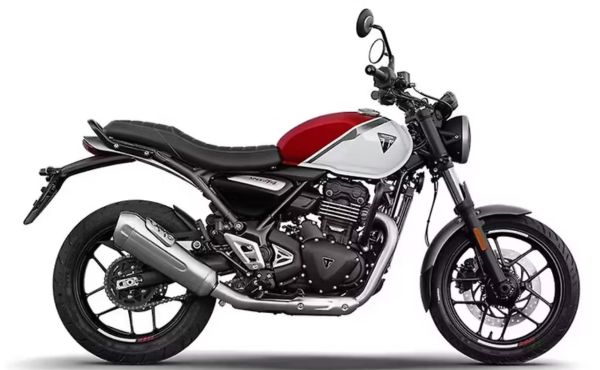
  • Right Profile
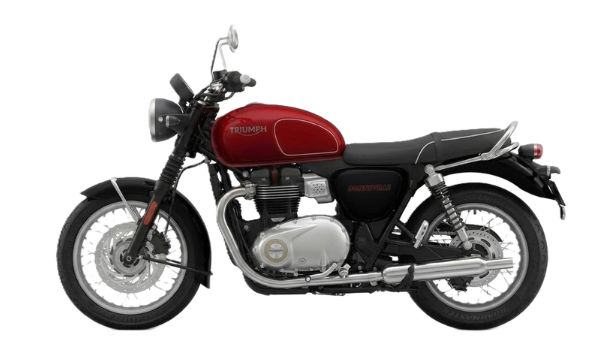
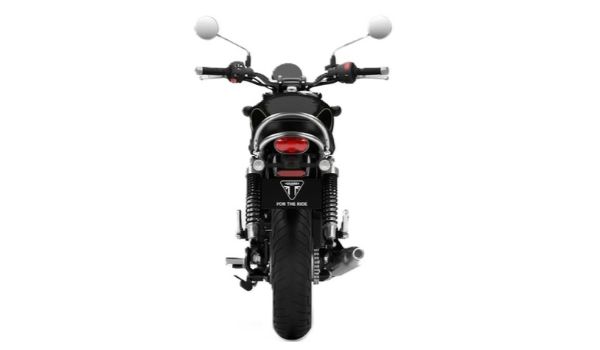
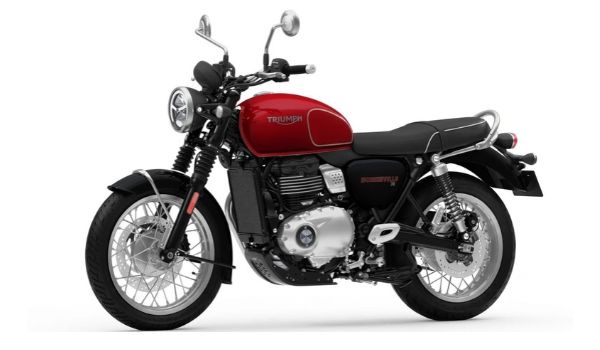
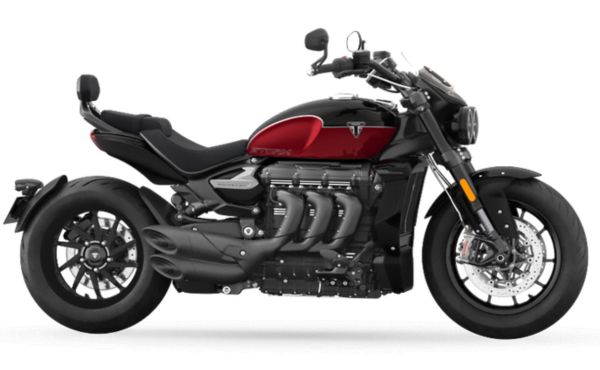
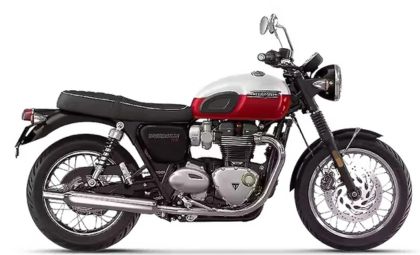
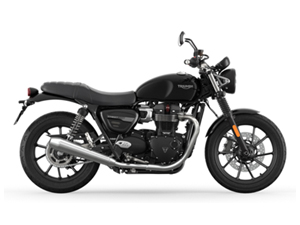
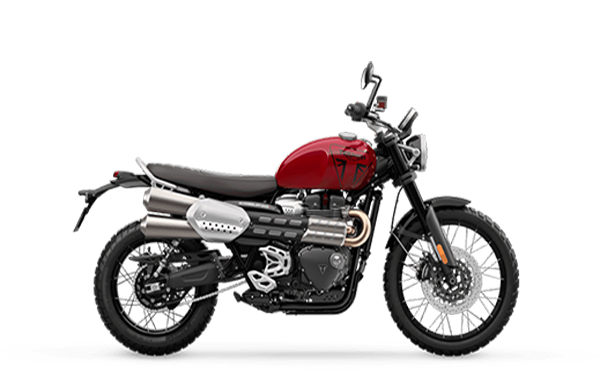
  • Carnival Red

Key Specifications

motor engine
Displacement

350 cc

mileage
Mileage

27-32km/l

Power

29 PS @ 7,000 rpm

torque
Torque

31.2 Nm @ 5,500 rpm

f system
Fuel System

Bosch EFI

fuel tank
Tank Capacity

14.5 liters

f sus
Rear Suspension

Pre-load adjustment

weight
Wet Weight

195 kg

Ratings

  • 100%

    Performance

  • 95%

    Features

  • 90%

    Handling

  • 100%

    Comfort

  • 100%

    Build Quality

  • 100%

    Styling

  • 70%

    Value for Money

  • 94%

    Total

  • Ratings calculation is purely based upon pros and cons of the model given below in the overview section.

Price

triumph logo india

State - DELHI
City - DELHI
Price (Ex-showroom) - 2,85,039

Special Features

1

Circular Colour Lcd Display

2

Turn-by-turn Navigation

3

Published Tyre Sizes

4

Backlit Handlebar Controls

5

Riding Modes

6

Electronic Throttle Control

7

Traction Control

8

Full Led Lighting

9

Automatic Headlight Activation

10

Self-cancelling Indicators

11

Slip-and-assist Clutch

12

Front Disc Brake

Full Specifications

City 27-30km/l
Highway 30–32km/l
Speedometer Digital
Tachometer Digital
Tripmeter No
Fuel Guage No
Low Fuel Indicator Yes
Low Battery Indicator Yes
Low Oil Indicator No
Start Type Electric Start
Kill Switch Yes
Clock yes
Pass Light No
ABS Yes
Brakes (F) 310mm fixed disc
Brakes (R) 255mm fixed disc
Type Liquid-cooled, single-cylinder, 4 valve, DOHC
Front Suspension 43mm forks. 130mm
Rear Suspension pre-load adjustment.
Ground Clearance 165 mm
Kerb Weight 195 kg
Seat Height 790mm
Fuel Capacity 14.5L
Electrical System 12-volt electrical system
Head Lamp LED
Halogen off-road mask Yes
Engine Type Liquid-cooled, single-cylinder, 4 valve, DOHC
Displacement 350cc
Power 29 PS at 7,000 rpm
Torque 31.2 Nm at 5,500 rpm
Clutch wet, multi-plate Slip-assist clutch
Bore x Stroke 89 × 56.1 mm
EMS Sequential electronic fuel injection
Lubrication Wet sump

Overview

Performance And Engine

The Bonneville T4 has a liquid-cooled, single-cylinder, four-stroke engine with four valves and double overhead camshafts. It has a 350cc capacity, with an 89 mm bore and a 56.1 mm stroke. Fuel is supplied by Bosch electronic fuel injection and electronic throttle control.

Engine specification Triumph Bonneville T4
Published engine capacity 350cc
Configuration Single-cylinder
Cooling system Liquid-cooled
Valve arrangement DOHC, four valves
Bore × stroke 89 × 56.1 mm
Fuel supply Bosch electronic fuel injection
Throttle system Electronic throttle control
Maximum power 29 PS at 7,000 rpm
Maximum torque 31.2 Nm at 5,500 rpm


Some sources list the engine as 349cc, but it is usually called 350cc. The T4 gets a new cylinder head and a special Bonneville tune. It reaches maximum torque at 5,500 rpm and peak power at 7,000 rpm. The engine delivers strong torque, quick throttle response, and more torque at lower revs.

These details explain the engine’s intended feel. The Bosch fuel-injection system uses electronic throttle control, which is different from a traditional mechanical throttle.

The T4 has a stainless-steel twin-skin header and a stainless-steel silencer. The engine uses a peashooter-style silencer, designed to give clear firing pulses and a unique exhaust sound.

There are no official 0–60 km/h or 0–100 km/h acceleration times for the Bonneville T4.

The Bonneville T4 comes with a six-speed manual gearbox and an X-ring chain final drive. The rider uses the clutch and shifts gears in the usual way. It is not an automatic or clutchless system.

Individual gear ratios or road speed per 1,000 rpm are not available.

The T4 uses a wet, multi-plate slip-and-assist clutch, which means it has both assist and slipper features.

A claimed top speed for the Bonneville T4 is 132 km/h.

Mileage And Fuel Efficiency

There is no official fuel economy figure for the Bonneville T4 yet, and no ARAI-certified mileage is available. An estimated mileage of 27.02 km/l is listed, but this is only an estimate and not an official or tested result.

The precise number does not show how it was measured. The 27.02 km/l figure is still just an estimate, not a confirmed result.

An estimated mileage of 32–32.5 km/l is reported for the Bonneville T40 range, which includes the T4. The Speed T4 is said to get about 30 km/l. Even though both have the “T4” name and similar engines, the Speed T4 is a different model from the Bonneville T4.

Features And Technology

The Triumph Bonneville T4 mixes classic looks with modern features like a round colour LCD display, full LED lighting, ABS, and traction control. It also has navigation, phone, and music controls for added connectivity. A slip-and-assist clutch and adjustable twin rear shocks come standard. You can also choose optional seats, protection bars, and panniers to personalise your bike.

  1. Circular Colour LCD Display: The Bonneville T4 has a 4-inch round colour LCD screen. Its shape keeps the classic look of the instrument panel but adds a digital interface. The display is LCD only, not a touchscreen.
  2. Turn-by-Turn Navigation: The technical specification confirms turn-by-turn navigation on the instrument display.
  3. Standard Phone and Music Controls: Phone and music controls are included as standard. These functions are operated through the left-hand switch cube and the display’s user interface.
  4. Backlit Handlebar Controls: The left-hand switch cube is backlit, making it easier to find and use the controls in low light. It gives access to the bike’s connected features and instrument interface.
  5. Riding Modes: Selectable riding modes are available.
  6. Electronic Throttle Control: The Bosch electronic fuel-injection system incorporates electronic throttle control.
  7. Traction Control: Traction control is included as part of the standard rider-technology package.
  8. Anti-Lock Braking System: ABS is included with the front and rear brakes.
  9. Full LED Lighting: The Bonneville T4 comes with full LED lighting, including its signature round headlight and Daytime Running Light. This means the whole lighting system is LED, not just the headlamp.
  10. Automatic Headlight Activation: The headlight turns on by itself in low light, showing it responds to lighting conditions. There is no information about automatic high-beam or adaptive cornering lights.
  11. Self-Cancelling Indicators: The indicators turn off automatically, but there are no details about how or when this happens.
  12. Emergency Deceleration Warning: The bike includes an emergency deceleration warning, but it’s not clear which lights flash or when it activates.
  13. Slip-and-Assist Clutch: The T4 has a wet, multi-plate slip-and-assist clutch, giving both assist and slipper features in a regular manual clutch. It is not automatic, and there is no quickshifter.
  14. Front Disc Brake: The front brake has a single 310 mm fixed disc, a twin-piston axial caliper, and ABS.
  15. Rear Disc Brake: The rear brake uses a single 255 mm fixed disc, a single-piston floating caliper, and ABS.
  16. Forty-Three-Millimetre Front Forks: The front suspension has 43 mm forks and 130 mm of wheel travel.
  17. Preload-Adjustable Twin Rear Shocks: The rear suspension has twin shock absorbers with spring-preload adjustment and 130 mm of wheel travel.
  18. Spoked Wheels with Aluminium Rims: The T4 comes with an 18-inch front wheel and a 17-inch rear wheel, both with spokes and aluminium rims.
  19. Published Tyre Sizes: The front tyre is 100/90-18 and the rear is 150/70 R17. These sizes are standard for the T4.
  20. Standard and Accessory Seat Options: The standard seat height is 790 mm. An accessory low seat reduces this to 770 mm and comfort seats are also available within the accessory range.
  21. Fourteen-and-a-Half-Litre Fuel Tank: The T4 has a 14.5-litre fuel tank. Its teardrop shape forms part of the classic Bonneville design.
  22. Stainless-Steel Exhaust Construction: The exhaust has a stainless-steel twin-skin header and a stainless-steel peashooter-style silencer, keeping the Bonneville’s traditional look.
  23. Tubular Steel Frame and Steel Swingarm: The chassis uses a hybrid spine and perimeter tubular steel frame with a twin-sided steel swingarm.
  24. Classic Engine Detailing: Machined cooling fins and large finned header roses give the engine a traditional appearance. The engine is liquid-cooled.
  25. Optional Protection and Luggage Accessories: Protection bars and classic panniers are available within the accessory range, alongside alternative seats. These allow additional protection, carrying capacity and seating configurations.

Build Quality

The Bonneville T4 has a hybrid spine and perimeter tubular-steel frame with a twin-sided steel swingarm. Its spoked wheels use aluminium rims, and the exhaust has a stainless-steel twin-skin header and silencer. These materials are confirmed in Triumph’s Indian technical specification.

The T4 combines classic Bonneville design with clearly listed metal parts. It is said to have rich paint, hand-finished details, and carefully chosen materials. The finishes are made to last.

The T4’s details include machined cooling fins, finned exhaust-header roses, and a peashooter-style silencer. Its aluminium-rimmed wire-spoke wheels, long mudguards, and classic body shape define its look.

It is not known how well the T4 will resist monsoon weather, coastal corrosion, paint fading, or rattles from rough roads over time. Claims about durability come from the manufacturer.

Handling

Triumph lists the T4’s wheelbase as 1,418 mm, rake angle as 25.4 degrees, and wet weight as 195 kg. The handlebar is 818 mm wide. These numbers show the bike’s size and shape. The T4 is said to handle well, making it good for both city streets and open roads.

The T4 has an 18-inch front wheel and a 17-inch rear wheel. The specified tyres are 100/90-18 at the front and 150/70 R17 at the rear. Both wheels use tubed construction with aluminium rims. This wheel setup stands out compared to the Royal Enfield Classic 350. The wheel sizes are confirmed specs.

The front suspension has 43 mm forks with 130 mm of wheel travel. The rear uses twin shock absorbers with the same travel and spring-preload adjustment. The T4’s rear suspension travel is longer than the Classic 350’s 90 mm. However, travel alone does not show how the T4 handles potholes, bumps, or rough roads.

The front brake uses a 310 mm disc with a twin-piston axial caliper. The rear has a 255 mm disc with a single-piston floating caliper, and ABS is specified at both ends. There are no measured stopping distances or detailed assessments of brake-lever feedback.

Comfort

The T4 has a relaxed riding position and a seat that works well for both the rider and passenger. Its bench-style seat matches the classic Bonneville design. The handlebar is 818 mm wide, giving a sense of the bike’s size.

The standard seat height is 790 mm, but you can get an optional low seat that brings it down to 770 mm. The T4’s standard seat is lower than the Classic 350’s 805 mm seat. The low seat is an extra, not included as standard. Still, these heights don’t mean every rider will be able to put both feet flat on the ground.

The T4’s suspension gives 130 mm of wheel travel at the front and back, and you can adjust the rear spring preload. This shows what’s available, but more rear travel doesn’t always mean better comfort. The seat and relaxed riding position are meant to make things comfortable for both rider and passenger. The bench seat is a key feature.

Overall, the T4 is clearly made for both rider and passenger. Triumph offers low and comfort seats as accessories, with the low seat at 770 mm. When talking about the India-spec T4, these accessories should be kept separate from the standard seat.

Styling

The Bonneville T4 has a classic roadster look. Its teardrop tank, smooth lines, twin rear shocks, and peashooter silencer all match the main features of the Bonneville family. Triumph says this design is inspired by its 1960s motorcycles.

The T4 has the same design, size, and shape as the Bonneville T40. It comes in its own set of colours, so it stands out in the lineup even though the basic shape stays the same.

The teardrop-shaped tank is the main part of the T4’s design. The tank accents change with the paint colour, but the Triumph logo is always easy to see. Long mudguards and a bench seat finish off the classic roadster look.

Each T4 paint option uses just one main body colour, unlike the T40’s two-tone choices. Even with different logos and accents, these are still single-colour options.

A round LED headlight keeps the Bonneville’s familiar front look. Triumph adds its signature daytime running light to this round headlamp, so it keeps the classic shape but uses modern lighting.

The instrument display is also in a round housing. This matches the other round shapes at the front of the bike, instead of using a rectangular cluster. Triumph says the round design helps keep the Bonneville’s classic look.

The engine has visible details like machined cooling fins and large finned exhaust-header roses. Triumph says these parts are meant to give the engine a classic look, connecting it to older Bonneville models instead of making it look plain and modern.

The engine is designed to look clean and simple. It stands out under the fuel tank as a main feature of the bike.

Wire-spoked wheels with aluminium rims add to the T4’s classic look. Along with the visible twin rear shocks, they help keep the style of old British roadsters. Triumph points out that both are key parts of the Bonneville design.

The peashooter-style silencer is another key design feature. Its long shape matches the tank, seat, and mudguards, and Triumph lists it as part of what makes the T4 a Bonneville. The specs confirm it uses a stainless-steel silencer and a stainless twin-skin header system.

Color Options And Variants

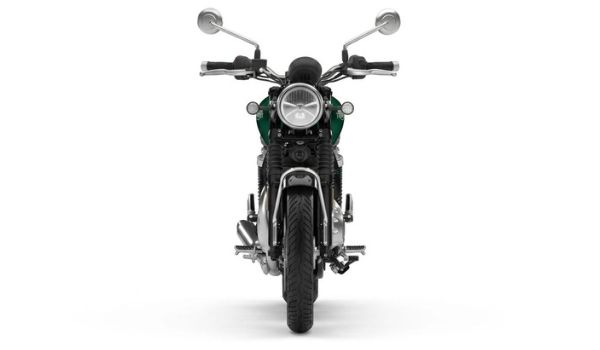
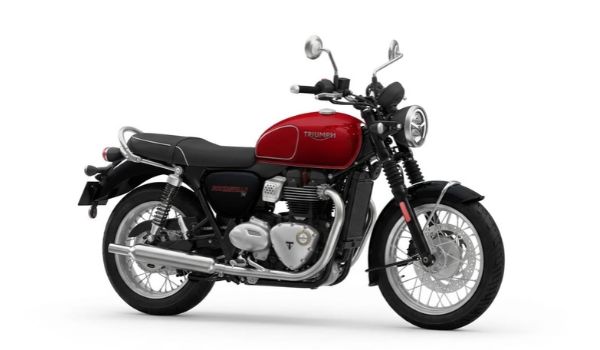
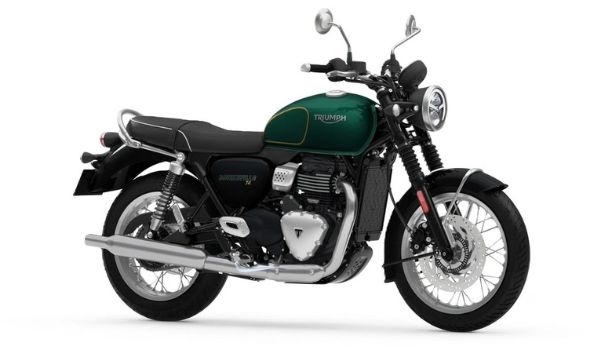
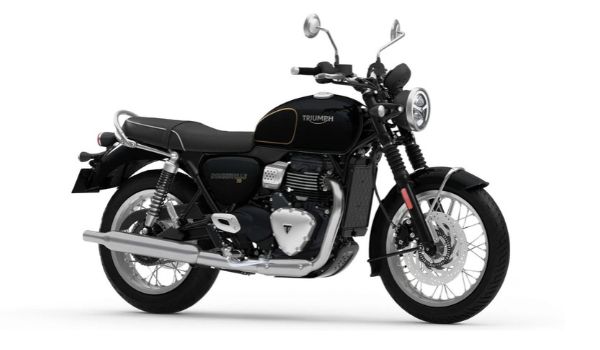
The India-spec Bonneville T4 comes in Phantom Black, Carnival Red, and Competition Green. Each colour has its own tank accents and branding details.

Colour option Main colour treatment Contrasting details
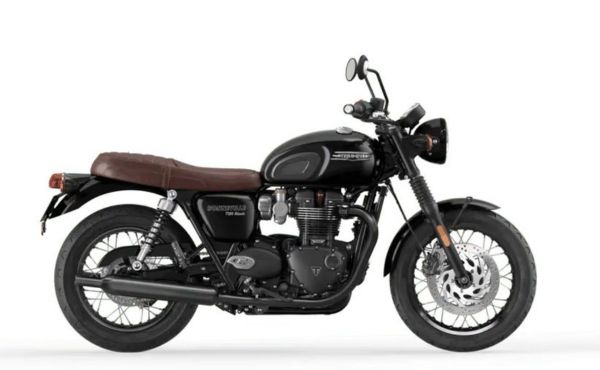
Phantom Black Single-tone black scheme Golden accent around the sculpted fuel tank.
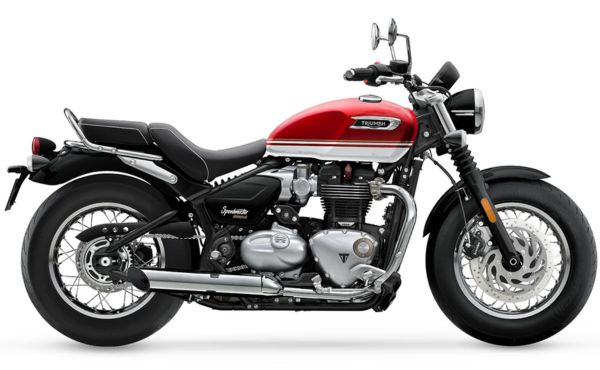
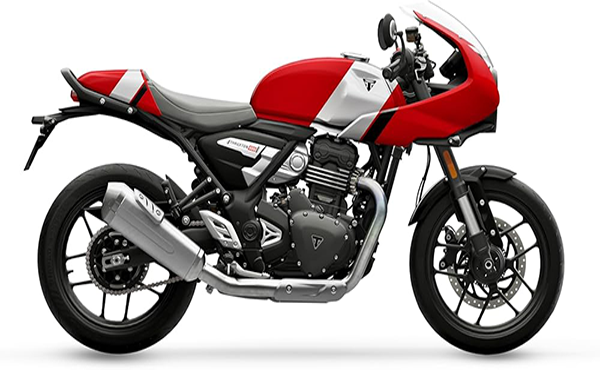
Carnival Red Deep-red fuel tank Grey Triumph logo and accents, with red Bonneville branding on the side panel.
Competition Green Deep-green scheme Golden tank highlights and green Bonneville branding on the side panels.


The Bonneville T4 is part of the larger Bonneville T40 lineup. For the T4, Phantom Black, Carnival Red, and Competition Green are just colour choices, not different equipment versions.

The T4’s three colours should therefore not be described as three different mechanical or equipment variants. They are distinguished by paint treatment and decorative details.

The full range includes the Bonneville T4, Bonneville T40, and Bonneville T40 Black. That’s why some sources list more colour options than the three for the T4 alone.

Name Position within the published range Relevance to the Bonneville T4
Bonneville T4 T4 version, with three single-tone colours The motorcycle covered in this overview.
Bonneville T40 Separately named version in the broader range Its colour schemes should not be included in the T4 colour list.
Bonneville T40 Black Separately named version with its own darker styling treatment It is not an additional black-colour trim of the T4.


All three T4 colours keep the same main design features: the teardrop tank, round headlight, spoked wheels, twin rear shocks, and peashooter silencer. Choosing Phantom Black, Carnival Red, or Competition Green only changes the paint, accents, and branding, not the body design.

Value For Money And Pricing

The Triumph Bonneville T4 starts at ₹ 2,85,039 ex-showroom. At this price, the T4 sits above lower-priced retro motorcycles such as the Royal Enfield Classic 350 and Meteor 350, while also competing for buyers considering the less expensive Speed T4 and Speed 400.

The on-road price covers registration and insurance on top of the ex-showroom price. In Ahmedabad, the T4’s on-road price is ₹2,85,039. This is just an estimate for that city, not for all of India.

There’s a ₹30,040 gap between the ex-showroom and on-road prices. So, if you only budget for the ₹2,54,999 starting price, you won’t cover the Ahmedabad registration and insurance costs. Optional accessories aren’t included in this total.

Triumph offers accessories like low seats, comfort seats, protection bars, and panniers. The official page doesn’t list their prices, so they shouldn’t be counted as part of the standard bike’s value or assumed to be free.

The T4’s value comes from its Bonneville style and its standard features, like a round colour LCD display, turn-by-turn navigation, phone and music controls, ABS, and traction control. It also has full LED lighting and a slip-and-assist clutch. These features help show what you get for the price, not just the brand name.

This doesn’t mean the T4 has the best features for the price in India. It does offer a connected instrument display and electronic rider aids in a classic Bonneville package, but whether that’s worth the extra cost depends on what other bikes you’re looking at.

At the ₹2,54,999 starting price, the T4 is ₹66,065 more than the Classic 350 and ₹53,948 more than the Meteor 350. It’s also ₹44,721 more than the Speed T4 and ₹19,515 more than the Speed 400. These numbers compare starting prices, not fully equipped versions.

The higher price is a big deal for buyers who mainly want the cheapest retro bike. The T4’s value is more about its Bonneville style and features. A lower price doesn’t mean a rival is the same kind of bike, but it does mean it’s cheaper to buy.

The T4 comes with a two-year, unlimited-distance warranty and needs servicing every 12 months or 16,000 km, whichever comes first. These are important things to consider when looking at the full package.

The time limit is important: even if you ride less than 16,000 km a year, you’ll still need a service after 12 months. The schedule doesn’t say how much servicing, parts, or consumables cost. Without those numbers, you can’t say the T4 is cheaper to maintain than its Indian rivals.

The official page doesn’t give a full list of maintenance costs, resale value, or total ownership costs. So, you can’t claim the T4 is the cheapest to own or has the best resale value in its class. It’s easier to judge its value based on the purchase price than on long-term costs.

The following models provide relevant comparisons across retro motorcycles and Triumph’s own lower-priced roadsters.

  1. Royal Enfield Classic 350
  2. Royal Enfield Meteor 350
  3. Royal Enfield Goan Classic 350
  4. Royal Enfield Guerrilla 450
  5. Jawa Perak

Other bikes like the Royal Enfield Goan Classic 350, Royal Enfield Guerrilla 450, and Jawa Perak are also alternatives to the wider Bonneville T40 range. These options go beyond just the cheaper models and matter for buyers looking at different types of bikes in this price range.
You should compare these models using up-to-date, local prices for each version. Just being on an alternatives list doesn’t mean they’re direct replacements for the T4 or that there’s one set price difference across India.

Verdict

The Triumph Bonneville T4 blends classic styling with modern features, bringing the Bonneville name to India’s 350cc motorcycle market. It has a single-cylinder engine, six-speed gearbox, slip-and-assist clutch, colour display, and electronic rider aids, offering more than just a classic look. There are three colour choices and several optional seats and accessories for personalisation. Still, its specs and manufacturer claims should be kept separate from independent reviews on handling, comfort, durability, and real-world fuel efficiency.

The Bonneville T4 costs more than some established alternatives and Triumph’s own Speed models. Its main appeal is for buyers who want the Bonneville design and standard features, not the lowest price. The 195 kg weight, tubed wheels, and extra cost for accessories are important factors. Unconfirmed mileage and incomplete maintenance cost details make it hard to judge long-term value. The T4’s best argument is its well-known style and included technology, not lower ownership costs or proven real-world performance.

Pros

  • Classic Bonneville Design: The T4 keeps the Bonneville’s teardrop tank, spoked wheels, twin rear shocks, and peashooter silencer. Machined engine fins and finned exhaust-header roses add to the classic look. This makes it appealing for buyers who want classic Bonneville style in a smaller bike.
  • Standard Connectivity Package: Triumph offers a 4-inch circular colour LCD display with turn-by-turn navigation, phone controls, and music controls. These features come as part of the standard package, not as extra accessories. You can access the connected functions using the left-hand backlit switch cube.
  • Electronic Rider Aids: The T4 comes with ABS, traction control, electronic throttle control, and selectable riding modes. This gives it a more complete electronic package than bikes with only ABS. Riding modes are confirmed, but the exact number is still to be decided.
  • Comprehensive Lighting Equipment: The T4 features full LED lighting, a signature daytime running light, automatic headlights for low light, and self-cancelling indicators. It also has an emergency deceleration warning. These features are confirmed, but detailed operating thresholds for each function are not available.
  • Lower-Seat Accessory Available: The standard seat height is 790 mm, and an optional low seat brings it down to 770 mm. This gives buyers another choice if they want a lower seat. However, how easily you reach the ground depends on your height and the seat shape, so the numbers do not guarantee flat-footed access.
  • Six-Speed Gearbox and Slip-and-Assist Clutch: The T4 has a six-speed manual transmission and a wet, multi-plate slip-and-assist clutch. These features are included, but there is no independent confirmation of very light clutch effort or completely smooth highway riding.
  • Rear Suspension Adjustment: The T4 has twin rear shock absorbers with spring-preload adjustment and 130 mm of wheel travel. You can adjust the preload for different loads, such as riding with a passenger. How it handles Indian potholes is not known without a road test.

Cons

  • Higher Entry Price Than the Classic 350: The T4’s starting price is higher than the Royal Enfield Classic 350’s ex-showroom price. This means the T4 costs more to start with in this comparison.
  • Less Expensive Triumph Alternatives: The T100 sticks to dual channel ABS and traction control without the more gadget heavy suites (multiple ride modes, cruise control, full colour TFT dash) that some higher spec Indian market nakeds and sport tourers offer.
  • Substantial Weight for a 350cc Motorcycle: The T4 weighs 195 kg wet, the same as the Classic 350, while the Speed 400 weighs 179 kg. The T4 does not have a weight advantage over the Classic 350 and is 16 kg heavier than the Speed 400. However, these numbers do not show how heavy each bike feels when riding.
  • Tubed Wheels: Both spoked wheels on the T4 use tubes. This means it does not offer the convenience of tubeless wheels found on some other bikes. Buyers should not assume the aluminium rims mean the wheels are tubeless.
  • Lower and Comfort Seats Cost Extra: Triumph offers low seats and comfort seats as accessories, along with protection bars and panniers. These are not standard equipment. Buyers who want these extras need to budget for them separately, and prices are not listed on the provided page.

Frequently Asked Questions About Triumph Bonneville T4

1. What Is The Price Of The Triumph Bonneville T4 In India?

The Bonneville T4 starts at ₹2,54,999 ex-showroom. In Ahmedabad, the on-road price is ₹2,85,039, a gap of ₹30,040 that covers registration and insurance. This is an estimate for that city, not for all of India. Accessory prices are not listed on the official page.
2. What Engine And Performance Figures Does The Bonneville T4 Offer?

It has a 350cc liquid-cooled, single-cylinder engine with DOHC and four valves. It makes 29 PS at 7,000 rpm and 31.2 Nm at 5,500 rpm, paired with a six-speed manual gearbox and a wet, multi-plate slip-and-assist clutch. The claimed top speed is 132 km/h. There are no official 0-60 or 0-100 km/h times.

3. What Is The Mileage Of The Bonneville T4?

There is no official or ARAI-certified fuel economy figure yet. An estimate of 27.02 km/l is listed, but it is not an official or tested result. The 32-32.5 km/l figure applies to the wider Bonneville T40 range, and the roughly 30 km/l figure belongs to the Speed T4, which is a different model.

4. What Features Does The Bonneville T4 Come With?

Standard features include a 4-inch round colour LCD display (not a touchscreen), turn-by-turn navigation, phone and music controls, ABS, traction control, electronic throttle control, selectable riding modes, and full LED lighting with a daytime running light. It also has self-cancelling indicators and an emergency deceleration warning. Optional accessories include low seats, comfort seats, protection bars, and panniers.

5. What Colours Is The Bonneville T4 Available In, And Are They Different Variants?

It comes in Phantom Black, Carnival Red, and Competition Green. These are only paint and branding choices, not different mechanical or equipment variants. The T40 and T40 Black are separately named versions, and their colours should not be counted among the T4’s.

Other Related Links From Bikeleague India

List Of All Triumph Bikes

About Triumph Bikes

Triumph Motorcycles , a well-known British brand with more than 125 years of history, has made a strong mark in India’s premium motorcycle market since arriving in November 2013. Starting as a premium import, Triumph has grown to become its largest market by volume in India, helped by a key partnership with Bajaj Auto that made the brand more accessible. Today, there are over 1 lakh Triumph motorcycles on Indian roads, more than 230 dealerships in over 200 towns, and India-made 400cc bikes are exported to 18 countries.

History And Growth

Entry Into India (2012-2013)

Triumph first appeared in India at the 2012 Auto Expo in Delhi, where it displayed its premium motorcycles. The company began selling bikes on November 28, 2013, launching 10 models priced from ₹5.7 lakh to ₹20 lakh (ex-showroom). Triumph started out with just one dealership in Bengaluru, importing fully built motorcycles.

Early Growth Phase (2013-2018)

In the first four years, Triumph expanded quickly:

  1. Dealership network: Grew from 1 to 14 dealerships across 14 cities
  2. Customer base: Served 4,500 proud customers by 2017
  3. Model lineup: Expanded from 10 to 16 motorcycles across five categories (Modern Classics, Roadsters, Supersports, Adventure & Touring, and Cruisers)
  4. Assembly: Began assembling motorcycles locally at the Manesar facility in Haryana, which helped keep prices competitive with European and Japanese brands.

By 2018, Triumph had more than 5,000 customers and was present in 16 cities, making it one of the fastest-growing premium motorcycle brands in India.
The Bajaj Auto Partnership Era (2019-present)

A major partnership with Bajaj Auto, announced in August 2017 and formalized soon after, changed Triumph’s business in India:

  1. July 2023: Launch of first locally manufactured mid-capacity Triumph motorcycles (Speed 400 and Scrambler 400 X) at Bajaj’s Chakan plant
  2. Bajaj takes over sales and operations: Bajaj took over sales and operations in April 2023, making Triumph motorcycles more accessible to a wider market.
  3. Rapid growth: Triumph sold over 1 lakh motorcycles in just 2.5 years after launching the 400cc range.
  4. Network expansion: The dealership network grew from 14 in 2017 to over 230 outlets in more than 200 towns by 2026.

Key Milestones And Developments

Sales Milestones

Milestone Year Significance
10 models launched 2013 Official market entry
4,500 customers 2017 4 years of operations
5,000+ customers 2018 5 years milestone
1 lakh motorcycles March 2026 Within 2.5 years of 400cc launch

Product Launches And Developments

  1. 2013: Initial launch of 10 models (Bonneville, Street, Speed, Daytona ranges)
  2. 2018: Six new motorcycles planned for launch, including updated and all-new models
  3. 2023: Speed 400 and Scrambler 400 X – first India-developed, globally exported Triumph motorcycles
  4. April 2026: New 350cc range confirmed launch (downsized from 400cc to fit lower GST bracket)
  5. May 2026: “Triumph Unleashed 2026” – new motorcycle reveals showcasing innovation

Technology And Engineering Achievements

  1. Moto2™ Engine Supplier: Since 2019, Triumph has provided race-tuned 765cc engines to the FIM Moto2™ World Championship, setting 16 lap records and achieving the first 300KPH top speed
  2. Shared R&D: Collaboration with Bajaj Auto enables shared engineering, research, and manufacturing capabilities
  3. GST Optimisation: Triumph downsized engines to 350cc for the Indian market, which means an 18% GST rate instead of 40% for bikes above 350cc.

Manufacturing Facilities

Global Manufacturing Footprint

Triumph operates four global manufacturing and assembly facilities:

  1. Hinckley, UK (Headquarters) – Primary manufacturing
  2. Thailand – Two facilities (Factory 3 opened in 2002, Factory 5 opened in 2007)
  3. Brazil – Assembly plant (opened 2012)
  4. India – Assembly and manufacturing hub

India Manufacturing Operations

Facility Location Purpose Status
Manesar Gurgaon-Manesar, Haryana CKD assembly of 90% of India-sold motorcycles (800-1200cc models) Operational since 2014
Chakan Pune, Maharashtra Full manufacturing of 400cc mid-capacity bikes for India and global export Operational since 2023
Narasapur (planned) Kolar district, Karnataka Full-scale manufacturing facility (40 acres on Bangalore-Chennai highway) Land acquired, planned as third global location

Key Manufacturing Facts

  1. 90% localisation: Most motorcycles sold in India—about 90%—are assembled from Completely Knocked Down (CKD) kits at the Manesar plant.
  2. Global export hub: India-made 400cc bikes exported to 18 global markets
  3. Strategic vision: India is set to become a global manufacturing hub for emerging markets.
  4. Production target: Bajaj Auto aimed for 10,000 units/month by September 2024,

Market Position And Achievements

Market Leadership

India is now Triumph’s biggest market in the world by sales volume. The brand has reached a wide customer base here:

Metric Achievement Year
Sales milestone 100,000+ motorcycles on Indian roads March 2026
Dealership network 230+ retail outlets 2026
Geographic reach 200+ towns covered 2026
Growth rate 10-12% annual growth target Ongoing
Monthly production target 10,000 units FY2025

Premium Segment Dominance

  1. One of the fastest-growing premium motorcycle brands in India
  2. Established as one of the major premium motorcycle manufacturers in the country
  3. Strong presence in the premium entry-level segment with 400cc range
  4. Strategic importance: India remains a key market for Triumph, as it is the world’s largest two-wheeler market.

Brand Achievements

  1. 1 lakh sales in 2.5 years: Triumph reached this milestone faster than ever after partnering with Bajaj.
  2. Global export success: India-made bikes exported to 18 countries, demonstrating global quality standards
  3. Customer endorsement: Triumph’s modern classic motorcycles and engineering have received strong support from customers.
  4. Premium ecosystem: Triumph is committed to building India’s premium motorcycle scene through special events and top-quality service.

Financial Performance

  1. Global turnover: ₹3,756 crores worldwide (7.6% increase)
  2. Investment: Triumph continues to invest heavily in backend operations and local sourcing.

Future Plans

Network Expansion

  1. Target: Triumph aims to have more than 350 touchpoints by FY27, up from over 230 now.
  2. Geographic reach: Triumph plans to expand further into smaller towns and Tier-2 and Tier-3 cities.
  3. Experience Centres: Triumph will keep developing premium service and experience centers.

Product Pipeline

Timeline Plan Strategic Purpose
April 2026 Launch of new 350cc range GST optimization (18% vs 40%)
2025-2026 Upcoming bikes blending classic aesthetics with cutting-edge innovation
Ongoing New street bikes in 400cc segment with new designs and price points
Future Potential replacement of 400cc lineup with 350cc for Indian market

Strategic Initiatives

Gst 2.0 Adaptation:

  1. Triumph is downsizing engines to 350cc by reducing stroke and adjusting timing. This helps keep prices competitive while maintaining a premium image.

Manufacturing Hub Expansion:

  1. Triumph is working to make India an even stronger global manufacturing hub.
  2. Potential full-scale manufacturing at the Karnataka facility
  3. The company is increasing local sourcing to keep prices competitive.

Premium Ecosystem Development:

  1. Triumph is focused on strengthening the premium motorcycle ecosystem in India.
  2. Specialised rider events and community engagement
  3. Triumph is building a world-class service infrastructure.

Market Volume Goals:

  1. Triumph plans to build on the success of its 400cc models.
  2. Aiming for 350 touchpoints shows Triumph’s confidence in continued growth.
  3. Triumph plans to leverage India’s status as the world’s largest market to drive further expansion.
  4. Technology And Innovation:

  1. Triumph will keep working with Bajaj Auto on shared research and development.
  2. The company plans to use Moto2™ racing technology in its road bikes.
  3. Triumph aims to keep its high engineering standards while making bikes more affordable.

Long-term Vision

The Bajaj-Triumph partnership looks set to keep growing, with both companies focused on:

  1. Making premium motorcycles accessible to more Indian riders
  2. Maintaining Triumph’s British heritage while adapting to the Indian market needs
  3. Positioning India as the global hub for mid-capacity premium motorcycle manufacturing
  4. Sustaining 10-12% annual growth in the Indian market

Other Related Articles From Bikeleague India

  1. Triumph Tiger 900 Rally Pro
  2. Triumph Tiger 900GT
  3. Triumph Street Triple 765 R
  4. Triumph Bonneville T120
  5. Triumph Speed Twin 900

User Reviews

0
0 out of 5 stars (based on 0 reviews)
Excellent
Very good
Average
Poor
Terrible

There are no reviews yet. Be the first one to write one.

Hiran Narayanan - Founder & CTO, Bikeleague India

Hiran Narayanan

Founder & CTO at Bikeleague India

Hiran Narayanan is the Founder and CTO of Bikeleague India, bringing over 15 years of experience in motorcycle technical writing. He develops detailed analyses, tools, model overviews, and blogs that contribute to bikeleague.in's improving rankings.

Core Expertise
Two-wheeler Technical & Blog Content Writing Petrol Motorcycle Analysis Electric Motorcycle Analysis Petrol Scooter Analysis Electric Scooter Analysis WordPress & SEO