
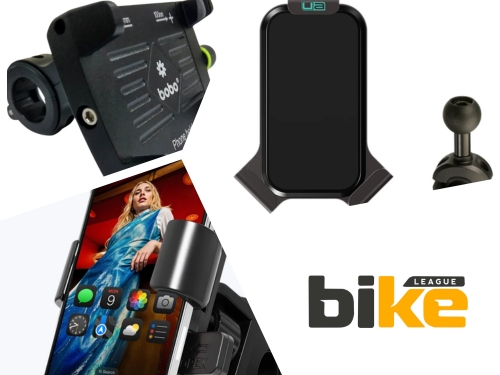
Long story short – In short, a good motorcycle phone mount keeps your phone safe, protects it from vibration, and lets you check navigation easily without distracting you or creating a safety risk. This guide explains the different types of mounts, what to consider before buying, safety and legal tips for Indian riders, installation advice, and answers to common questions.
Phones are now essential for many Indian motorcycle riders, whether for navigation, fitness tracking, or music. Because of this, having a sturdy phone mount is almost as important as wearing a helmet. But not all mounts sold online can handle real-world conditions like potholes, heavy rain, and highway vibrations. This guide explains the types of motorcycle phone mounts available in India, helps you choose one that fits your riding style, and shows you how to use it safely.
Key Takeaways
- Pick a mount based on where you want your phone to be visible. Handlebar, mirror stem, and fork stem mounts each work best for different riding styles.
- Grip strength matters as much as vibration damping. Cheap mounts without dampers can make your phone’s camera shake or the screen flicker over time.
- If you ride during the monsoon, check if your mount has IP or splash resistance. Choose a mount with a locking mechanism instead of just friction clamps.
- Using a phone mount does not make it legal to hold your phone while riding in India. These mounts are meant for quick navigation checks, not for making calls or typing.
- Magnetic mounts are simple to use, but it’s best to add a safety strap as a backup. For highways, rough roads, or off-road riding, pick a mount with a secure mechanical lock like a quarter-turn or locking cradle.
Quick Picks: Best Bike Mobile Holders In India
How we selected these mounts: We compared mounting security, vibration control, weather protection, phone compatibility, installation complexity, charging features, price, availability in India, and suitability for common use cases such as commuting, touring, scooter use, and rough roads. Prices and availability can change, so verify the latest listing, warranty, and fitment before ordering.
| Category | Our Pick | Why |
|---|---|---|
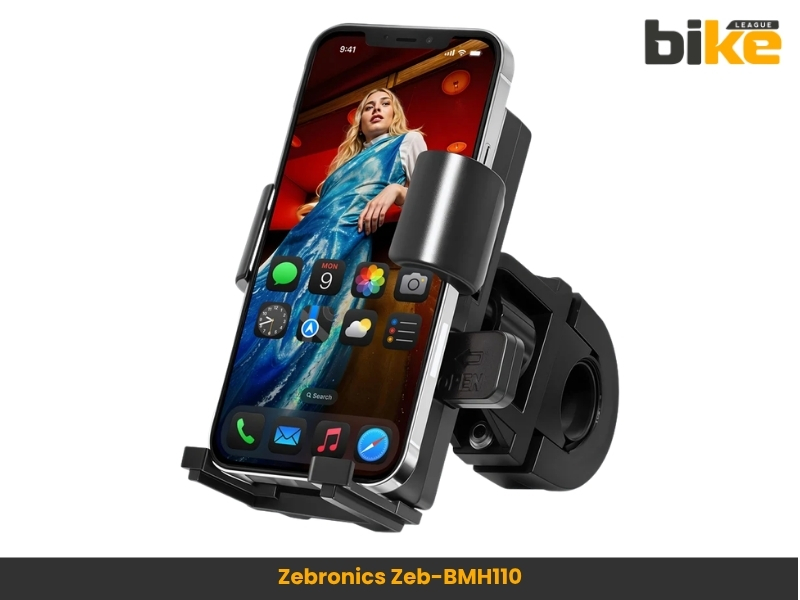
| Best Budget | Zebronics Zeb-BMH110 | A low-cost 360° clamp option for occasional city navigation; check phone-size fitment and retention strength before purchase |
| Best enclosed rain-protection option | Rynox Shark Stormproof Mobile Mount | An enclosed pouch-style option intended to offer better rain protection than an exposed cradle. Confirm the exact stormproof/water-resistance claim on the current listing. |
| Best for Touring | BOBO BM11H Pro with Wireless Charging | Listed with a vibration damper and onboard charging for long highway stretches; confirm the exact variant and specs before ordering |
| Best for Scooters | BOBO BM10M Mirror-Mount Pouch | A mirror-mount pouch-style option that may suit scooters with limited handlebar space; verify mirror-stem and phone-size compatibility before purchase |
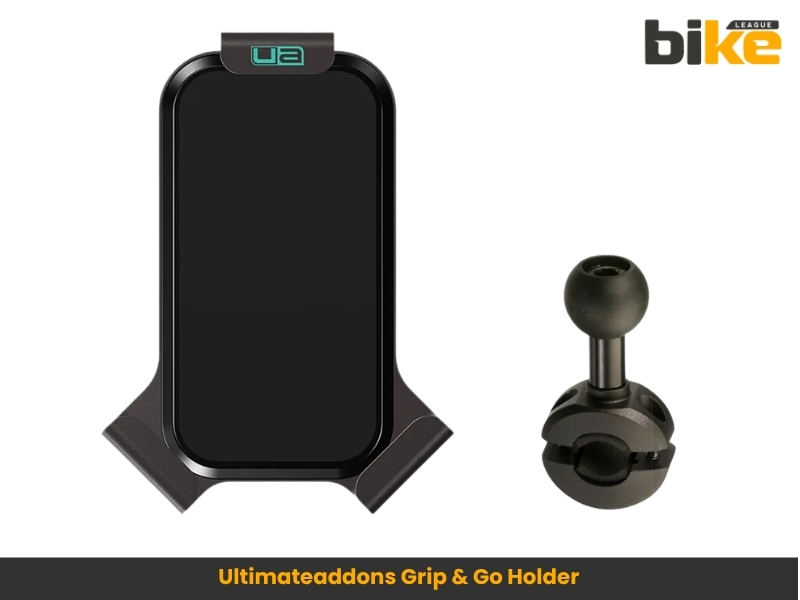
| Best for Rough Roads / Off-Road | Ultimateaddons Grip & Go, Holder | A premium metal ball-mount system that may suit riders seeking a rugged setup; confirm the exact mount, clamp, phone holder, and vibration-control accessory before purchase |
| Best Wireless-Charging Mount | BOBO BM11H Pro | Listed with wireless charging; confirm the exact product variant, power rating, input requirement, and phone compatibility before ordering |
More detailed specifications, prices, and links to buy each of these are in the product table further down in the guide.
What Is A Motorcycle Phone Mount?
A motorcycle phone mount is a bracket and holder fitted to the handlebar, mirror stem, fork stem, or fuel tank to keep your smartphone in sight and steady while you ride. Typically, these mounts include a base clamp, an adjustable arm or ball joint, and a cradle or magnetic plate to hold the phone.
Phone Mount Vs Tank Bag Pocket Vs Bluetooth Voice Prompts Vs Dedicated Gps
You don’t have to use a phone mount if you don’t want to. Here’s a comparison with other common methods, in case you’re not sure if you need one.
| Option | Visibility | Weather/Vibration Risk | Best For |
|---|---|---|---|
| Handlebar/Stem Phone Mount | High — direct sightline | Moderate to high, depending on damping and weatherproofing | Riders who want visual turn-by-turn guidance in daily use |
| Tank Bag Phone Pocket | Low — requires looking down and away from the road | Low vibration exposure, decent weather cover | Tourers who mainly need occasional glance-checks, not constant viewing |
| Bluetooth Intercom Voice Prompts | None — audio-only; phone can stay in a pocket or tank bag | No mount-related vibration risk to the phone at all | Riders who prioritise eyes-on-road time and minimal visual distraction |
| Dedicated GPS Unit (e.g. Garmin Zumo) | High — purpose-built, sunlight-readable screen | Built for vibration and weather from the factory | Serious tourers who don’t want to risk their primary phone on the bars |
If you mainly need spoken directions instead of a map, a Bluetooth intercom with voice prompts helps you avoid camera vibration and the theft risks of mounting your phone. But if you want visual guidance, real-time traffic updates, or need your phone visible for calls or music, a mount is still the better option.
Is It Legal To Use Phone Mounts When Riding In India?
A phone mount does not grant a rider the right to use their phone while the motorcycle is in motion. Set your route before you begin, use the display only for short navigation checks, and do not type, scroll, make handheld calls, or watch videos while riding.
Traffic laws can differ by state and locality, so riders should follow local regulations and avoid any phone use that takes their attention away from controlling the motorcycle. Although consumer advice on Indian road rules usually identifies holding or interacting with a phone as the main risk, local enforcement practices and associated penalties may still vary.
Separately, wearing earphones or a headset while riding is regulated on its own in several Indian states, independent of phone mounts — check your state’s specific rule if you plan to use audio for navigation prompts.
Types Of Motorcycle Phone Mounts
The main types of motorcycle phone mounts sold in India are:
1. Handlebar Clamp Mounts
They attach directly to the handlebar tube, typically near the clutch or brake lever attachment. They are the most common and cheapest choice, with universal fits available for most Indian commuter and naked bikes.
Pros: Easy to install, widely available, works on almost any handlebar diameter.
Cons: Can obstruct switchgear on narrower handlebars; sits close to vibration-heavy areas.
2. Mirror Mount / Mirror Stem Mounts
These replace or clamp around the mirror stem, placing the phone slightly higher and further from switchgear clutter. Popular on scooters and commuter bikes where handlebar space is tight.
Pros: Doesn’t crowd the handlebar, good sightline on scooters.
Cons: Can vibrate more than handlebar mounts since mirror stems flex; not ideal on bikes with weak mirror threads.
3. Stem Mounts (fork/steering Stem)
These bolt onto the top fork clamp or steering stem, common on sport and adventure bikes. They sit low and central, directly in the rider’s natural line of sight.
Pros: Very stable, minimal vibration transfer, doesn’t block switches.
Cons: Installation is more involved, and fitment is bike-specific rather than universal.
4. Magnetic Mounts
Magnetic mounts use a metal plate stuck to the phone or case, held by a strong magnet on the bike-side bracket. They allow one-second attachment and release.
Pros: Fastest to use, no cradle arms blocking the screen edges.
Cons: Relies entirely on magnet strength and plate adhesive quality; budget magnetic mounts risk the phone detaching on rough roads.
5. Tank / Fuel Cap Mounts (navigation Pouches)
These use a magnetic or strap-on base fixed to the fuel tank and hold a clear pouch that fits the phone. Common among touring riders.
Pros: Large, stable surface; keeps the phone below eye line and out of the wind.
Cons: Not usable on plastic-tanked bikes with magnetic versions; strap-on versions can scratch paint over time.
6. Wireless Charging Mounts
These combine a clamp or magnetic mount with a built-in wireless charging coil, wired to the bike’s battery or a USB port, so the phone charges while mounted.
Pros: Solves battery drain from GPS and screen-on navigation.
Cons: Requires wiring work, costs more, and heat build-up in Indian summers can trigger charging cut-offs on some phones. If you’d rather not wire into the bike’s electrics, a separate handlebar-mounted power bank holder paired with a non-charging mount is a common workaround, though it adds bulk.
You may occasionally see adhesive-only mounts marketed for phones, common on car dashboards. These aren’t a standard choice for motorcycles — engine and road vibration tends to work adhesive bonds loose over time — so stick to a clamp-based or magnetic mount with mechanical retention as the primary hold.
Can A Motorcycle Phone Mount Damage Your Phone Camera?
Yes, this is a real risk and not just marketing from vibration-damper sellers. Many premium smartphones have optical image stabilisation (OIS) or closed-loop autofocus. These camera parts are delicate and can be damaged by long-term, strong vibrations. High-frequency engine and road vibrations, especially from single-cylinder bikes and rough roads, can wear out or misalign these parts after months of daily use. Signs of damage include blurry or shaky video, a faint rattle from the camera, or autofocus that struggles more than before.
Apple has warned that exposing iPhone cameras to strong vibrations, like those from motorcycle engines, can affect image stabilisation and autofocus. This is a real, manufacturer-recognized risk. While a vibration damper can lower the risk, it does not remove it completely.
How To Reduce Phone-camera Vibration Damage
- Choose a mount with a dedicated vibration damper, rubber-isolated cradle, or shock-absorbing interface, not a rigid metal-to-metal connection.
- For highway and long-distance use, prefer a positive-locking mount over a basic spring clamp.
- Avoid rigid, direct mounting of expensive OIS-equipped phones on high-vibration motorcycles for long periods.
- Check that the mount remains tight after rough-road rides — a loose clamp can amplify vibration rather than isolate it.
- If camera protection is your highest priority, use Bluetooth navigation prompts, a tank-bag phone pocket, or a dedicated GPS unit instead of mounting your primary phone rigidly on the handlebar.
- A vibration damper reduces camera-vibration risk but doesn’t guarantee a phone camera will never be affected.
Motorcycle Phone Mount Compatibility By Popular Indian Bike Models
This table provides general starting points, but fitment isn’t guaranteed. Different motorcycle models, years, aftermarket handlebars, windscreens, brake reservoirs, and accessory bars can all affect where you can mount your phone. Always measure the available space on your own bike and check the manufacturer’s supported diameter before you order.
| Bike Model | Handlebar/Mount Point | Recommended Mount Type | Notes |
|---|---|---|---|
| Royal Enfield Classic 350 | ~22mm handlebar, thick switchgear cluster | Offset handlebar clamp or accessory crossbar | Verify available central-bar and steering-head clearance before choosing a universal stem mount |
| Royal Enfield Hunter 350 | ~22mm handlebar, compact cockpit | Compact handlebar clamp or mirror-stem mount, depending on available clearance | Narrower bars leave less clamp room than the Classic |
| Royal Enfield Himalayan 450 | Tall handlebar, windscreen present | Stable crossbar or handlebar location clear of the instrument console | Avoid a long-arm mount above the windscreen — it can obstruct forward vision and worsen vibration |
| KTM Duke / Adventure range | Tapered bar or triple clamp, layout varies by model | Centre crossbar or model-specific clamp; verify stem compatibility | Duke and Adventure models can have different cockpit layouts — check bar-riser/crossbar space for your exact model |
| Hero Xpulse 200 4V | Slim off-road-style handlebar | Mechanical locking clamp with vibration damper and optional safety tether | Off-road terrain adds vibration and impact loads a basic clamp may not handle |
| TVS Apache RTR / RR series | Standard bar on RTR, clip-ons on RR | Handlebar clamp (RTR) or stem mount (RR) | RR’s clip-ons leave little room for a bulky clamp mount |
| Yamaha R15 M | Clip-on bars, faired cockpit | Low-profile stem mount | Avoid mounts that block the instrument console behind the R15’s fairing |
| Yamaha MT-15 Ver 2.0 | Conventional handlebar, naked cockpit | Handlebar clamp or stem mount | More clamp-mount room than the R15 thanks to the non-faired layout |
| Bajaj Pulsar series | Standard ~22mm bar | Handlebar clamp mount | Widely compatible with universal clamp mounts |
| Honda Activa and similar scooters | Scooter handlebar with limited depth | Mirror-stem mount | Handlebar clamps often clash with the horn/indicator switch housing |
| Ola S1 Pro / Ather scooters | Compact handlebar, digital dash already present | Mirror-stem mount or small clamp mount | Position away from the built-in display so both stay visible |
How To Choose The Right Phone Mount?
| Feature | Why It Matters | What to Check |
|---|---|---|
| Vibration Damping | Protects phone camera and screen from micro-vibration damage | Rubber/silicone dampers, ball-joint isolation, reviews mentioning shake |
| Locking Mechanism | Prevents the phone from popping out on bumps | Quarter-turn lock or spring clamp with safety latch; treat a magnet plus tether only as secondary retention for smoother-road use |
| Weather Resistance | Monsoon riding exposes phone and mount to water | IPX rating on the case/pouch, drainage design, rust-resistant hardware, and whether the cradle’s width range still fits once a waterproof case is on |
| Build Material | Determines long-term durability under heat and vibration | Aluminium or reinforced nylon over thin ABS plastic |
| Phone Size Range | Case and cradle mounts need to fit your specific phone/case | Adjustable width range, compatibility with your phone’s dimensions and case |
| Mounting Point Fit | Universal clamps don’t fit every handlebar or stem | Confirm handlebar diameter or mirror thread size before buying |
What To Buy By Budget
Under ₹1,000
For example, you can get a basic clamp mount made from ABS plastic with a spring-loaded claw grip, such as the Zebronics Zeb-BMH110. This type is fine for occasional city navigation on a tight budget, but avoid using it during the monsoon if your phone is exposed in the holder.
₹1,000–₹2,500
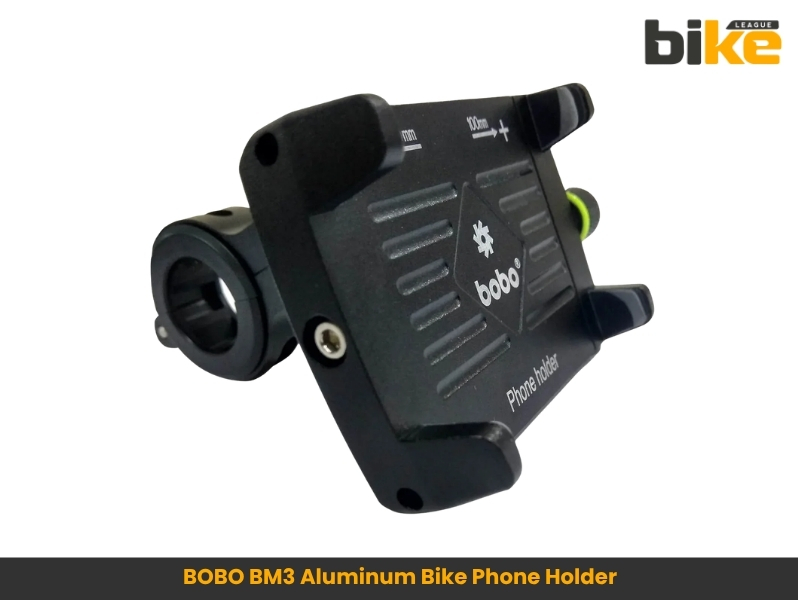
This range includes mid-priced aluminium clamp and claw-grip mounts, such as the BOBO BM3 and the Grandpitstop Claw-Grip Holder, as well as more basic enclosed rain-protection models like the Rynox Shark Stormproof Mount; in this case, look for a locking latch and at least basic weather sealing.
₹2,500–₹5,000
You can get mirror-mount navigation pouches (BOBO BM10M) and premium vibration-damped mounts with wireless charging (BOBO BM11H Pro), which are worth buying if you are a daily commuter who rides in all weather conditions or a tourer who needs their phone charged on long rides.
Premium (₹5,000+)
Ball-mount systems imported from abroad, for example Ultimateaddons, fall into this category, as do global ecosystems such as RAM Mounts, Quad Lock, and SP Connect if they are imported or purchased via authorised Indian resellers. These are appropriate for riders who want the best possible ruggedness and long-term build quality and are prepared to pay the import prices.
Which Brands To Look For
BOBO and Zebronics cover most budget-to-mid-range clamp and pouch mounts sold in India; Rynox is known for weatherproof pouch mounts; and Ultimateaddons, RAM Mounts, Quad Lock, and SP Connect (imported or via authorised resellers) lead the premium ball-mount segment. Brand alone isn’t a guarantee of quality — check the specific model’s locking mechanism and recent buyer reviews before ordering.
Recommended Mounts By Riding Scenario
| Riding Scenario | Recommended Mount Type | Key Features to Look For |
|---|---|---|
| Daily city commuting | Handlebar clamp or mirror mount | Quick-release, budget-friendly, easy to remove when parking |
| Monsoon commuting | Enclosed rain-protection pouch or a manufacturer-rated waterproof case mount | Sealed pouch or verified IP-rated case, rust-resistant clamp, protected charging port and drainage design |
| Highway touring | Stem mount with wireless charging | Vibration dampers, locked cradle, charging support |
| Adventure / off-road | Mechanical locking mount or enclosed weatherproof pouch, with a safety tether | Positive locking mechanism, vibration damper, robust clamp, protected phone edges, tether as secondary retention |
| Sport riding | Stem or triple-clamp mount | Low profile, doesn’t obstruct instrument cluster view |
Five Questions To Ask Before You Buy
- What’s my handlebar or mirror-stem diameter? Measure it — don’t guess — before ordering a clamp-based mount.
- Do I ride in the rain regularly? If yes, rule out anything without at least a sealed pouch or IPX-rated housing.
- Does my phone have OIS or a flagship camera I want to protect? If yes, prioritise a damped mount or an enclosed pouch over a rigid clamp.
- Do I need charging on the move? If your rides regularly exceed 2–3 hours with navigation running, a wired or wireless charging mount is worth the extra cost.
- What’s my realistic budget? Match your answer against the budget-tier breakdown above rather than buying the cheapest option and upgrading twice.
Best Motorcycle Phone Mounts In India (2026)
Here are some motorcycle phone mounts actually sold in India across budget, mid-range, and premium price points. Treat the retention, damping, and weather-protection details below as a starting point drawn from current listings — confirm the exact rating, mechanism, and included accessories on the live product page before ordering.
Prices and specifications last checked: 23 September 2026.
| Product | Best For | Mount Style | Phone Retention | Vibration Control | Rain Protection | Charging | Fitment to Verify | Approx. Price | Main Limitation |
|---|---|---|---|---|---|---|---|---|---|
| Zebronics Zeb-BMH110 | Occasional city navigation on a tight budget | Handlebar clamp | Spring claw grip — confirm exact locking mechanism | Basic or none | Phone stays exposed | No | Bar diameter and case thickness | ₹699 | Not ideal for rain or high-vibration, long-distance use |
| BOBO BM3 Aluminium Mobile Holder | Budget metal-clamp buyers | Handlebar clamp | Confirm exact model mechanism on the listing | Confirm actual damper design before buying | Confirm the seller’s current weather claim | No | Bar diameter, phone width, and thickness | ₹1,400-₹1,800 | Product variants can differ by seller |
| Grandpitstop Claw-Grip Aluminium Holder | Riders wanting a wide universal claw-grip fit | Claw-grip handlebar mount | Expandable claw grip — confirm max opening width | Confirm actual damper design before buying | Confirm the seller’s current weather claim | No | Bar diameter and phone/case dimensions | ₹1,200-₹1,400 | Claw grips leave phone edges less protected than an enclosed pouch |
| Rynox Shark Stormproof Mobile Mount | Rain-priority riders | Enclosed pouch mount | Pouch closure | Air-gap/shock-reduction design if specified by the seller | Weather-protection design — verify the current claim on the listing | No | Internal pouch dimensions and mounting point | ₹1,500–₹2,000 | Less convenient screen interaction and may retain heat |
| BOBO BM10M Mirror-Mount Pouch | Scooters and rain-conscious commuters | Mirror/stem pouch | Enclosed pouch closure | Depends on installation and mirror-stem rigidity | Verify the exact weather claim on the listing | No | Mirror-stem fitment and phone dimensions | ₹2,000-₹2,300 | Mirror stems can transmit more vibration than a handlebar clamp |
| BOBO BM11H Pro | Touring and on-the-move charging | Handlebar charging mount | Confirm exact locking system on the listing | Listed vibration controller — confirm variant included | Confirm exact IP/weather rating from the seller | Wireless — confirm wattage and variant | Bar diameter, USB power input, and phone size | ₹4,500-₹5,000 | Higher cost and possible heat during charging |
| Ultimateaddons Grip & Go Holder | Premium rugged setup | Ball-mount system | Confirm holder type in the chosen attachment kit | Depends on the chosen ball-mount arm and base | Depends on chosen holder/case combination | Optional, depending on setup | Bike-specific mounting hardware | ₹5,000+ (imported) | High price and possible import/warranty limitations |
Note: These listings reflect availability at the time of writing. Brand, price, and seller details on marketplaces can change without notice, so always verify current specs, warranty, and fitment before buying.
How To Install A Motorcycle Phone Mount?
- Pick the mounting point: Confirm the clamp diameter matches your handlebar, mirror stem, or fork clamp before you fit it.
- Position for sightline: Mount the phone where you can glance at it without tilting your head far from the road — usually slightly below the mirror line.
- Torque the clamp evenly: Tighten in small increments on both sides to avoid cracking plastic clamps or denting the handlebar.
- Route any charging cable: Zip-tie the cable along existing wiring looms, away from moving parts like the throttle cable or fork.
- Test with a short ride: Ride slowly over a speed bump or rough patch first to confirm the phone doesn’t shift, rattle, or block any switchgear.
60-second Pre-ride Mount Safety Test
Run through this check every time you fit a new mount, and periodically afterward, before trusting it with your phone on the road.
- Confirm the clamp is tight: The mount should not rotate or slide when you push it firmly by hand.
- Check full steering lock: Turn the handlebar fully left and right. The phone, mount, and charging wire must not hit the tank, windscreen, brake reservoir, or fairing.
- Check instrument visibility: The speedometer, warning lamps, fuel gauge, and turn-indicator display must remain visible.
- Confirm phone retention: Lock the cradle, latch, or quarter-turn mechanism, then pull the phone gently in every direction.
- Check case compatibility: Make sure the phone stays secure with its everyday protective case fitted.
- Secure the charging cable: Keep the cable away from steering movement, sharp edges, hot engine parts, and the front suspension.
- Use a tether where appropriate: Treat it as backup fall protection, not as the main phone-retention system.
- Inspect after the first 5 km: Stop safely and recheck clamp tightness, phone position, and cable routing after riding over normal road bumps.
Wiring A Charging Mount Safely
If you’re installing a wired or wireless charging mount that taps into the bike’s electrical system, do it properly rather than splicing into the nearest live wire.
- Use an ignition-switched accessory circuit where possible so the mount doesn’t keep drawing power when the motorcycle is parked.
- Fit an appropriate inline fuse close to the power source if the kit doesn’t already include one—typically 1–3A for a phone charger.
- Avoid tapping into an unknown wire or attaching bare wire directly to the battery terminals without protection.
- Use waterproof connectors and heat-shrink insulation, especially if you ride in the monsoon.
- Route the wire with enough slack for full steering movement, but keep it away from the steering head pinch point, exhaust, radiator, and moving suspension parts.
- If you’re unsure, have a competent mechanic or authorised accessory installer do the wiring.
- Check with the dealership before altering factory wiring, particularly on a new motorcycle still under warranty.
A wired charging mount shouldn’t normally cause a major battery-drain issue when connected through switched ignition power. The real risk is leaving an always-live charging module connected for long periods, especially on motorcycles you don’t ride often.
How To Prevent Phone Overheating On A Mounted Ride
Indian summer sun, continuous GPS navigation, mobile data, high screen brightness and wireless charging can create enough heat for a phone to dim its display, slow navigation or pause charging. The risk is highest during hot-weather touring when the phone sits in direct airflow but also direct sunlight.
To reduce this:
- Keep the phone out of direct peak-afternoon sunlight where possible.
- Use a mount with airflow behind the phone instead of a fully enclosed pouch during dry, hot weather.
- Manually reduce screen brightness when navigation stays visible at a lower setting.
- Turn off unnecessary background apps, hotspot use, and high-power features before a long ride.
- Use wired charging if your phone repeatedly overheats while charging wirelessly.
- Stop charging if the phone shows a temperature warning, navigation begins lagging, or the screen dims significantly.
- During extreme heat, carry the phone in a pocket or tank bag and use Bluetooth voice guidance instead.
Protecting Your Phone And Mount From Theft
- Remove the phone at every stop: Even a two-minute stop at a shop is enough for a mounted phone to be lifted — get in the habit of unclipping it every time you park, not just overnight.
- Choose a quick-release holder: A mount with a one-hand quarter-turn or push-button release makes it realistic to actually pocket the phone at each stop, instead of skipping it because it’s a hassle.
- Don’t leave an expensive mount on the bike in public parking: A premium metal mount can be a target on its own; if you’re parking somewhere unattended for hours, consider a mount that unclips easily from its base.
- Use a safety tether only for fall protection, not theft: A tether or lanyard stops the phone from hitting the road if it pops out — it does nothing to stop someone from unclipping it by hand while you’re away from the bike.
How To Clean And Maintain A Motorcycle Phone Mount?
- Wipe down after every dusty or wet ride: A damp cloth on the cradle, clamp, and any rubber dampers keeps grit from working into the moving joints.
- Dry before remounting the phone: Let the cradle air-dry fully after monsoon rides before clipping the phone back in.
- Check fasteners monthly: Vibration works clamp screws and locking mechanisms loose over time — retighten as needed.
- Air out pouch-style mounts: Open zip or Velcro closures after rain rides so trapped moisture doesn’t sit against the phone.
- Inspect rubber dampers for wear: Replace them once they turn brittle or cracked — that’s usually when vibration protection starts to fail.
- Lubricate ball joints sparingly: A little silicone grease (not oil, which attracts grit) keeps adjustable joints moving without drying out.
Safety Tips While Using A Phone Mount
- Set your destination and start navigation before you begin riding, not while moving.
- Rely on voice prompts for turn-by-turn directions instead of watching the screen continuously.
- Never type, call, or scroll on the mounted phone while riding.
- Use a secondary safety tether or lanyard on magnetic mounts, especially on rough roads.
- Turn the phone brightness down or use a matte screen protector to reduce glare and eye strain in daylight.
- Remove the phone when parking in direct sun for long periods to avoid heat-related shutdowns.
Useful Accessories For Motorcycle Phone Mounts
- Safety tether or lanyard: fall protection if the mount fails, not a substitute for a proper lock.
- Silicone or rubber damper insert: retrofits basic mounts with extra vibration isolation.
- Waterproof phone pouch or IP-rated case: for monsoon riding with an open cradle mount.
- Cable clips or zip ties: keep charging cables away from the steering head and moving parts.
- Anti-glare or matte screen protector: cuts daylight glare on the mounted screen.
- Spare mounting adapter: useful if you switch between multiple bikes.
Common Mistakes When Buying And Using Phone Mounts
1. Choosing The Cheapest Clamp-only Mount
Mistake: Buying a basic friction clamp with no locking or damping feature purely for price.
Why it’s risky: Vibration on Indian roads loosens friction clamps quickly, and a phone can fall off mid-ride.
What to do instead: Spend slightly more for a locking or spring-latch mount with rubber dampers.
2. Ignoring Case Compatibility
Mistake: Buying a cradle mount without checking if it fits over your phone’s existing cover.
Why it’s risky: Removing the case every ride to fit the mount is inconvenient and increases drop risk.
What to do instead: Check the mount’s maximum width and thickness rating against your case-on phone dimensions.
3. Mounting Too Close To The Instrument Cluster
Mistake: Placing the phone where it blocks the speedometer or warning lights.
Why it’s risky: You lose visibility of critical ride information like speed and fuel warnings.
What to do instead: Position the mount slightly above or to the side of the cluster, not directly over it.
4. Skipping A Backup Tether On Magnetic Mounts
Mistake: Trusting the magnet alone on bumpy roads or off-road trails.
Why it’s risky: Magnets can lose enough grip on hard impacts to let the phone fall.
What to do instead: Add a simple safety strap or lanyard as a backup, especially for expensive phones.
Common Myths About Motorcycle Phone Mounts
Myth 1: A Mounted Phone Means I Can Legally Use It While Riding
Reality: Mounting only makes the phone visible; actively interacting with it while riding can still attract a traffic fine in most Indian states.
Myth 2: All Mounts Fit All Handlebars
Reality: Handlebar diameters and mirror thread sizes vary by brand and model; always check the mount’s compatible range before ordering.
Myth 3: Magnetic Mounts Are Unsafe On Any Bike
Reality: Magnetic mounts can be convenient for smooth urban riding when they come from a reputable manufacturer and use a secondary retention system. For broken roads, high-speed touring, and off-road riding, choose a mount with a positive mechanical lock rather than relying on magnetic retention alone.
Myth 4: Motorcycle Phone Mounts Can Respond To Voice Commands
Reality: Voice control comes from your phone’s navigation app or a paired Bluetooth intercom, not the mount itself — a mount is purely mechanical hardware with no electronics of its own (beyond a charging coil on wireless-charging models).
Faq On Motorcycle Phone Mounts In India
1. Is It Safe To Mount A Phone On A Motorcycle?
Generally yes, provided the mount has a secure locking mechanism and some form of vibration damping, doesn’t block your view of the instrument cluster, and is used only for quick glances rather than active interaction while riding. The main safety risks come from a cheap clamp that lets the phone detach, or from treating the mount as permission to type or scroll on the move.
2. Is It Illegal To Fit A Mobile Holder On A Bike In India?
No — fitting a phone mount or holder to your motorcycle isn’t itself illegal. What’s restricted is using the phone (holding it, typing, making handheld calls) while the vehicle is in motion. See “Is it legal to use phone mounts when riding in India?” above for how mount use is regulated.
3. Where Should I Mount My Phone On A Motorcycle?
Slightly below or beside the instrument cluster, in a spot you can glance at without turning your head far from the road ahead.
4. Do Phone Mounts Drain My Bike’s Battery?
A phone mount without charging hardware does not draw power from the motorcycle. A wireless-charging phone holder still needs a wired power connection to the bike or USB outlet, so it can draw a small amount of power when active. Connecting it through an ignition-switched circuit helps prevent unnecessary battery drain while parked.
5. Can I Use My Phone Mount In The Rain?
Only if the mount or accompanying case/pouch is rated water-resistant. Standard cradle mounts without a sealed case can let water into charging ports.
6. Is A Magnetic Mount Strong Enough For Highway Speeds?
A magnetic mount from a reputable manufacturer with a secondary locking edge can hold at highway speeds on smooth roads, but magnetic grip alone isn’t the safest primary retention method—pair it with a safety tether, and prefer a mount with a positive mechanical lock for sustained highway or rough-road use.
7. Will A Phone Mount Void My Bike’s Warranty?
Clamp-on mounts that don’t require drilling or wiring changes generally don’t affect warranty. Wired charging mounts that tap into the bike’s electrical system may need to be installed carefully to avoid warranty issues — check with your dealer if unsure.
8. Can A Motorcycle Phone Mount Damage My Phone’s Camera?
It can, over time, if the mount is rigid and undamped — sustained engine vibration can affect optical image stabilisation. Choosing a mount with a rubber or silicone damper and avoiding long rigid mounting on high-vibration bikes reduces the risk. See the camera-protection section above for details.
9. Is It Safe To Leave My Phone On The Mount When I Park?
Not really. A mount keeps the phone secure while riding, not while unattended — unclip the phone at every stop, even short ones, and treat a safety tether as fall protection only, not theft protection.
10. Do Motorcycle Phone Mounts Have Adjustable Viewing Angles?
Most cradle and clamp mounts include a ball joint or multi-axis arm so you can angle the screen toward you. When buying, check that the joint locks firmly in place — a loose joint will let the phone droop or rotate under vibration, which defeats the purpose.
Sources
This guide references the following manufacturer-published source for the camera-vibration risk discussed above:
Official Product Website Links
For the latest specifications, pricing, and warranty terms, refer directly to each brand’s official website rather than third-party listings, which can change without notice.
- Zebronics: zebronics.com
- BOBO: bobogears.com
- Rynox: rynoxgears.com
- Ultimateaddons: ultimateaddons.com
- RAM Mounts: rammount.com
- Quad Lock: quadlockcase.com
- SP Connect: sp-connect.com
- Grand Pitstop: grandpitstop.com
Other Related Articles From Bikeleague India
- What all basic motorcycle accessories should a rider have
- Action camera with mount on helmets – Legal or illegal in India
- Motorcycle Vibrations – Understanding Causes & Solutions
- Motorcycle disc brake – Everything you need to know
- Bajaj Dominar 250
Conclusion
The best motorcycle phone mount in India isn’t always the priciest one. It’s the one that fits your bike, keeps your phone secure with a reliable locking system, handles vibration well, and matches your weather and riding needs.
For short city rides, a simple but secure handlebar clamp should do the job. During the monsoon, pick an enclosed, weather-protected pouch or a waterproof system with a proper rating. For long-distance touring, focus on a good locking mechanism, vibration damping, safe charging, and proper cable routing.
If your main concern is protecting an expensive phone camera, consider using Bluetooth navigation prompts or a dedicated GPS unit instead of mounting your main phone on the handlebar.
If you have more questions, email us at bikeleagueindia@gmail.com or share your thoughts in the comments below.