Overview
Performance And Engine
The RR 310’s 312.2 cc engine has a reverse-inclined design, liquid cooling, four valves, and electronic fuel injection. This setup helps it make peak power at higher revs and keeps engine temperatures in check during Indian traffic and longer rides. The bike is built more for spirited road riding than for slow commuting.
| Engine and performance item |
Specification |
| Engine type |
Single-cylinder, four-stroke, four-valve, liquid-cooled, reverse-inclined |
| Displacement |
312.2 cc |
| Fuel system |
Bosch closed-loop electronic fuel injection |
| Maximum power — Sport/Track |
38 PS at 9,800 rpm |
| Maximum torque — Sport/Track |
29 Nm at 7,900 rpm |
| Maximum power — Urban/Rain |
30 PS |
| Maximum torque — Urban/Rain |
26.5 Nm |
| Claimed 0–60 km/h |
2.82 seconds |
| Claimed 0–100 km/h |
6.74 seconds |
Sport and Track modes give full power for open roads or track riding, letting you use the engine’s high-revving nature. Urban and Rain modes lower the power and soften the response, making the bike easier to handle in city traffic or on slippery roads.
The Apache RR 310 uses a six-speed manual gearbox with a wet multi-plate, seven-plate RT slipper clutch. The gear pattern is one down and five up, and the final drive is by chain.
| Transmission item |
Specification |
| Gearbox |
Six-speed manual |
| Shift pattern |
One down, five up |
| Clutch |
Wet multi-plate, seven-plate RT slipper clutch |
| Final drive |
Chain drive |
| Quickshifter |
Bi-directional quickshifter available on applicable variants |
The slipper clutch helps prevent the rear wheel from slipping during hard downshifts, especially when slowing down for corners. If your bike has the bi-directional quickshifter, you can shift up or down without using the clutch.
The claimed maximum speed is 164 km/h in Sport and Track modes, with other estimates placing it around 160 km/h.
The top speed is the maximum claimed under ideal conditions, but it’s not meant for regular cruising. Riding at high speeds uses more fuel, wears out tyres and brakes faster, and can be tiring. Always follow speed limits and adjust your riding to traffic, road conditions, weather, and local rules.
Mileage And Fuel Efficiency
The Apache RR 310’s certified fuel economy is 34.7 kmpl, and its 11-litre fuel tank gives a theoretical distance of roughly 382 km at this rate, though actual riding range is usually lower.
| Mileage reference |
Reported figure |
Context |
| ARAI mileage |
34.7 kmpl |
Official/standardised fuel-economy reference. |
| Real-world estimate |
30–33 kmpl |
Mixed real-world riding estimate. |
In real-world use, you can expect about 30–33 kmpl, based on owner reports. You might get better mileage on calm highway rides, but heavy traffic, frequent hard acceleration, using Sport or Track mode, hard braking, carrying luggage or a passenger, and rough roads can reduce fuel efficiency.
With an 11-litre tank and 30–33 kmpl, you can expect to travel about 330–363 km before needing fuel, leaving some reserve. The official figure is about 382 km, but real-world city riding may give around 337 km, and highway rides up to 397 km. These are estimates, not guarantees.
Features And Technology
The TVS Apache RR 310 packs features for Indian riders, including a colour TFT display, ride-by-wire throttle, four riding modes, and smartphone connectivity. Higher variants also offer an advanced safety and performance electronics suite with a six-axis IMU.
- 5-inch vertical TFT race computer: The Apache RR 310 uses a vertically mounted 5-inch full-colour TFT instrument display. It presents essential riding information and supports different display themes linked to the selected riding mode.
- TVS SmartXonnect connectivity: The TFT console supports TVS SmartXonnect smartphone connectivity. It lets you access connected functions through the TVS Connect application.
- Turn-by-turn navigation: The display can show navigation guidance, helping riders follow a route without continuously checking a phone. Set the destination before riding and avoid operating the display while the motorcycle is moving.
- Call and notification alerts: With a compatible smartphone paired through SmartXonnect, the TFT can show call alerts and notifications. Riders should view or respond to these only after safely stopping.
- Ride analytics and race telemetry: The connected interface supports ride analytics, while the RR 310 specifications list race telemetry as one of its information functions.
- Ride-by-wire throttle: The motorcycle uses an electronic ride-by-wire throttle system. This allows TVS to manage throttle response and engine behaviour across different riding modes.
- Four riding modes: The Apache RR 310 offers Track, Sport, Urban, and Rain modes. These modes adjust power delivery and ABS settings to better suit open-road riding, ordinary urban use, or reduced-grip conditions.
- Glide Through Technology+: TVS lists Glide Through Technology+ among the RR 310’s features. It is intended to support easier low-speed progress in congested traffic by assisting controlled movement at low rpm. 1574
- Dual-channel ABS: The Apache RR 310 offers dual-channel ABS. It helps prevent wheel lock under heavy braking by monitoring both wheels, though it does not remove the need for controlled braking, proper following distance, or appropriate speed.
- Race Tuned Dynamic Stability Control: The enhanced RT-DSC electronics suite is available on applicable higher variants or packages. It uses a six-axis IMU and expands the RR 310’s safety and control functions.
- Six-axis IMU: The RT-DSC system uses a six-dimensional inertial measurement unit. It enables the motorcycle to account for lean angle and vehicle movement for the related cornering-assistance functions.
- Cornering ABS: On relevant higher variants or packages, cornering ABS is available as part of RT-DSC. It assists braking while the motorcycle is leaned into a corner; it does not override the limits of tyres, road grip, rider inputs, or physics.
- Cornering traction control: The enhanced package includes cornering traction control, which regulates engine torque to help reduce wheelspin while accelerating out of a corner.
- Cornering cruise control: On equipped versions, the motorcycle’s cruise system works with the IMU to reduce speed automatically during a corner and return toward the set speed after the motorcycle exits the turn.
- Cruise control: Cruise control is included with the advanced electronics package on applicable variants. It can be convenient during steady-speed riding on suitable, open roads, but it should not be used in dense traffic, rain, poor visibility, broken roads, or routes with frequent hazards.
- Launch control: Launch control is available on equipped RR 310 variants or packages. TVS describes it as an electronic system that optimises throttle input for a controlled start from rest while helping manage wheelspin.
- Wheelie control: Wheelie control is listed as an RT-DSC rider aid for equipped variants. It is designed to manage front-wheel lift under strong acceleration.
- Cornering drag torque control: The feature manages engine braking to help reduce rear-wheel slip while entering or travelling through a corner. It is particularly relevant during downshifts and deceleration.
- Rear lift-off control: Rear lift-off control is part of the advanced RT-DSC suite on equipped variants. It is designed to manage conditions where the rear wheel may become light under very hard braking.
- Slope-dependent control: TVS lists slope-dependent control as part of the RT-DSC feature set. It is intended to account for the motorcycle’s position on an incline as part of the control strategy.
- Bi-directional quickshifter: A bi-directional quickshifter is available on applicable variants or through the relevant package. It enables clutchless upshifts and downshifts, helping maintain momentum during performance riding.
- Tyre Pressure Monitoring System: TPMS is listed among the upgraded RR 310’s features. It lets riders monitor tyre pressure and can help identify abnormal pressure loss, although riders should still inspect tyre condition manually and check pressures when cold.
- Tyre Pressure Monitoring System: TPMS is listed among the upgraded RR 310’s features. It lets riders monitor tyre pressure and can help identify abnormal pressure loss, although riders should still inspect tyre condition manually and check pressures when cold.
- Dynamic rev-limit indication: The instrument system includes dynamic rev-limit indication, intended to help the rider identify the relevant engine-speed limit during operation.
- LED lighting: The Apache RR 310 uses LED lighting equipment, including the motorcycle’s distinctive LED headlamp arrangement. The LED setup improves visibility and adds to the RR 310’s fully faired sportbike look.
- Transparent clutch cover: The updated RR 310 includes a transparent clutch cover, offering a visual styling detail that exposes the clutch assembly area.
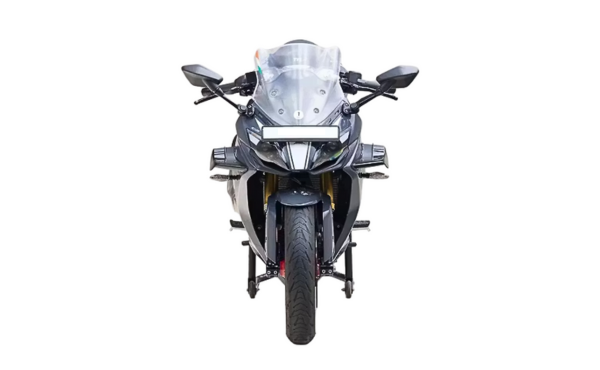
- Aerodynamic winglets: The RR 310 is offered with winglets as part of the model’s equipment or applicable configuration. They form part of the sportbike’s aerodynamic styling and are intended to contribute to stability at higher speeds.
- Built To Order customisation: TVS’s Built To Order programme allows buyers to personalise the Apache RR 310 through available configuration options, including relevant kits, colours, racing-number graphics, and wheel choices.
- Race and Dynamic kits: The Built To Order programme has offered Race and Dynamic kits. You can select these individually or together, subject to current configuration and availability, and they may determine access to equipment such as the quickshifter and advanced electronics.
- Black Diamond Edition: TVS introduced a Black Diamond Edition of the Apache RR 310 in September 2026. It features an all-black appearance and is reported to have Race Tuned Dynamic Stability Control, cruise control, cornering ABS, cornering traction control, launch control, and drag torque control.
Build Quality
The Apache RR 310 has a fully faired sportbike design with a trellis frame, aluminium swingarm, 41 mm USD front fork, and rear monoshock. This setup gives it a solid, big-bike feel while keeping it agile and responsive for road and cornering performance.
The RR 310’s fit and finish and build quality are rated highly. Personal experiences can vary, so it’s best to check the bike yourself when taking delivery.
The contemporary RR 310’s equipment also includes features that add to its premium appearance, such as the full-colour TFT instrument console, LED lighting, aerodynamic bodywork, winglets on applicable configurations, and a transparent clutch cover. The exact equipment package can differ across variants and Built To Order configurations.
Before delivery in India, check fairing-panel alignment, paint quality, switchgear feel, handlebar-end finish, TFT operation, headlamp and indicator function, brake-lever and clutch-lever action, chain adjustment, tyre manufacturing dates, wheel condition, panel fasteners, and any rattles. This matters more on a fully faired motorcycle because panel fit and fastening quality can show more on uneven roads.
Handling
The RR 310 uses a chassis and suspension layout designed for both stable straight-line riding and cornering confidence. It has a 41 mm KYB USD front fork and a preload-adjustable rear monoshock, while its 1,365 mm wheelbase, 180 mm ground clearance, and 174 kg kerb weight define the basic handling package.
Handling is a strong point for the RR 310. It feels stable at high speeds and confident in corners, and many riders find it agile enough for twisty roads without feeling unstable.
A user reported the RR 310 felt at home on both fast-flowing and narrower technical sections, and the suspension absorbed mid-corner bumps effectively without compromising cornering confidence.
The advanced electronics on higher versions or applicable BTO packages can further support control. These may include RT-DSC, a six-axis IMU, cornering ABS, cornering traction control, wheelie control, cornering drag-torque control, and rear lift-off control. These systems are rider aids, not substitutes for correct tyre pressure, safe speed, rider skill, road awareness, or controlled braking and throttle use.
Comfort
Even with clip-on handlebars and rear-set footpegs, the Apache RR 310 doesn’t force you into an extreme supersport position. The 810 mm seat height, slightly raised clip-ons, and moderate footpeg placement make for a more comfortable posture than many fully faired 300 cc sportbikes.
A user reported no body ache or pain after a long-distance ride, specifically praising the relationship between the raised clip-ons and less extreme footpeg placement, noting that even a more tucked riding posture was not especially taxing on their back.
Suspension comfort is another reported strength. The RR 310 feels slightly firm at lower speeds, up to about 60 km/h, where road undulations remain noticeable. However, the ride did not become uncomfortable, and the suspension became notably more compliant at cruising speeds above about 80 km/h, handling poor surfaces particularly well while still retaining cornering capability.
This setup makes the RR 310 more comfortable for long solo rides than its sporty looks suggest. It handles daily city rides, highways, and winding roads well, but like most faired bikes, it can get hot in traffic, needs more clutch work, and puts more weight on your wrists compared to upright naked bikes.
Pillion comfort is a bigger limitation. Owners say the rear seat is uncomfortable on long rides, though some older reviews found it better than other sportbikes. It’s fine for short trips with a passenger, but if you plan to ride two-up often, take a test ride with your usual pillion to check seat space, footpeg position, suspension, and braking.
Styling
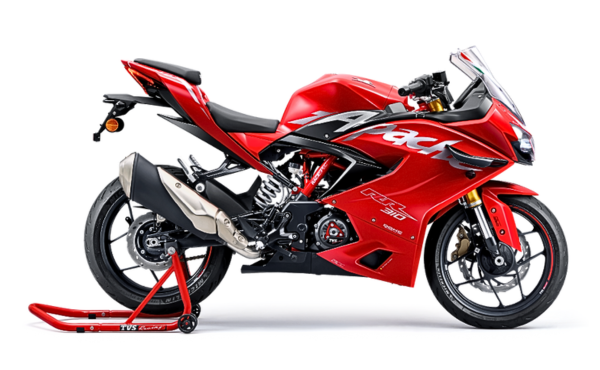
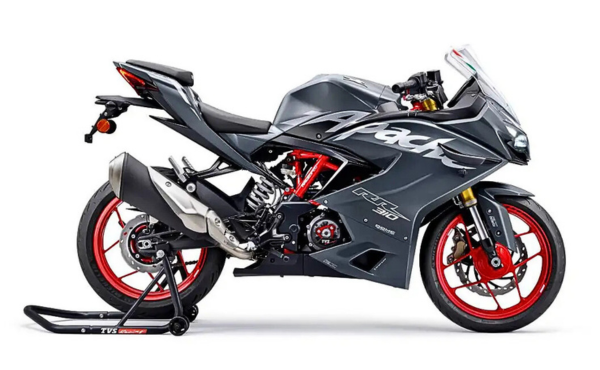
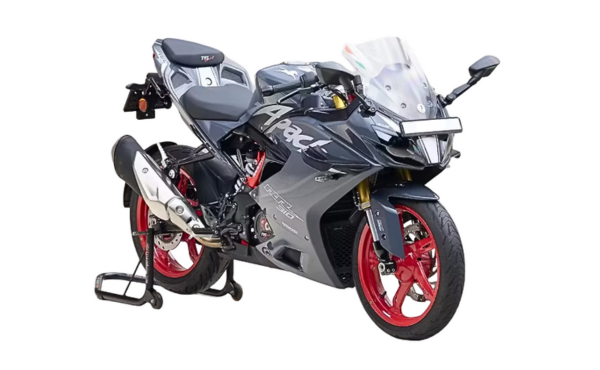
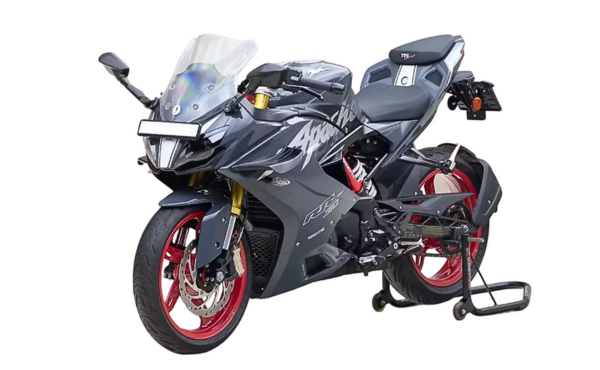
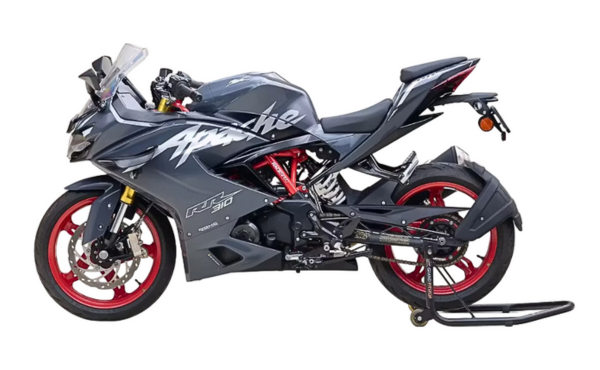
The TVS Apache RR 310 uses a fully faired, track-influenced design rather than the upright styling of the Apache RTR 310. Its styling centers on a low-slung front profile, sculpted fuel-tank area, side fairings, a raised tail section, and a compact windscreen. The motorcycle’s bodywork gives it a clear sportbike identity while also serving an aerodynamic purpose.
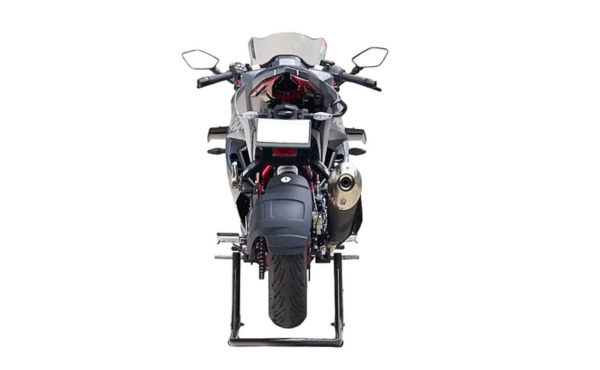
At the front, the RR 310 features TVS’s distinctive bi-LED projector headlamp arrangement and LED daytime-running lights. The front fairing, layered panels, windscreen, and clip-on handlebar arrangement create the motorcycle’s recognisable race-derived stance. The fairing extends into a sharply shaped tail section, while the exposed aluminium swingarm, rear tyre, and compact tail-light layout keep the rear visually sporty.
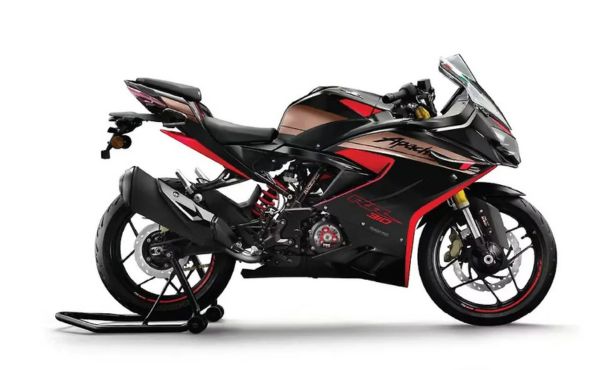
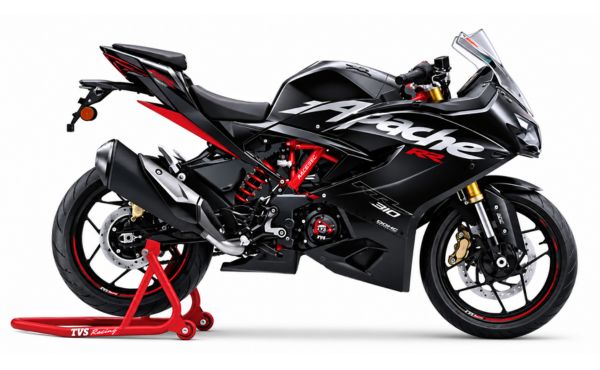
The latest update also brings the Black Diamond Edition, which adopts an all-black treatment with white Apache branding and red accents. This makes the RR 310 look more stealthy than the brighter Racing Red, Sepang Blue, or Bomber Grey options. The Black Diamond Edition is based on the RR 310’s higher-spec quickshifter-equipped configuration and adds Keyless Ride technology.
Other standout features include a 5-inch TFT display, LED lighting, a transparent clutch cover, race-style graphics, and, on some versions, winglets. The exact equipment depends on the variant or Built To Order options you choose.
Colour Options & Variants
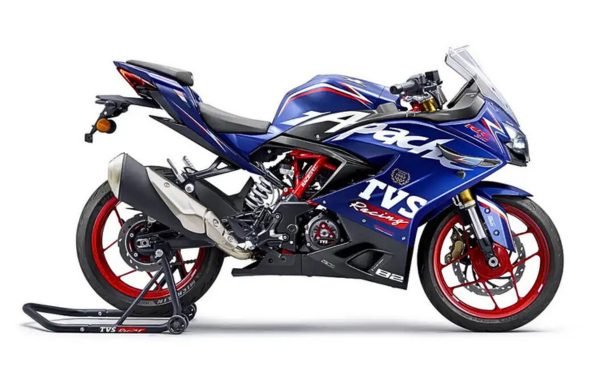
There are five colour or livery choices for the Apache RR 310 range. Availability depends on the selected variant, so not every colour is offered with every equipment level.
- Racing Red
- Sepang Blue
- Bomber Grey
- Black Champagne Gold Livery
- Black Diamond Edition
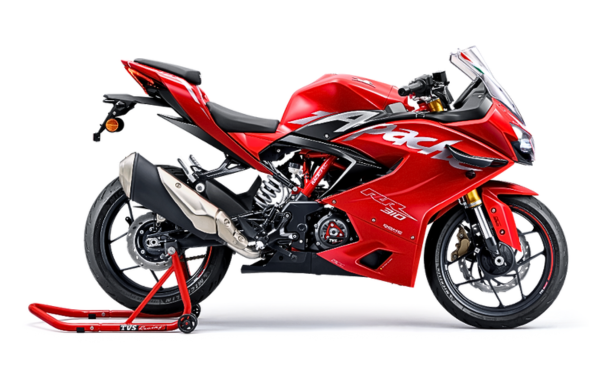
Racing Red is the classic, high-visibility sportbike colour. Sepang Blue gives a race-inspired blue look. Bomber Grey is a more subtle option and costs the same as the Black Diamond Edition.
The Black Champagne Gold livery is exclusive to the Limited Anniversary Edition. It pairs a black base with gold-coloured detailing, giving the RR 310 a more celebratory and collector-focused visual identity than the standard colour options.
There are five Apache RR 310 variants. They include
| Variant |
Key identity |
| Racing Red without Quickshifter |
Entry RR 310 configuration in Racing Red, without bi-directional quickshifter. |
| Racing Red with Quickshifter |
Racing Red version with bi-directional quickshifter. |
| Bomber Grey |
Grey colour option listed at the same price as the Black Diamond Edition |
| Black Diamond Edition |
Black Diamond Edition All-black special edition based on a higher-spec quickshifter-equipped setup; includes Keyless Ride according to contemporary Indian reports. |
| Limited Anniversary Edition |
Special black-and-Champagne-Gold livery variant. |
The base Racing Red without Quickshifter is the entry-level RR 310. It has the same fully faired design but doesn’t include the bi-directional quickshifter found on higher variants.
The Racing Red with Quickshifter, Bomber Grey, and Black Diamond Edition occupy the next price point . The Black Diamond Edition is the most visually distinct, with monochrome black paintwork, white branding, red highlights, and the Keyless Ride feature.
The Limited Anniversary Edition is the flagship listed variant. Its defining visual element is the Black Champagne Gold livery.
Value For Money And Pricing
The TVS Apache RR 310 starts at ₹ 2,66,190 ex-showroom in India for the base model without QuickShifter. It’s a great choice for riders who want a fully faired 300 cc sportbike with plenty of electronics, a 38 PS engine, riding modes, and a lower starting price than many premium competitors. The Delhi on-road price is about ₹3,03,447, but prices can vary by city.
At the entry price, the Apache RR 310 offers a 312.2 cc, liquid-cooled single-cylinder engine producing 38 PS and 29 Nm, four riding modes, a TFT instrument console, dual-channel ABS, LED lighting, and a fully faired sportbike design. These features make the base version a strong proposition for buyers who want a performance-oriented Indian sportbike without moving beyond the ₹3 lakh ex-showroom mark.
As the price goes up, the value depends more on what you want. Versions with the quickshifter or special editions cost about ₹25,500 more than the base model. These are best for buyers who want the quickshifter, advanced electronics, or special styling. Always get a written list of features for your chosen variant, since equipment varies between regular, Black Diamond, Built To Order, and anniversary models.
The Limited Anniversary Edition is primarily a flagship or special-livery choice. It may appeal to buyers who want its black-and-Champagne-Gold look and limited-edition identity, but it is not automatically the best value choice if performance and core equipment are the only priorities.
The RR 310’s value is also shaped by the availability of riding modes, connected TFT functions, optional or variant-linked quickshifter equipment, and—on relevant configurations—advanced RT-DSC electronics such as cornering ABS, cornering traction control, wheelie control, launch control, and cornering drag-torque control. These features are important because they bring higher-end electronic assistance to the 300 cc faired sportbike segment.
The main Indian alternatives to the Apache RR 310 include:
- KTM RC 390
- Kawasaki Ninja 300
- BMW G 310 RR
- Hero Karizma XMR
- Yamaha R15 V4
They do not all compete at the same price or performance level, but they are relevant cross-shopping options for riders looking at sport-oriented motorcycles.
The RR 310 is a strong value at its base price for riders wanting a well-equipped, fully faired Indian sportbike with a 38 PS engine, riding modes, a TFT display, and safety electronics. But price isn’t the only factor—buyers should consider if they prefer the Apache’s feature-rich, single-cylinder experience or a rival’s specific strengths, like the RC 390’s performance, the Ninja 300’s twin-cylinder engine, or the lower prices of the Karizma XMR and R15 V4.
Before purchasing, confirm the features, functions, and equipment included with the chosen RR 310 variant.
Verdict
The TVS Apache RR 310 is a great choice for Indian riders who want performance, technology, and sportbike looks in one bike. Its 312.2 cc liquid-cooled engine, 38 PS in Sport and Track modes, six-speed gearbox, 164 km/h top speed, and 34.7 kmpl fuel economy make it good for weekend rides, highway trips, and occasional track days. It also stands out with a 5-inch TFT display, SmartXonnect, four riding modes, dual-channel ABS, ride-by-wire throttle, and, on higher variants, advanced features like a bi-directional quickshifter, cornering ABS, traction control, launch control, cruise control, TPMS, and RT-DSC electronics.
The Apache RR 310 suits riders who understand the trade-offs of a single-cylinder, fully faired sportbike. The engine can feel buzzy at some revs, city traffic can make it hot, and the forward-leaning position and pillion seat suit short trips more than long two-up rides. The base model is a good value for those who want core performance and sportbike style, while higher-spec versions are worth it if you want extra features or a different look. Overall, the RR 310 is a well-rounded, feature-rich, and eye-catching 300 cc sportbike, as long as you’re realistic about comfort in the city, pillion use, and long-distance touring.
Pros
- Strong 312.2 cc performance: The liquid-cooled, single-cylinder engine produces up to 38 PS and 29 Nm in Sport and Track modes. This gives the RR 310 brisk acceleration and makes it suitable for spirited riding, highway overtakes, and track-oriented use.
- Four riding modes: Track, Sport, Urban, and Rain modes allow the rider to adjust power delivery and ABS calibration for different conditions. Urban and Rain modes reduce output to 30 PS and 26.5 Nm, making the motorcycle easier to manage in city traffic and wet conditions.
- Extensive electronics package: Depending on the variant or selected package, the RR 310 can include a bi-directional quickshifter, RT-DSC, six-axis IMU, cornering ABS, cornering traction control, wheelie control, launch control, drag-torque control, rear lift-off control, cruise control, and TPMS. This is an unusually comprehensive electronics offering in the Indian 300 cc faired-motorcycle category.
- TFT display and smartphone connectivity: The 5-inch vertical TFT console supports SmartXonnect, navigation assistance, call and notification alerts, ride analytics, and race telemetry functions. This gives the RR 310 a more modern cockpit than many conventional sportbikes in its price range.
- Confident handling and stability: Road-test and owner feedback identify the RR 310’s chassis behaviour as a major strength. Its KYB USD fork, rear monoshock, trellis-frame-based layout, and sportbike geometry support composed cornering and stable faster riding.
- More usable ergonomics than an extreme supersport: The raised clip-ons and less aggressive footpeg positioning provide a relatively manageable posture for a fully faired motorcycle. A user reported no body ache after a long-distance journey.
- Strong visual appeal and build presentation: The full fairing, bi-LED projector headlamp arrangement, LED lighting, TFT display, aerodynamic bodywork, and special-edition colour choices give the RR 310 strong road presence. Owners have also praised its build quality and styling.
- Competitive base price: The RR 310 starts at a competitive ex-showroom price, undercutting several premium fully faired rivals, including the KTM RC 390, Kawasaki Ninja 300, and BMW G 310 RR.
Cons
- Engine vibrations remain noticeable: Vibrations are an ongoing downside, and owner reviews also mention vibration on longer highway rides. The single-cylinder layout is a likely compromise compared with a smoother twin-cylinder motorcycle, although the extent will vary with rpm, riding style, and rider sensitivity.
- Pillion comfort is limited: The rear seat is less suitable for extended two-up riding. Owner feedback specifically flags pillion comfort as a weakness, so buyers planning frequent touring with a passenger should test the motorcycle with their regular pillion.
- Higher-spec variants become expensive: The base model begins at ₹2.66 lakh ex-showroom, but quickshifter-equipped versions and special editions rise to ₹2.83 lakh and ₹2.87 lakh. At these prices, buyers should carefully compare the exact equipment against rivals.
- Single-cylinder character may not suit everyone: The RR 310’s single-cylinder engine delivers strong performance, but buyers seeking smoother power delivery, an exhaust note, and better refinement may prefer alternatives such as the Kawasaki Ninja 300.
- Heat and forward-leaning posture in dense traffic: Like many liquid-cooled, fully faired sportbikes, the RR 310 is less relaxed in slow, stop-start city traffic than an upright naked motorcycle. Rider feedback has mentioned heat in slow traffic and discomfort from the sportbike posture on longer rides, though experience can vary significantly among riders.
- Top-speed limitation for performance-focused riders: Owner feedback notes a speed limiter around 160 km/h. This is not a concern for normal legal road riding, but riders comparing the RR 310 strictly on maximum-speed performance may prefer more powerful alternatives.
Frequently Asked Questions About Tvs Apache Rr 310
1. What Is The Top Speed And Power Output Of The Tvs Apache Rr 310?
The Apache RR 310 makes up to 38 PS at 9,800 rpm and 29 Nm at 7,900 rpm in Sport and Track modes (30 PS/26.5 Nm in Urban and Rain modes), with a claimed top speed of 164 km/h.
2. What Mileage Does The Apache Rr 310 Give?
Its ARAI-certified mileage is 34.7 kmpl, though real-world riding typically returns 30–33 kmpl depending on traffic, riding mode, and load. With an 11-litre tank, that works out to roughly 330–363 km on a full tank in real-world conditions.
3. What Safety And Rider-assist Electronics Does It Offer?
Depending on the variant, the RR 310 offers dual-channel ABS as standard, plus an optional RT-DSC suite built around a six-axis IMU that includes cornering ABS, cornering traction control, wheelie control, launch control, cruise control (including cornering cruise control), drag-torque control, and rear lift-off control. A bi-directional quickshifter and TPMS are also available on applicable variants.
4. What Is The Price Of The Tvs Apache Rr 310 In India?
The base variant (without quickshifter) starts at ₹2 66 190 ex-showroom (about ₹3,03,447 on-road in Delhi). Quickshifter-equipped and special-edition variants (Bomber Grey, Black Diamond Edition) cost around ₹25,500 more, pushing prices up to roughly ₹2.87 lakh ex-showroom.
5. What Are The Main Drawbacks Of The Apache Rr 310?
Key cons include noticeable engine vibrations on longer rides, limited pillion comfort, a forward-leaning riding posture that gets hot in slow city traffic, a single-cylinder character that some riders may find less refined than twin-cylinder rivals like the Kawasaki Ninja 300, and a top speed capped around 160 km/h for riders focused purely on outright performance.
Other Related Links From Bikeleague India
About Tvs Bikes
TVS Motor Company, a prominent player in the Indian two-wheeler industry, has a rich innovation and strategic growth history. TVS Motor manufactures a wide range of two-wheelers, including mopeds, scooters, commuter motorcycles, and racing-inspired bikes like the TVS Apache series and the TVS Apache RR310. The company’s diverse product portfolio caters to various segments, ensuring options for different customer preferences and needs.
History
TVS Motor Company, part of the TVS Group, was founded in 1911 by T.V. Sundaram Iyengar, starting with Madurai’s first bus service. In the 1970s, the group entered the automotive sector, launching Sundaram Clayton and opening a moped manufacturing facility in Hosur in 1976.
In 1980, they released TVS 50, India’s first two-seater moped, revolutionising the two-wheeler market. The company rapidly expanded, introducing motorcycles and scooters, and formed a joint venture with Suzuki before becoming independent again in 2001.
Timeline & Milestones
- 980: Launch of TVS 50, the first Indian moped.
- 1987: Collaboration with Suzuki, introducing advanced products and manufacturing expertise.
- 2001: JV with Suzuki ends; TVS becomes an independent entity.
- 2005: Introduction of the Apache series, marking entry into high-performance bikes.
- 2013: Alliance with BMW Motorrad for co-development of high-end motorcycles.
- 2020: Launch of TVS iQube Electric, signalling robust entry into electric mobility.
- 2024: Over 50 million vehicles on the road; TVS reaches record revenue and expands its EV portfolio.
Manufacturing Facilities
TVS Motor Company operates three state-of-the-art factories in India:
- Hosur, Tamil Nadu: The primary and oldest plant, central to TVS’s manufacturing capacity.
- Mysuru, Karnataka: Supports production for southern and western markets.
- Nalagarh, Himachal Pradesh: Caters to northern and eastern India.
The company has also entered into contract manufacturing partnerships to optimise logistics and expand service in eastern India.
Market Position
- TVS is India’s third-largest two-wheeler manufacturer.
- In the first half of 2025, TVS grew its market share to 18.71%, up from 17.08% in 2024, outpacing competitors like Hero, Honda, and Bajaj. This was driven by robust performance in the electric scooter segment and premium motorcycles.
- The company continues to innovate, leading with connected vehicles, advanced safety features, and a wide product portfolio from commuter mopeds to high-end racing bikes.
Achievements
- Financial Strength: In FY2023-24, TVS posted record revenue of ₹31,776 crore and Profit Before Tax of ₹2,781 crore, with EBITDA margins exceeding 11%.
- Global Presence: TVS exports to over 80 countries and is strengthening its position in international markets with partnerships and homologated products for Europe and other regions.
- Innovation: Pioneer of several firsts, including India’s first catalytic converter in a 100cc bike and connected scooters.
- Recognition: Consistently awarded for quality, performance, and customer satisfaction, reflecting industry trust in the brand.
Future Outlook
- Growth Forecasts: Analysts expect TVS’s earnings to grow at 20.2% annually, with revenue growth projected at 5.8% per annum and return on equity at 26.3% over the next three years.
- EV & Sustainability: TVS is intensifying its EV push, aiming for leadership in sustainable urban mobility. The company is investing in R&D and roping in partnerships to strengthen its EV lineup.
- Premiumisation & Expansion: Continued focus on premium models, expansion of the dealer network, customer-centric campaigns, and a strategic push into Europe, Africa, Latin America, and ASEAN regions.
- Innovation Commitment: TVS will keep innovating, both in product offerings and technology, to match evolving consumer preferences and to remain a trendsetter in the Indian mobility space.
TVS Motor Company embodies Indian manufacturing excellence and adaptability. Starting from modest beginnings, it has become a global leader, driving India’s mobility revolution with a focus on quality, sustainability, and innovation.
Other Related Links From Bikeleague India
- TVS Apache RTR 160
- TVS Apache RTR 200 4V
- TVS Apache RTR 310
- TVS Apache RTR 180
- TVS Apache RTR 160 4V