Overview
Performance And Engine
The RTR 180 uses a 177.4 cc single-cylinder, four-stroke, oil-cooled, fuel-injected engine with two valves per cylinder. TVS says it is an over-square, short-stroke engine with Race-Tuned Fuel Injection, made for quick acceleration and high revs
| Engine item |
Specification |
| Engine type |
Single-cylinder, four-stroke, two-valve, oil-cooled, fuel-injected |
| Displacement |
177.4 cc |
| Fuel system |
BS-VI Race Tuned Fuel Injection / closed-loop fuel injection |
| Cooling system |
Oil-cooled |
| Maximum power — Sport |
17.02 PS at 9,000 rpm |
| Maximum torque — Sport |
15.5 Nm at 7,000 rpm |
| Maximum power — Urban/Rain |
14.54 PS at 8,200 rpm |
| Maximum torque — Urban/Rain |
14.2 Nm at 6,000 rpm |
| Riding modes |
Urban, Rain and Sport |
In Sport mode, the RTR 180 makes 17.02 PS and 15.5 Nm. Urban and Rain modes reduce this to 14.54 PS and 14.2 Nm. Urban mode is tuned for smoother, more controlled riding. Rain mode improves ABS response and brake feel. Sport mode gives full power.
The RTR 180 features Glide Through Technology, which lets the bike move forward without throttle when you slowly release the clutch. TVS says GTT allows speeds up to 7 km/h in first gear, 12 km/h in second, and 17 km/h in third. This helps in slow traffic and reduces stalling.
The Apache RTR 180 uses a five-speed manual gearbox, chain drive, and a wet multi-plate clutch. The gear pattern is one down and four up.
| Transmission item |
Specification |
| Gearbox |
Five-speed manual |
| Shift pattern |
One down, four up |
| Clutch |
Wet multi-plate clutch |
| Final drive |
Chain |
| Quickshifter |
Not listed in the retrieved TVS specification |
The RTR 180 does not include a quickshifter or slipper clutch. It uses a standard wet multi-plate clutch and a five-speed gearbox for regular city and highway use. Glide Through Technology helps at low speeds.
The official specs list a top speed of 113 km/h in Sport mode, dropping to 102 km/h in Urban and Rain modes.
| Riding mode |
Listed speed |
| Sport |
113 km/h |
| Urban |
102 km/h |
| Rain |
102 km/h |
These are claimed top speeds, not recommended cruising speeds. Actual results depend on factors like rider weight, road slope, wind, traffic, tyre and engine condition, fuel quality, maintenance, and weather. Always follow speed limits and ride according to road and traffic conditions.
Mileage And Fuel Efficiency
The reported ARAI mileage is 45 kmpl, with current versions showing about 42 kmpl and some reports at 40 kmpl. These numbers are estimates and can vary in real-world conditions.
For planning, use 40 to 45 kmpl as the expected fuel economy. With a 12-litre tank, this means about 480 to 540 km before reserve. These are estimates, not guaranteed distances.
Mileage depends on traffic, speed, rider weight, tyre pressure, maintenance, route, riding mode, and weather. Most riders see between 40 and 44 kmpl.
In real use, expect about 38-42 kmpl. Calm highway riding at moderate speeds can reach or go above 42 kmpl. Heavy traffic, frequent Sport mode, high revs, heavy loads, steep roads, low tyre pressure, or poor maintenance can drop mileage to the mid-30s.
Features And Technology
The TVS Apache RTR 180 is a race-inspired naked motorcycle for India, offering three riding modes, SmartXonnect connectivity, a digital console, Super-Moto ABS, and a chassis and suspension designed for sporty daily riding. Its features focus on city convenience, ride info, braking support, easy control, and bold Apache styling.
- 177.4 cc BS-VI RT-Fi engine: The RTR 180 uses a 177.4 cc, oil-cooled, fuel-injected, two-valve single-cylinder engine with TVS Race Tuned Fuel Injection. In Sport mode, it produces 17.02 PS at 9,000 rpm and 15.5 Nm at 7,000 rpm.
- Three riding modes: The motorcycle provides Urban, Rain, and Sport modes. TVS states that the modes adjust engine and ABS calibration for city roads, low-grip rain conditions, or full-performance riding.
- Urban mode: Urban mode is intended to provide smooth and controlled movement in regular city traffic. It uses reduced output compared with Sport mode.
- Rain mode: Rain mode is designed for wet conditions, with TVS describing a sharper ABS response and stronger brake-lever pulsation feel.
- Sport mode: Sport mode unlocks the motorcycle’s full output setting of 17.02 PS and 15.5 Nm.
- Glide Through Technology: GTT lets the motorcycle start moving when you gradually release the clutch, without throttle input. TVS lists maximum GTT speeds of 7 km/h in first gear, 12 km/h in second gear, and 17 km/h in third gear. This makes slow-moving traffic easier to manage and helps reduce the risk of stalling.
- TVS SmartXonnect: SmartXonnect provides Bluetooth connectivity through the TVS smartphone application. It enables connected information and control functions through the motorcycle’s console.
- Voice Assist: The SmartXonnect system includes Voice Assist, allowing hands-free access to supported connected functions. Check the owner’s manual or dealer for currently supported commands and phone compatibility.
- Navigation assistance: The connected navigation system displays directions on the instrument console. TVS says it includes pre-programmed points such as fuel stations, hospitals, and restaurants. Set routes before moving and do not operate the display while riding.
- Low-fuel navigation support: TVS says the system detects low fuel and can redirect the rider to a nearby fuel station. Performance depends on proper phone pairing, app configuration, GPS, mobile data, and network availability.
- Ride telemetry: SmartXonnect provides riding telemetry that the rider can review after a journey.
- Call and SMS alerts: The connected system shows call and SMS notifications. Review or respond to alerts only when safely stopped.
- Crash alert: TVS states that the system can notify selected contacts in the event of a crash. It depends on appropriate app configuration, connectivity, and emergency-contact setup.
- Digital instrument console: The white-backlit digital console includes a lap timer, top-speed indicator, and essential rider information. It also uses a racing-stripe design theme.
- Single-channel Super-Moto ABS: The RTR 180 uses a single-channel Super-Moto ABS system. TVS describes it as providing precise control and sharp feedback; riders should still brake controllably and maintain appropriate distance, especially on wet or loose surfaces.
- 270 mm front Roto Petal disc: The front braking system uses a 270 mm petal disc.
- 200 mm rear Roto Petal disc: The rear braking system uses a 200 mm petal disc.
- Synchro Stiff double-cradle chassis: TVS uses a Synchro Stiff double-cradle frame, intended to balance straight-line stability with sufficient flex for cornering.
- Telescopic front fork: The motorcycle uses telescopic front suspension.
- MIG rear suspension: The rear uses a Monotube Inverted Gas-filled shock absorber with spring aid and five-step adjustment. TVS pairs it with a rectangular swingarm.
- Split clip-on handlebars: The RTR 180 uses split clip-on handlebars as part of its race-oriented ergonomic layout.
- Forged handlebar end weights: The motorcycle has forged handlebar-end weights, which TVS says improve road handling.
- Alcantara racing seat: TVS lists an Alcantara racing seat designed for rider comfort over longer distances.
- Intelligent tank-cowl aerodynamics: TVS says the tank-cowl design supports airflow and can reduce engine heat by 10°C. This is the company’s stated claim.
- Tank scoops: The tank scoops channel cooler air toward the engine and direct warm air outward.
- Beast-inspired LED headlamp: The headlamp uses an LED light guide and pilot lamps. TVS says it provides a far-reaching beam for night riding.
- All-time-on LED position lamp: The headlamp arrangement includes an all-time-on LED position lamp.
- LED tail lamp: The motorcycle has an LED tail lamp.
- Race graphics: The RTR 180 uses bold race-inspired graphics.
- Muscular engine and tail cowls: Sculpted engine and tail cowls are part of the motorcycle’s visual design, creating its angular, race-inspired appearance.
- Remora tyres: The RTR 180 uses tubeless 90/90-17 front and 120/70-17 rear tyres. TVS refers to the wider rear tyre as a Remora tyre and states that it supports acceleration and braking grip.
- Theft-resistant key: The motorcycle includes a theft-resistant key as part of its security equipment.
- Complimentary TVS XPOD helmet: TVS lists a complimentary XPOD helmet for the RTR series in Tamil Nadu, Kerala, Karnataka, Gujarat, Puducherry, Rajasthan, Uttar Pradesh, Haryana, the North East, and Odisha. This offer is region-specific and may change, so confirm eligibility and terms with the dealer before booking.
Build Quality
The RTR 180 uses a Double Cradle Synchro Stiff frame that TVS says balances straight-line stiffness with the controlled flex needed for cornering. The mechanical package includes a rectangular swingarm, telescopic front fork, a rear Monotube Inverted Gas-filled shock absorber with spring aid, petal disc brakes, tubeless tyres, split clip-on handlebars, forged bar-end weights, engine and tail cowls, tank scoops, and LED lighting.
The bodywork is intended to look and feel more substantial than a basic commuter motorcycle. Its tank cowl, tank scoops, muscular engine cowl, sharp tail cowl, race graphics, LED headlamp assembly, and LED tail lamp give it an aggressive visual identity. TVS claims the tank-cowl aerodynamics can reduce engine heat by 10°C, while the tank scoops route cooler air toward the engine and exhaust warm air outward.
Users say the build quality is solid and the seat is comfortable. This is based on user feedback, not a long-term reliability test, so consider it helpful but not a guarantee that every bike will be the same.
Before taking delivery, check the paint and decals, panel alignment, tank-cowl mounting, seat lock, switches, headlamp and tail-lamp, digital console, chain alignment, brake lever feel, front fork seals, rear shock adjustment, wheel rims, tyre dates, alloy condition, and visible fasteners. Take a short ride on a rough surface to listen for rattles and make sure the handlebar is straight.
Handling
The RTR 180’s compact layout, 140 kg kerb weight, 1,326 mm wheelbase, 90/90-17 front tyre, and 120/70-17 rear tyre give it a handling package focused on agility rather than long-wheelbase touring stability. TVS says the Synchro Stiff chassis balances straight-line stability with flexibility under aggressive cornering, while forged bar-end weights are intended to improve road handling.
The RTR 180 remains flickable in traffic and feels more composed and stable through turns, thanks to the extended swingarm. The new model’s chassis architecture continues these handling characteristics.
The rear MIG shock has five-step preload adjustment, so you can set it up for solo rides, a pillion, luggage, or your own preference. Use the owner’s manual or ask a technician for help, and adjust in small steps. Too much preload can make the suspension stiff, while too little can reduce support with a passenger.
The brakes use a 270 mm front petal disc and a 200 mm rear petal disc, with single-channel Super-Moto ABS. TVS says the system gives sharp feedback and precise control. Since ABS is only on the front wheel, be gentle with the rear brake, especially on wet or loose roads and during emergency stops.
Braking is strong, but the original TVS tyres may not inspire confidence during hard braking or on twisty roads. Grip is good on dry roads, but less so in the rain. Tyre specs and availability can change, so check the tyres on your bike, their manufacturing dates and pressure, and consider replacing them if needed.
Comfort
The RTR 180 has a sporty, but not extreme, riding position. Split clip-on handlebars, a 790 mm seat height, 730 mm width, and a 12-litre fuel tank put the rider in a slightly forward-leaning stance. TVS calls this “race ergonomics,” and owners say it feels sporty but comfortable for daily use.
TVS offers an Alcantara racing seat meant for comfort on long rides. In practice, comfort depends on your body size, the road, what you wear, trip length, and if you have a passenger. Most owners find the seat comfortable for average-height riders, with average cushioning and enough space for both rider and pillion.
The suspension is set up for sporty riding, so the ride is a bit firm. The forks and rear shocks handle big potholes fairly well, but you might feel some handlebar vibration at high speeds. The RTR 180 can handle rough Indian roads, speed bumps, and potholes, but it will not be as soft as a regular commuter bike on repeated bumps.
Adjusting the five-step rear shock can make the ride more comfortable if set for your weight. For solo rides, start with the recommended setting. If you often carry a pillion or luggage, use a higher preload. Test the bike on city roads, speed bumps, corners, and open roads at normal speeds before deciding if you need to adjust the suspension.
Glide Through Technology also helps with comfort in traffic. It lets you move at low speeds by slowly releasing the clutch, without using the throttle—up to 7 km/h in first gear, 12 km/h in second, and 17 km/h in third. This reduces the need for constant throttle and clutch work in traffic.
Styling
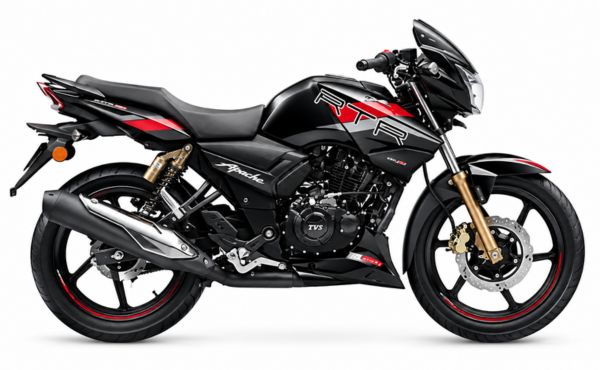
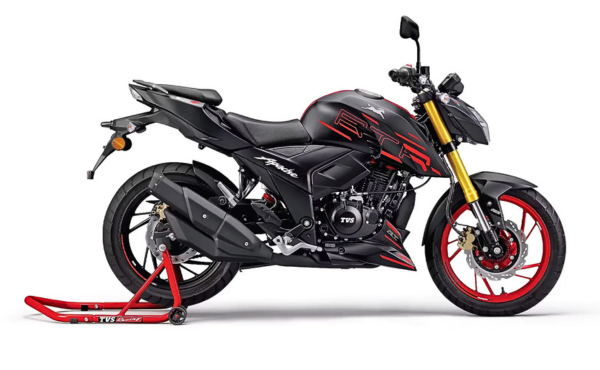
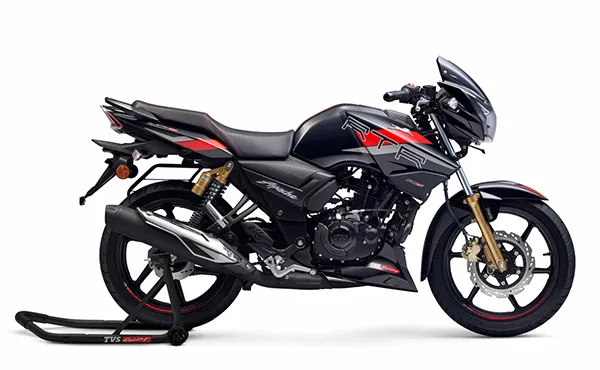
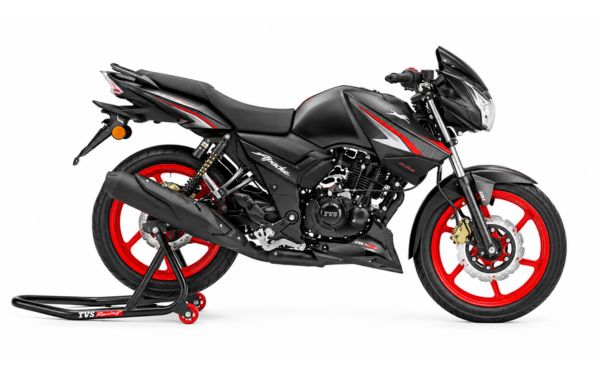
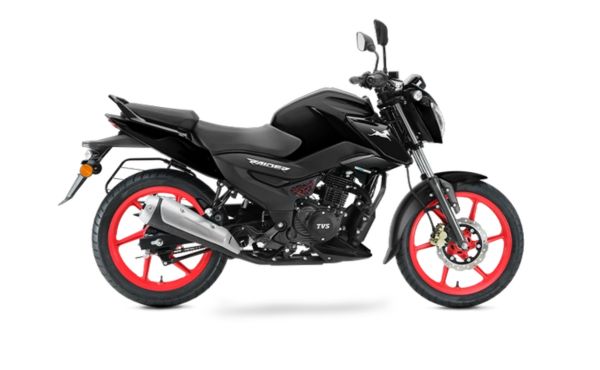
The Apache RTR 180 uses a compact naked-sport design rather than a commuter-oriented silhouette. TVS describes its visual theme as race-inspired, with a flared tank, angular engine and tail cowls, split clip-on handlebars, tank scoops, muscular bodywork, and bold graphics intended to create a track-influenced appearance.
Its front end uses a beast-inspired LED headlamp assembly with LED light guides, pilot lamps, and an all-time-on LED position lamp. This is matched with an LED tail lamp, giving the RTR 180 a more contemporary lighting signature than older versions.
The tank scoops, engine cowl, and tail cowl are key visual details. TVS says the scoops channel cooler air toward the engine and direct warmer air outward, while the shaped tank cowl is intended to support aerodynamics and reduce engine heat. These elements also give the bike its sharp, layered side profile.
The compact digital console, which includes a white backlight, lap timer, top-speed indicator, and racing-stripe theme, reinforces the motorcycle’s performance-focused presentation. Other styling-linked features include the Alcantara racing seat, forged handlebar-end weights, petal discs, blacked-out mechanical components, and the double-cradle frame structure visible around the engine.
Colour Options & Variants
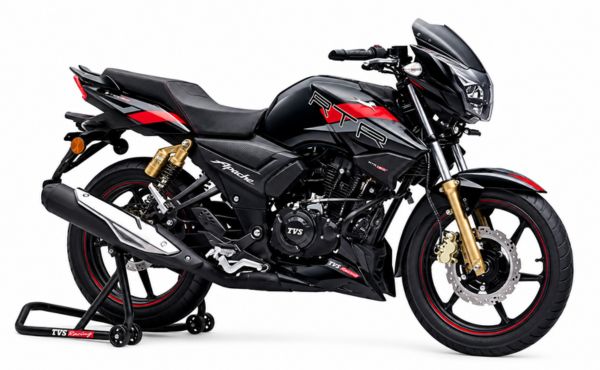
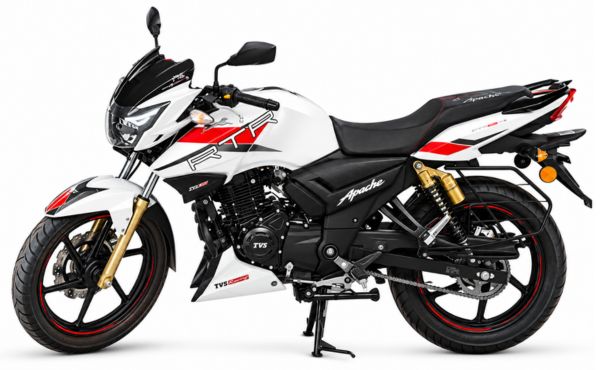
The Apache RTR 180 comes in two colour options. Availability depends on the variant and dealer stock, so check the exact colour, graphics, and invoice details before booking.
| Colour / livery |
Visual character |
| Pearl White |
Clean, bright, contrast-heavy appearance |
| Gloss Black |
Dark, understated naked-sport finish |
Pearl White is the official colour for those who want the brightest look for the RTR 180’s sharp styling. Gloss Black is a more subtle choice, giving the bike a more understated appearance.
The Apache RTR 180 is listed in India in one variant:
- Disc
This variant has a 177 cc engine, five-speed manual gearbox, single-channel ABS, and the main RTR 180 mechanical setup. The standard Disc version is a practical choice for those who want the RTR 180’s main features at a lower price.
Value For Money And Pricing
The Apache RTR 180 starts at ₹ 1,27,090 ex-showroom Delhi for the base variant. On-road cost will vary by state, city, insurance provider, registration, road tax, dealer handling, and optional products. For example, a Mumbai on-road starting price is ₹1,40,616 for the Disc.
The Apache RTR 180 offers a 177.4 cc oil-cooled, fuel-injected engine that produces 17.02 PS and 15.5 Nm in Sport mode. It also includes three riding modes, Glide Through Technology, Bluetooth-enabled SmartXonnect, navigation assistance, voice assist, riding telemetry, call and SMS alerts, crash alert, a white-backlit digital console with a lap timer and top-speed indicator, and LED headlamp and tail-lamp equipment.
The riding and safety package is also substantial for this price level. The RTR 180 has a Double Cradle Synchro Stiff chassis, telescopic fork, five-step-adjustable MIG rear suspension, split clip-on handlebars, tubeless tyres, 270 mm front and 200 mm rear petal discs, and single-channel Super-Moto ABS. It also offers Sport, Urban, and Rain modes that adjust engine output and ABS response.
This makes the RTR 180 a good-value choice for buyers who want more equipment and sport-oriented character than an entry-level 160 cc commuter. The value case is less straightforward for riders who prioritise dual-channel ABS, a six-speed gearbox, a more modern TFT screen, higher peak performance, or a larger engine. At this price point, newer 160 cc models, the Bajaj Pulsar range, the Honda Hornet 2.0, and even some 200 cc options may suit the buyer better, depending on their exact priorities.
Alternatives to the Apache RTR 180 in India include:
- Bajaj Pulsar 150
- Honda Hornet 2.0
- Bajaj Pulsar N160
- Bajaj Pulsar NS160
- Hero Xtreme 160R
- TVS Apache RTR 160 4V
- Yamaha FZ-S FI