Overview
Performance And Engine
The TVS Sport runs on a 109.7 cc DuraLife engine with Eco-Thrust Fuel Injection (ET-Fi). It produces 6.03 kW (8.08 bhp) at 7,350 rpm and 8.7 Nm of torque at 4,500 rpm. This single-cylinder, four-stroke, air-cooled engine meets BS VI emission standards.
| Engine item |
Specification |
| Engine type |
Single-cylinder, four-stroke, air-cooled |
| Displacement |
109.7 cc |
| Fuel system |
ET-Fi Eco-Thrust Fuel Injection Technology |
| Maximum power |
6.03 kW (8.08 bhp) at 7,350 rpm |
| Maximum torque |
8.7 Nm at 4,500 rpm |
| Bore × stroke |
53.5 mm × 48.8 mm |
| Compression ratio |
10.0:1 |
| Air filter |
Paper filter element |
| Emission compliance |
BS VI |
| Fuel-tank capacity |
10 litres |
ET-Fi uses injectors and sensors to keep the air–fuel mix right, which helps the bike run smoothly and efficiently. The DuraLife engine has chrome-plated piston rings and a roller cam follower to reduce friction and stress on moving parts.
The TVS Sport is mainly built for daily commuting, not for high speeds. Its 109.7 cc fuel-injected engine makes 6.03 kW (8.08 bhp) at 7,350 rpm and 8.7 Nm at 4,500 rpm, paired with a four-speed manual gearbox. The engine aims to balance power and fuel efficiency, with ET-Fi helping it run smoothly.
Most owners find the bike has good pickup and a smooth engine for city rides, though this is based on personal experience, not formal tests. Some notice vibrations at 65 to 70 km/h, while others do not.
The TVS Sport has a four-speed constant-mesh manual gearbox and a wet multi-plate clutch. It uses an “All Up” gear-shift pattern, so you follow this pattern instead of guessing the gear order.
The main transmission uses spur gears, while the secondary uses a chain and sprockets. The all-gear electric start lets you start the engine even if a gear is engaged, but you still need to use the clutch and shift gears yourself.
The Sport’s top speed is listed as 90 km/h by TVS. Actual speed may depend on riding conditions, rider load, road gradient, wind, and other factors. The specific test conditions for this figure are not detailed, and it may not be achieved in all situations.
Mileage And Fuel Efficiency
Reported ARAI mileage figures for the TVS Sport vary, and different numbers are sometimes attributed to the ES and ES+ models. The official product information does not specify a particular ARAI mileage number for either. Without clear evidence, these figures cannot be confidently linked to a specific variant or model year.
TVS claims ET-Fi offers “15% more mileage,” but does not specify the baseline for this claim. This percentage does not establish an exact mileage or confirm any ARAI figure.
Owners report an average mileage of about 70 km/l for the Sport. This number is based on owner feedback and is separate from official certification or road-test results. It does not represent an assured outcome for all users.
Individual owners have reported mileages like 52, 61, 64, 75, and 78 km/l. These numbers show that experiences vary. The average is based on all models, not just a verified 2026 version.
Test results for the Star City Plus, like 62.7 km/l, 83.09 km/l in the city, and 66.34 km/l on the highway, should not be used for the Sport. Even if the engines are similar, their fuel use is not automatically the same. There is no official city-versus-highway mileage split for the current Sport.
Owner reports commonly mention about 70 km/l as an average mileage figure. This is different from ARAI numbers and does not represent a guaranteed result for all units.
Features And Technology
The TVS Sport in India is made for simple commuting. It comes with analogue instruments, an Econometer, all-gear electric start, Eco-Thrust Fuel Injection, Automatic Headlight On, and a five-step-adjustable rear suspension. Features like a long cushioned seat, pillion grab rail, alloy wheels, and Synchronized Braking Technology make it practical for daily use. The lighting uses a regular headlamp with separate LED position/DRL lamps, not a full-LED setup. USB charging may be included, but check if it is available on your chosen variant. There is no smartphone connectivity, navigation, or call alert feature.
- Econometer: The bike has an Econometer that lights up when you ride at the recommended speed, helping you ride more efficiently. It shows when you are riding economically, but does not display real-time mileage. The exact speed range for this feature is not given.
- Analogue instrument console: The Sport has analogue instruments, including a speedometer, odometer, and fuel gauge. It gives you the basics, but there is no digital or TFT display, clock, gear-position indicator, or service reminder.
- USB charging facility: The bike includes a USB charger for charging devices while you ride.
- All-gear electric start: You can start the bike even if a gear is engaged, so you do not need to be in neutral. This makes starting easier, but the gearbox is still manual.
- Eco-Thrust Fuel Injection: ET-Fi uses injectors and sensors to keep the air–fuel mix right. This helps the bike run smoothly and efficiently. It is an engine management technology, not a switchable Eco mode.
- DuraLife engine construction: The DuraLife engine has chrome-plated piston rings and a roller cam follower. These parts are designed to reduce friction and stress, which may contribute to smoother operation and increased longevity. These are manufacturer design claims, with no stated service life figures.
- ECU-controlled digital ignition: The ignition system uses an Electronic Control Unit, and the digital ignition is set up for efficiency. Here, “digital ignition” refers to engine control, not a digital dashboard display.
- Automatic Headlight On: The Sport’s AHO feature keeps the headlamp on while you ride, making the bike more visible. It does not sense light or turn the headlamp on and off automatically.
- Conventional headlamp with LED position/DRL lighting: The bike uses an HS1 35/35 W headlamp and separate 4 W LED position/DRL lamps. The rear tail-and-stop lamp is a regular 5/21 W unit. So, the Sport does not have a full-LED lighting package.
- Telescopic oil-damped front suspension: The front suspension uses telescopic oil-damped forks designed for comfort and to absorb bumps during daily rides.
- Five-step-adjustable rear suspension: The hydraulic rear shocks can be adjusted in five steps. This lets you change the rear suspension setting, but the bike does not have electronic suspension or selectable modes.
- Extra-long cushioned seat: The extra-long, cushioned seat is designed to provide space for both the rider and passenger. The seat’s exact length is not specified.
- Aluminium pillion grab rail: The aluminium grab rail at the back gives the passenger a handhold and can be used to secure extra luggage with a bungee cord. It is not a separate luggage rack or carrier.
- Synchronized Braking Technology: Indian specs list SBT, which links the front and rear brakes. This is a combined braking system, not ABS, and it should not be described as preventing wheel lock during braking.
- Drum brakes at both ends: The Sport has a 130 mm front drum brake and a 110 mm rear drum brake. There is no front-disc version, so a disc brake should not be listed as a feature.
- Alloy wheels: The Sport features alloy wheels. The tyres may be tubed or tubeless, depending on the specific variant and market details.
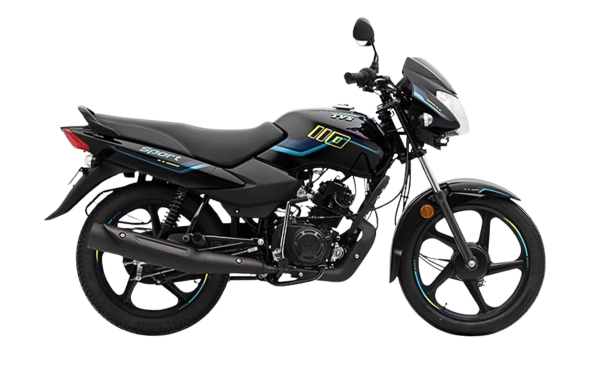
- Premium 3D emblem and body graphics: The Sport’s exterior has a chrome-finish 3D emblem, sticker decals, flowing body graphics, and a blacked-out engine. These are just appearance features and do not mean the engine is different.
- No smartphone-connected functions: There is no mobile phone connectivity, GPS navigation, Voice Assist, or call/SMS alerts. The USB charger and analogue console are not part of a SmartXonnect system.
Build Quality
The TVS Sport has a standard commuter design, with telescopic oil-damped front forks, hydraulic rear shocks, and alloy wheels. It weighs 112 kg. Its dimensions are 1,950 mm long, 705 mm wide, 1,080 mm tall, and a 1,236 mm wheelbase, making it compact rather than bulky.
The finish includes a chrome-finish 3D emblem, body graphics, a blacked-out engine, and an aluminium rear grab rail. These are visible features, but there is no detailed info about how durable each material is or whether every exterior part is metal.
Some owners say the Sport feels sturdy and is good for daily commuting. These are positive comments about everyday use, but they are personal opinions, not results from controlled durability tests.
There is no published evidence on long-term finish or condition retention.
The aluminium grab rail is for the passenger to hold and can also be used to tie down extra luggage with a bungee cord. It is not a separate luggage rack, and there is no stated carrying capacity.
Handling
One of the Sport’s main strengths in the city is its light weight. Owners say it is easy to steer in traffic and handle during frequent turns. Its compact size and 112 kg weight make it good for commuting.
However, these comments do not mean the bike is equally stable at all speeds or on every road surface. There are no official wet-grip tests or detailed handling results available.
The suspension has telescopic oil-damped front forks and five-step-adjustable hydraulic rear shocks.
The front is designed for comfort and to absorb bumps. The rear can be adjusted, but there is no single setting that works best for everyone or every road.
Owners have different opinions about the suspension. Some say it is smooth on normal roads and handles small bumps well, while others find it firmer on rough surfaces. The Sport has 175 mm of ground clearance, which is intended to help on uneven roads and speed bumps.
Some owners mention concerns about balance or how the bike handles rough roads. These are personal experiences and do not mean every Sport will have the same issue.
Comfort
TVS highlights the Sport’s extra-long cushioned seat, upright riding position, and comfort-focused suspension as its main comfort features. The seat is designed to give enough space for both the rider and passenger, and the aluminium grab rail provides a handhold for the pillion.
There is no specific information about the seat’s length or height. So, you cannot compare seating space exactly or say that every shorter rider can put both feet flat on the ground. “Extra-long” is just the manufacturer’s term, not a measured comparison with other bikes.
Many owners say the riding position is convenient and the seat is comfortable for daily trips. Some also praise the cushioning and space for passengers. These comments suggest it works well for commuting, but comfort may vary for different people.
Feedback on longer rides is mixed. Some owners stay comfortable, while others say the seat support drops or they feel back discomfort on longer trips. A seat that feels good on short rides may not be as supportive on longer journeys.
The suspension also affects comfort. It usually handles normal bumps well, but sharper bumps and rough roads can feel firmer. Owner feedback does not include controlled comparisons for rider weight, passenger load, tyre pressure, or rear shock settings.
Vibration may be an issue at higher speeds. Some owners say there is little vibration, while others notice it above about 65 to 70 km/h. These numbers are from individual reports and do not establish a fixed vibration limit for all units.
Styling
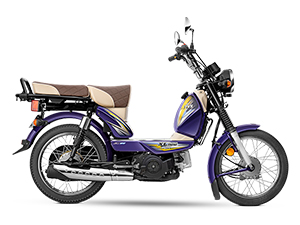
The TVS Sport in India keeps a conventional commuter design, with its look focused on flowing graphics, sticker decals, a chrome-finish 3D emblem, a blacked-out engine, and alloy wheels. TVS says these details give the bike a sportier look while keeping its simple commuter shape. The current India range includes Self Start (ES) and Self Start (ES+), with six colours split between them.
The graphics and decals are central to the Sport’s appearance. TVS highlights “all-new graphics” and stylish sticker treatments, which add contrasting detail to the bodywork. These are descriptions of the current motorcycle’s presentation.
The chrome-finish 3D emblem stands out against the darker engine, and alloy wheels add to the bike’s clean commuter look. An aluminium rear grab rail and a long single-piece seat complete the rear. TVS lists these features for the whole model, not as differences between ES and ES+.
At the front, TVS describes a sporty headlamp setup. The lighting uses a regular HS1 headlamp with separate LED position/DRL lamps, so the bike does not have a full-LED headlamp. Its look is different from other TVS commuter models with LED headlamps.
Colour Options And Variants
The supported current palette has six distinct colour options:
- Starlight Blue
- All Black
- All Grey
- All Red
- Black Neon
- Grey Red
TVS assigns four colours to Self Start (ES) and two to Self Start (ES+).
| Variant |
Colour Options |
Number of colours |
| Self Start (ES) |
Starlight Blue, All Black, All Grey, All Red |
4 |
| Self Start (ES+) |
Black Neon, Grey Red |
2 |
The variant-to-colour pairing is based on current information. The six-colour count is confirmed by available information.
The current TVS Sport lineup on the official India page includes Self Start (ES) and Self Start (ES+).
Both are part of the same Sport design family. The main styling difference is their separate colour choices; the official page does not list detailed differences in body panels, headlamp style, seat shapes, or wheel finishes.
| Variant |
Listed colours |
| Self Start (ES) |
Starlight Blue, All Black, All Grey, All Red |
| Self Start (ES+) |
Black Neon, Grey Red |
The table reflects distinctions currently documented. The ES+ name alone does not establish additional styling equipment beyond what is identified.
Self Start (ES)
Self Start (ES) offers the widest colour choice in the current Sport range. Buyers who pick Starlight Blue, All Black, All Grey, or All Red are choosing an ES colour. The styling focuses on its graphics, chrome-finish emblem, blacked-out engine, alloy wheels, and long seat.
Self Start (ES+)
Self Start (ES+) comes in Black Neon and Grey Red. It is also called “Self Start (ES Plus) – Alloy Wheels” in some listings, but this does not mean alloy wheels are exclusive to ES+, since TVS lists alloys as part of the Sport’s general styling. So, it should not be seen as a different body design or an alloy-wheel upgrade over ES without more proof.
Value For Money And Pricing
The TVS Sport is offered in India as Self Start (ES) and Self Start (ES+). Current Indian motorcycle listings quote ₹59,100 ex-showroom Delhi for ES and ₹ 1,71,153 for ES+, a difference of ₹850. These figures provide a reference for comparing the two versions, but registration-related charges, insurance, accessories, and the final invoice must be established through a city-specific quotation.
On-road estimates vary substantially even for the same city. For example, prices for ES can differ based on ex-showroom, RTO charges, and insurance costs.
The TVS Sport’s value proposition is a relatively low purchase price combined with a straightforward, fuel-injected commuter package. TVS highlights all-gear electric start, an Econometer, alloy wheels, an extra-long cushioned seat, adjustable rear suspension, and an aluminium passenger grab rail. These provisions contribute to its everyday utility.
ES is the lower-priced version in the cited motorcycle listings. It is the relevant starting point for a buyer whose main priority is controlling initial expenditure. Its value should be judged according to the actual equipment and accessories included in the dealer’s quotation, as features may differ between dealer offerings and not all features shown on the range-level webpage are necessarily standard.
The official page assigns Starlight Blue, All Black, All Grey, and All Red to ES. This provides a documented reason to choose it beyond price, but does not establish a different engine or a reduced mechanical specification compared with ES+. TVS assigns Black Neon and Grey Red to this version, making the variant-linked colour presentation a supported distinction.
The official page does not establish an additional gear, different engine output, front-disc brake, or a separate list of mechanical upgrades for ES+. The “+” designation does not indicate a more powerful or comprehensively equipped motorcycle. Its premium relates to the selected colour or dealer-confirmed equipment.
TVS states that ET-Fi improves fuel efficiency and advertises “15% more mileage,” but the product page does not specify what this is compared to. This percentage cannot be used to calculate an exact fuel saving over a competitor or to estimate annual cost savings.
The DuraLife engine description highlights reduced friction and wear, but does not provide maintenance cost or service-life figures. There is no evidence to confirm the Sport is always the cheapest to maintain, has the lowest cost per kilometre, or is consistently less expensive to own than its rivals.
TVS also lists USB charging on the current page, but does not clearly map its fitment across both variants. It should contribute to the value assessment only after the selected motorcycle’s inclusion is confirmed, rather than being counted automatically as standard equipment on every Sport.
The Sport belongs in comparisons with entry-level commuter motorcycles, particularly the
- Hero HF Deluxe
- Honda Shine 100
- Bajaj Platina 100
These models belong in the same budget-oriented purchase category. TVS Radeon and Star City Plus are also relevant same-brand alternatives.
The supported distinction within the Sport range is that ES has the lower listed purchase price, while ES+ is priced slightly higher and has a separate colour selection.
Verdict
The TVS Sport is a practical commuter motorcycle that brings together a 109.7 cc fuel-injected engine, four-speed manual gearbox, manageable weight, and equipment aimed at making daily rides simpler. Features like the Econometer, all-gear electric start, a long cushioned seat, adjustable rear suspension, and an aluminium grab rail are designed for comfort and convenience.
Owners commonly report mileage of about 70 km/l, though this is a typical figure rather than a promise. The straightforward design and six colour choices offer some variety, but basic instruments, no smartphone connectivity, drum brakes, and no ABS are still notable drawbacks. Feedback shows that comfort and smoothness, especially at higher speeds or on long journeys, can differ between riders.
Choosing between Self Start (ES) and Self Start (ES+) is primarily a matter of budget, colour preference, and included equipment, since there is no major difference in the bike’s mechanics. The higher-priced version relates to different colour options, not additional power or features. It is important to check the on-road price for your city, confirm if USB charging is included, and verify what is standard for the specific motorcycle. Test riding the bike can help assess the seat, suspension, brakes, and engine feel based on personal experience, rather than relying on unverified claims.
Pros
- Fuel-efficient commuter package: The TVS Sport combines a 109.7 cc fuel-injected engine with an Econometer intended to encourage economical riding. Reported owner-average mileage is approximately 70 km/l. This is owner-submitted data and does not represent guaranteed consumption for all users.
- Easy city manoeuvrability: TVS lists a kerb weight of 112 kg and describes the Sport as designed for agility in urban riding. Indian owner feedback also praises its manageable weight and ease of use in traffic, making this a relevant strength for routine commuting.
- Practical starting convenience: All-gear electric start allows the engine to be started with a gear selected rather than requiring neutral first. Kick- and self-start capability are both available.
- Commuter-oriented seating and suspension: The extra-long cushioned seat, telescopic oil-damped front forks, and five-step-adjustable hydraulic rear shocks form a practical comfort package. Some owners report comfortable everyday riding, although their experiences do not establish equal comfort for every rider or journey length.
- Useful everyday equipment: TVS lists USB charging and an aluminium pillion grab rail. Charging adds convenience, while the grab rail provides a passenger handhold and can be used to secure luggage with a bungee cord.
- Useful road clearance: The published 175 mm ground clearance is relevant to speed breakers and uneven roads. It supports the Sport’s everyday commuter role, but does not guarantee that the motorcycle will avoid grounding under every load or road condition.
- Small price step between variants: Indian motorcycle listings place ES and ES+ close together in price. This allows buyers to consider their preferred variant-colour combination without a large reported price increase.
Cons
- No front-disc option: Both current variants are listed with drum brakes. Buyers wanting front-disc hardware must consider another motorcycle rather than simply choosing ES+.
- No ABS listed: The Sport uses Synchronized Braking Technology, but ABS is not listed. Combined brake application should not be confused with an anti-lock system that prevents wheel lock.
- Basic instrumentation and no connectivity: The analogue console provides essential information rather than a comprehensive digital display. Smartphone connectivity, navigation, Voice Assist, or call/SMS alerts are not listed; USB charging does not make it a connected-console motorcycle.
- Higher-speed vibration in owner reports: Some owners describe increasing vibration and engine noise at approximately 65–70 km/h, while other accounts are more positive about smoothness. These are individual experiences rather than a fixed vibration threshold, but they qualify claims of uniformly refined performance at higher speeds.
- Mixed comfort on longer journeys: Although TVS promotes the long cushioned seat, some owners report reduced comfort, back discomfort, or an uncomfortable seat on longer rides. Others praise its long-ride comfort, so the evidence supports a mixed assessment rather than a universal verdict.
- Four-speed transmission only: The Sport has a four-speed constant-mesh gearbox, with no fifth-gear option listed. This is a limitation for buyers specifically seeking a five-speed commuter, but it does not by itself prove a particular cruising-speed or refinement disadvantage.
Frequently Asked Questions About Tvs Sport
1. What Is The Mileage Of The Tvs Sport?
Owners report an average of about 70 km/l, but individual reports range from roughly 52 to 78 km/l. This is owner feedback, not an ARAI-certified figure, and it is not guaranteed for every rider. TVS also claims ET-Fi gives “15% more mileage,” but does not say what that is compared against.
2. What Is The Difference Between The Tvs Sport Self Start (es) And Self Start (es+)?
There is no difference in engine or major features. The main differences are colours and price. ES comes in Starlight Blue, All Black, All Grey, and All Red, while ES+ comes in Black Neon and Grey Red. Listings quote ₹59,100 (ex-showroom Delhi) for ES and ₹59,950 for ES+, a gap of ₹850.
3. Does The Tvs Sport Have Abs, Disc Brakes, Or Smartphone Connectivity?
No. Both variants use drum brakes (130 mm front, 110 mm rear) and have no ABS. The bike has Synchronized Braking Technology, which links the front and rear brakes but is not an anti-lock system. There is also no smartphone connectivity, navigation, or call/SMS alerts, and the analogue console has no digital or TFT display.
4. What Are The Engine Specifications And Top Speed Of The Tvs Sport?
It has a 109.7 cc, single-cylinder, air-cooled, BS VI engine with ET-Fi fuel injection. It makes 6.03 kW (8.08 bhp) at 7,350 rpm and 8.7 Nm of torque at 4,500 rpm, paired with a four-speed constant-mesh gearbox. TVS lists a top speed of 90 km/h, though actual speed depends on conditions such as load, gradient, and wind.
5. Is The Tvs Sport Comfortable For Daily Commuting And Long Rides?
It suits city commuting well. It weighs 112 kg, has an extra-long cushioned seat, 175 mm ground clearance, and five-step-adjustable rear suspension. Feedback on long rides is mixed, with some owners reporting back discomfort. Some also notice vibration above about 65–70 km/h, while others do not. A test ride is recommended to judge the seat, suspension, and engine feel for yourself.
Other Related Links From Bikeleague India
List Of All Tvs Bikes And Scooters
About Tvs
TVS Motor Company is a top Indian manufacturer of two- and three-wheelers. Its products include commuter motorcycles, family scooters, performance bikes, electric scooters, and commercial three-wheelers. The company’s growth is built on Indian engineering, manufacturing skills, and a strong motorsport background. TVS stands out by meeting both affordable mobility needs and offering higher-value lifestyle and performance options, rather than focusing only on premium motorcycles.
In over forty years, TVS has grown from making mopeds and motorcycles to becoming an international manufacturer. It now has production facilities in India, develops its own products, works with global partners, and operates in more than 80 countries. India is still the main base for its manufacturing, engineering, and product development.
History And Growth
TVS Motor is part of the larger TVS business group, which started its transport business in 1911. The company began making two-wheelers with mopeds and later produced motorcycles with Suzuki. Models like the Samurai, Shogun, and Scooty helped TVS become well-known in India’s personal mobility market.
When the Suzuki partnership ended, TVS changed direction. It focused on building its own engineering and brand, with the Apache series becoming a key performance motorcycle. TVS also expanded by partnering with BMW Motorrad and acquiring Norton Motorcycles.
Key Milestones And Developments
| Year / period |
Milestone |
Importance |
| Early 1980s |
Establishment of the motorcycle business and technical collaboration with Suzuki |
Built the foundation for motorcycle manufacturing and technology development |
| 1982 |
Beginning of TVS Racing |
Established a motorsport platform that continues to support the brand’s performance identity |
| 1993 |
Introduction of TVS Scooty |
Expanded the company’s presence in lightweight personal mobility |
| 2001 |
Transition to an independent TVS Motor identity following the Suzuki partnership |
Opened a new phase of independent product development and corporate growth |
| 2002 |
Receipt of the Deming Application Prize |
Recognised the company’s commitment to total quality management |
| 2005 |
Introduction of the Apache motorcycle family |
Created a major platform for TVS’s performance-motorcycle business. |
| 2013 |
Strategic partnership with BMW Motorrad |
Supported joint development and manufacturing of motorcycles, including products based on the 310cc platform |
| 2020 |
Acquisition of Norton Motorcycles |
Expanded the group’s presence in premium international motorcycling |
| 2025–2026 |
Expansion through Orbiter, NTORQ 150, Apache RTX 300, and updated existing products |
Broadened participation in electric commuting, sporty scooters, and adventure touring. |
TVS’s growth shows two main strengths: a strong base in practical vehicles for daily use and a growing focus on technology-driven, performance products. Recent launches have added electric vehicles and adventure motorcycles to its lineup.
Product Portfolio
TVS serves different types of customers instead of focusing on just one type of motorcycle or scooter. Its range includes family scooters, sporty scooters, commuter motorcycles, premium motorcycles, and electric vehicles.
| Product category |
Major models / families |
Main role in the portfolio |
| Family scooters |
Jupiter 110 and Jupiter 125 |
Practical personal and family mobility |
| Sporty scooters |
NTORQ 125 and NTORQ 150 |
Performance-oriented scooter options with distinctive styling and features |
| Commuter motorcycles |
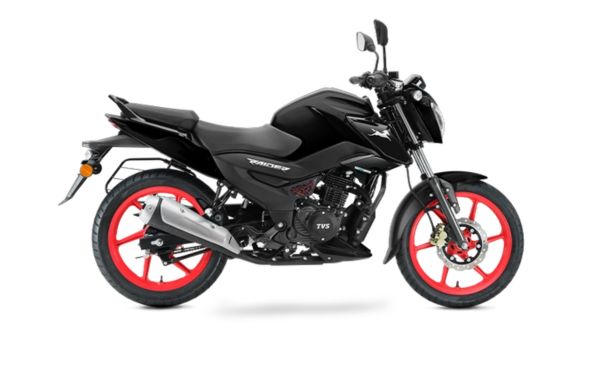
Raider |
Everyday mobility with a stronger emphasis on styling and features |
| Performance motorcycles |
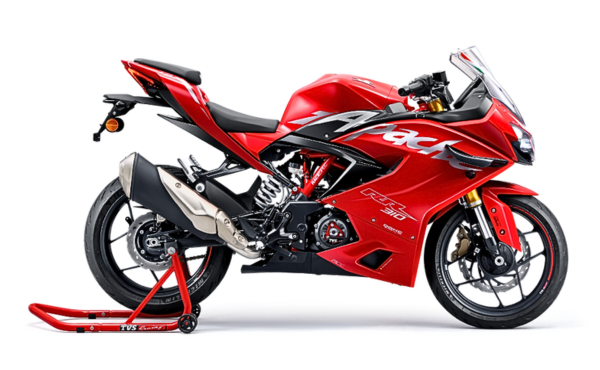
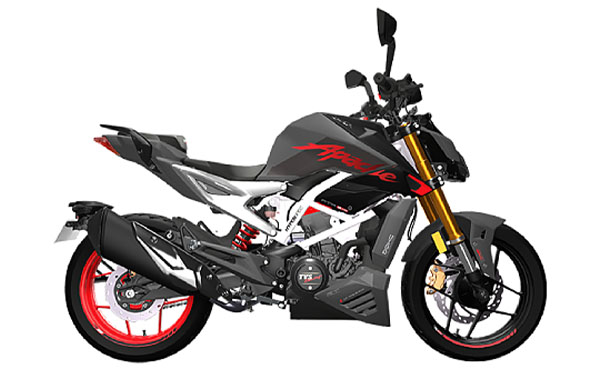
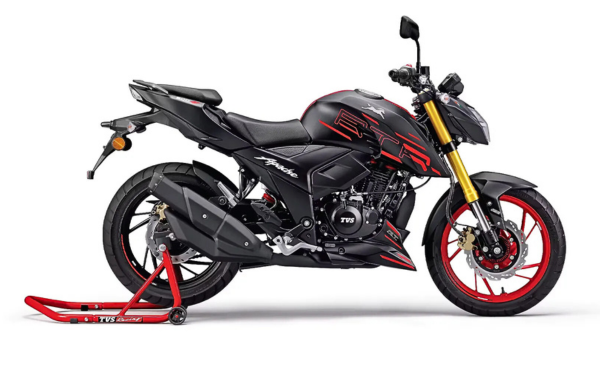
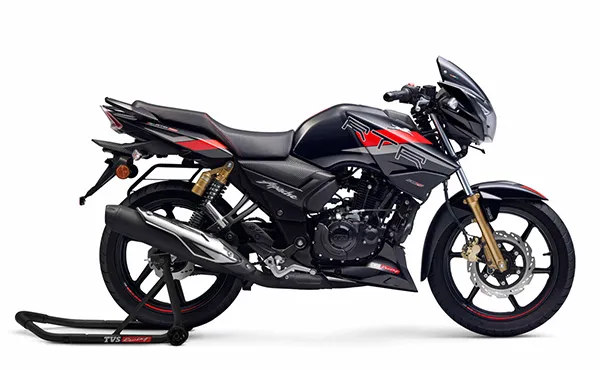
Apache RTR series, Apache RTR 310, and Apache RR 310 |
Street-performance and sports-motorcycle offerings |
| Modern-retro motorcycles |
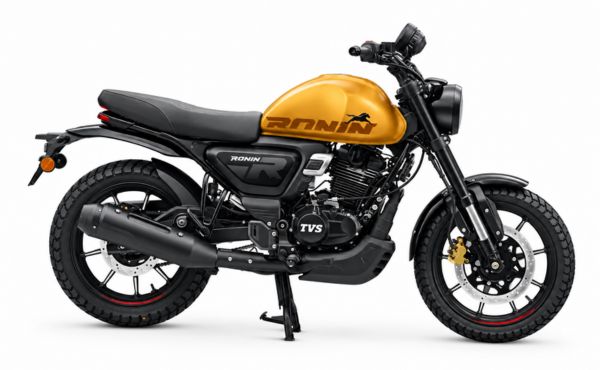
Ronin |
A lifestyle-oriented alternative to conventional commuter and sports motorcycles |
| Adventure motorcycles |
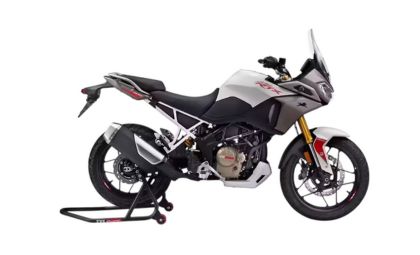
Apache RTX 300 |
Expansion into the adventure and touring segment |
| Electric scooters |
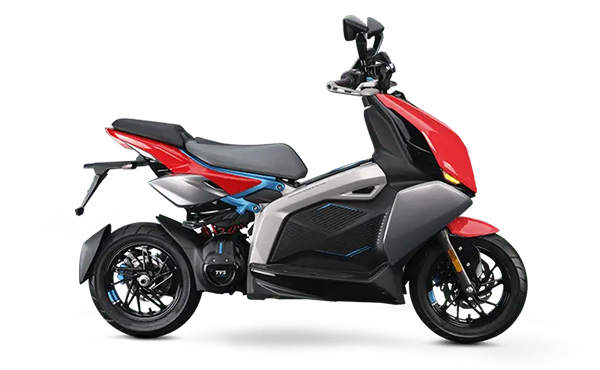
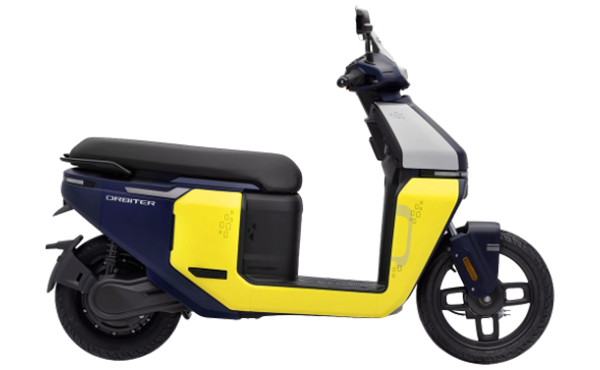
iQube, Orbiter, and TVS X |
Electric mobility across different positioning and customer needs |
Manufacturing Facilities
TVS Motor’s main manufacturing sites are in Hosur, Mysuru, and Nalagarh in India, and Karawang in Indonesia. The Indian plants support both local and international business. Norton’s UK operations are a separate part of the group’s manufacturing and engineering activities.
| Facility |
Location |
Role |
| Hosur |
Tamil Nadu |
A major manufacturing location and an important centre for TVS’s research and development activities |
| Mysuru |
Karnataka |
One of the company’s three principal Indian manufacturing locations |
| Nalagarh |
Himachal Pradesh |
Part of the company’s Indian production network |
| Karawang |
Indonesia |
Overseas manufacturing facility supporting the company’s international presence |
TVS’s manufacturing focuses strongly on quality, environmental care, and workplace safety. Its Hosur, Mysuru, and Nalagarh plants are certified under ISO 14001:2015 and ISO 45001:2018. The company’s Deming Prize is also a key part of its quality credentials.
Market Position And Achievements
TVS holds a diverse place in India’s two-wheeler market. Scooters make up a large part of its business, the Apache series builds its performance image, and electric scooters add new growth. This mix lets TVS compete in both daily mobility and premium segments.
Recent Business Performance
The following numbers are for FY 2025–26, which ended in March 2026. Vehicle sales include both domestic and international volumes reported by the company, not just Indian retail registrations.
| Indicator |
FY 2024–25 |
FY 2025–26 |
Reported growth |
| Total two- and three-wheeler sales |
47.44 lakh units |
58.89 lakh units |
24% |
| Two-wheeler sales |
46.09 lakh units |
56.70 lakh units |
23% |
| Three-wheeler sales |
1.35 lakh units |
2.19 lakh units |
63% |
| Motorcycle sales |
21.95 lakh units |
27.13 lakh units |
24% |
| Scooter sales |
19.04 lakh units |
24.13 lakh units |
27% |
| Revenue reported in the annual results release |
₹36,251 crore |
₹47,270 crore |
30% |
Sources: TVS Motor’s full-year sales announcement and annual financial results release. Growth percentages are the company’s reported, rounded figures.
Here are some achievements that show how the company has grown:
- Quality recognition: TVS received the Deming Application Prize in 2002, recognising its approach to total quality management.
- Performance-motorcycle growth: Apache crossed five million cumulative global sales in 2023, demonstrating the scale achieved by the family since its introduction in 2005.
- International reach: The company’s manufacturing and distribution ecosystem serves more than 80 countries.
- Engineering partnerships: The BMW Motorrad relationship has connected TVS’s Indian manufacturing and engineering capabilities with internationally marketed products.
Electric Mobility
Electric vehicles now play a key role in TVS’s growth plans. The company has added products like Orbiter beyond the iQube family, and TVS X is its premium, design-focused electric model. This approach lets TVS meet different customer needs instead of relying on a single product.
| Electric offering / initiative |
Positioning or purpose |
| TVS iQube |
An established electric-scooter family, with refreshed S and ST variants included in recent portfolio updates |
| TVS Orbiter |
An urban electric-commuting product introduced in India in August 2025 |
| Orbiter V1 with Battery-as-a-Service |
Introduced in March 2026 to broaden access through an alternative ownership model |
| TVS X |
A premium electric product forming part of the company’s domestic and international portfolio |
| Electric manufacturing expansion |
Planned additional capacity to support rising demand and improve product availability |
TVS is focused not just on launching new vehicles, but also on increasing production and giving customers more ways to use electric mobility. For example, the Orbiter offers a Battery-as-a-Service option as part of this wider strategy.
Future Plans
TVS Motor’s plans in India focus on increasing production, growing its electric vehicle business, making higher-value products, and using its Indian base to support global growth. Announced capacity plans are different from completed investments, and overseas product showcases do not always mean those products will launch in India.
1. Expansion Of Electric-vehicle Production
TVS aims to increase its electric two-wheeler production to about 80,000 units per month. Reports say this expansion is planned for the end of FY 2026–27 to meet higher demand for electric scooters.
2. Higher Overall Manufacturing Capacity
TVS plans to boost its yearly two-wheeler production from about 6.8 million to 8.3 million units by the last quarter of FY 2026–27. This increase will support both local and export markets. These numbers show planned capacity, not expected sales.
3. More Premium And Specialised Products
Recent products highlight where TVS is taking its lineup:
- Apache RTX 300 expands the brand into adventure touring.
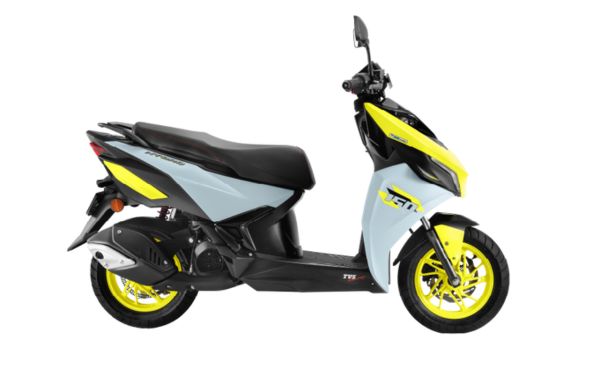
- NTORQ 150 strengthens its performance-scooter offering.
- Updated Apache variants add features and reinforce its sports-motorcycle range.
- Orbiter broadens its electric-commuting business.
These new launches give clearer proof of TVS’s strategy than just listing possible future models.
4. Continued International Growth
TVS is building a stronger presence in Europe and expanding its products internationally. Recent European events have featured both electric scooters and motorcycles. India still leads in engineering and manufacturing. However, products shown in Europe are not always confirmed for the Indian market.
Overall Outlook
TVS Motor’s strength in India comes from its wide range of everyday vehicles and its growing focus on performance motorcycles, electric scooters, and special categories. Recent financial results show growth in motorcycles, scooters, and three-wheelers. The company’s plans to expand capacity show it wants to serve more customers in India and abroad. The main challenge is turning these investments into steady growth while keeping up product quality, availability, and customer support.
Other Related Links From Bikeleague India
- TVS Apache RTR 160
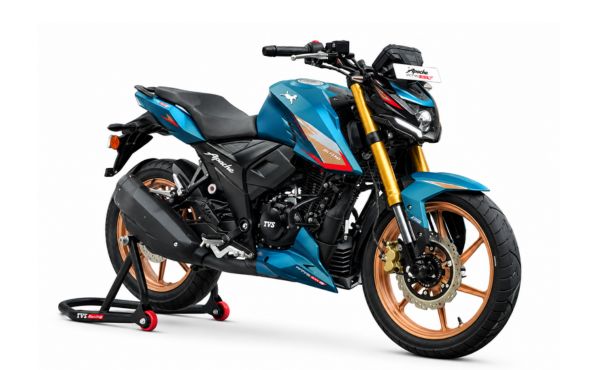
- TVS Apache RTR 200 4V
- TVS Apache RTR 310
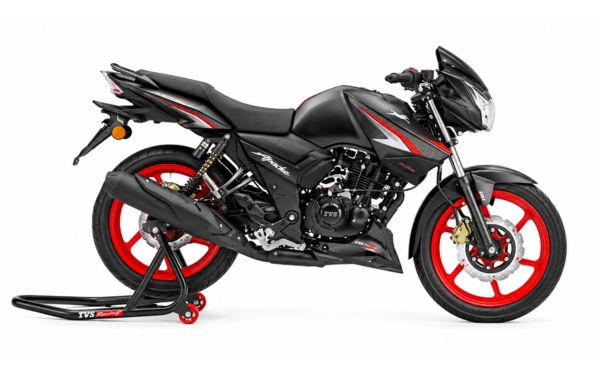
- TVS Apache RTR 180
- TVS Apache RTR 160 4V