Overview
Performance And Engine
The TVS Zest 110 has a 109.7cc, single-cylinder, four-stroke, air-cooled spark-ignition engine. It has a maximum power output of 5.75 kW at 7,500 rpm (approximately 7.82 PS) and a peak torque of 8.8 Nm at 5,500 rpm. It also features ETFi fuel-injection technology and the Eco Thrust engine.
| Engine specification |
TVS Zest 110 |
| Displacement |
109.7cc |
| Configuration |
Single-cylinder, four-stroke |
| Cooling system |
Air-cooled |
| Fuel supply |
ETFi fuel injection |
| Valves per cylinder |
Two |
| Maximum power |
7.82 PS at 7,500 rpm |
| Maximum torque |
8.8 Nm at 5,500 rpm |
| Bore × stroke |
53.5 × 48.8 mm |
The engine’s displacement, configuration, and output are technical details. The power in PS is a rounded version of the 5.75 kW rating.
ETFi technology improves starting, rideability, power delivery and mileage. The engine also features a multicurve ignition system as part of the Eco Thrust engine package.
The engine and CVT work together smoothly, focusing on easy acceleration and user-friendly operation instead of high performance. This setup is meant for regular city riding, not for long stretches of high-speed travel.
The Zest is said to have improved pickup, but it doesn’t list 0–40 km/h or 0–60 km/h acceleration times.
Later versions are less quick than the earlier BS-III version, which was peppier.
The TVS Zest 110 has a CVT automatic transmission. This transmission changes its gear ratio automatically, so the rider doesn’t need to shift gears or use a manual clutch. The scooter uses both an automatic and a CVT system.
The Zest 110 uses a belt drive and a dry centrifugal clutch; the clutch engages automatically as engine speed rises, providing twist-and-go operation. The transmission suits repeated acceleration and braking in city traffic.
The TVS Zest 110 has a listed top speed of 80 km/h, but the official specifications do not mention a maximum speed.
Mileage And Fuel Efficiency
ETFi technology and the Eco Thrust engine are said to improve mileage by 15%. The main specifications don’t provide a certified mileage figure, but the estimated mileage is 48 km/l.
The Zest’s estimated mileage is approximately 48 km/l, while the typical mileage is 45 km/l.
There is no official ARAI mileage figure. The only confirmed detail is the advertised 15% improvement, while the 48 km/l figure is just an estimate.
The TVS Zest 110 is given an average mileage of 45 km/l. A 45 km/l figure is repeated for the Gloss, Matte Series and SXC.
Some mileage results are 47 km/l and 50 km/l, which are higher than the 45 km/l average. Earlier years also saw a 40 km/l figure. The 45 km/l average is the most reliable estimate.
Features And Technology
The TVS Zest 110 offers practical features for everyday riding in India, including 19-litre underseat storage, a front glove box, an LED tail lamp and Synchronized Braking Technology. The SXC adds a Bluetooth-enabled digital console with SmartXonnect, bringing navigation, call and SMS alerts, and connected ride information to the range.
- LED Tail Lamp: The TVS Zest 110 features an LED tail lamp with bright, steady illumination as part of the scooter’s rear visibility equipment.
- 2. Digital Instrument Console on SXC: The SXC features a Bluetooth-enabled digital instrument console with a digital speedometer, odometer, tripmeter and fuel gauge.
- Analogue Console on Gloss Series: The Gloss Series uses an analogue instrument console with an analogue speedometer, odometer and fuel gauge.
- SmartXonnect Smartphone Connectivity: The SXC supports the SmartXonnect platform. Pairing a compatible smartphone with the console provides access to connected functions through an app.
- Turn-by-Turn Navigation with Voice Assistance: The connected SXC provides turn-by-turn navigation with voice assistance, and the digital console can display navigation guidance through the SmartXonnect app.
- Call and SMS Alerts: The SmartXonnect-equipped version displays supported call and SMS alerts. These notifications form part of the connected package, allowing the rider to view incoming communication alerts on the instrument display.
- Connected Ride Statistics: Ride statistics, top speed, average speed, distance, and riding-pattern information are accessible through smartphone connectivity.
- Average Fuel-Economy Display on SXC: The SXC has an average fuel-economy indicator that provides additional consumption information alongside its digital fuel gauge.
- Underseat Storage: The Zest 110 provides a 19-litre underseat storage compartment for bags, groceries and other daily essentials.
- Front Glove Box: An open front glove box provides additional storage separate from the underseat compartment. It is a convenient place to keep small belongings within easy reach.
- USB Charging Port: The Gloss Series and SXC models include a USB charging port for charging mobile devices.
- Carry Hook: The Gloss Series and SXC include a carry hook that provides an additional carrying point separate from the glove box and underseat compartment.
- Longer and Wider Dual-Tone Seat: The new dual-tone seat is longer and wider than before. The contrasting upholstery adds a visual distinction, while the seat is intended to accommodate both rider and pillion.
- Textured Floorboard: The Zest has a textured floorboard that provides a skid-resistant surface.
- Telescopic Front Suspension: The Zest features telescopic front suspension and a double-rated hydraulic monoshock at the rear.
- Tubeless Tyres: The Zest uses a 90/100-10 tubeless front tyre and a 90/90-10 tubeless rear tyre, described as “Antiskid tubeless Wider Tyres.”
- Synchronized Braking Technology: The Zest features SBT, which links braking action between the wheels. SBT is a combined braking function, not an anti-lock braking system.
- Front and Rear Drum Brakes: The Zest uses a 110 mm front drum brake and a 130 mm rear drum brake. There is no front disc-brake option.
- Parking Brake: The Zest includes a parking brake as a standard convenience feature. It helps hold the scooter stationary when parked or stopped, providing a function separate from the regular brake operation used while riding.
- Engine Kill Switch: The Zest includes a handlebar-mounted engine kill switch. It allows the rider to switch off the engine without reaching for the ignition key, including during prolonged stationary periods.
- Side-Stand Warning: The Gloss Series and SXC include a side-stand warning.
- Pass-Beam Switch: The Gloss Series and SXC include a pass-beam switch that lets the rider flash the headlamp to signal other road users.
- E-Z Centre Stand: The Zest features a patented E-Z centre stand, with a claimed 30% reduction in effort required.
- Multifunction Lock and Key Shutter: The Gloss Series and SXC include a multifunction lock and key-shutter lock.
Build Quality
Silveroak interior panels, a textured floorboard and a raised 3D emblem are highlighted as trim details, but there is no complete breakdown of exterior-panel materials. The available information does not confirm the Zest as an all-metal-body scooter.
The Zest has good overall build quality, with positive mentions of the handlebar grips and acceptable switchgear quality. Earlier Zest models had several finish-related shortcomings. Body decals began coming off, some plastics faded within months, and the rubber boots around the rear-view mirrors repeatedly came loose.
Current details mention updated decals and a new dual-tone seat, but it’s unclear whether the earlier fading and decal problems have been fixed. Some reviews praise the build quality, while others point out cosmetic durability issues.
The Zest has a textured floorboard, described as providing a skid-resistant surface. The rubber-based footboard material is considered useful during monsoon use. This is a practical contact-surface detail, though it doesn’t guarantee footwear won’t slip on a wet or dirty floorboard.
Handling
The current Zest is listed at 102 kg, with low weight and manoeuvrability identified as strengths for daily commuting. This is the current figure; earlier versions were lighter, but those quoted weights should not replace the current specification.
The Zest’s agility is praised. Quick direction changes are easy, including for less-experienced riders, and a well-balanced chassis is noted for traffic maneuverability. The Zest is described as planted through corners up to about 50 km/h, with the 10-inch wheels providing good grip in corners.
The scooter can feel shaky on rough roads at higher speeds, but it is more comfortable at lower speeds. It handles best in moderate-speed city conditions, not on damaged roads at high speed.
The Zest features 10-inch tubeless tyres, with a 90/100-10 front tyre and a 90/90-10 rear tyre. The front tyre is wider than the rear, adding grip and weight up front.
The manufacturer lists a 1,250 mm wheelbase, telescopic front suspension and a double-rated hydraulic rear monoshock. These specifications establish the basic chassis arrangement; the product page does not advertise rider-adjustable suspension settings.
The Zest features Synchronized Braking Technology, which is designed to support braking stability. The 110 mm front drum and 130 mm rear drum arrangement provide good bite and progressive braking response.
Slowing from higher speeds downhill requires more lever effort, particularly with two occupants.
Comfort
The current dual-tone seat is described as longer and wider than before and accommodates a rider and pillion. The seat is praised for its broad shape and well-judged padding. Extended commuting does not become uncomfortable.
The Zest’s riding position is relaxed, with the seat and ergonomics well-suited to commuting. The compact riding position suits shorter riders better and is less ideal for taller riders.
The scooter is said to be easy to reach the ground on, but the claim that it fits all rider heights isn’t entirely accurate. Taller riders may find it less spacious or comfortable.
Suspension assessments differ. Some found the rear suspension stiff when riding solo, with small bumps clearly noticeable. Adding a pillion substantially improved the ride in those cases.
At lower speeds, the suspension can provide a plush response over bumps and undulations, and overall ride comfort is praised.
The current information confirms the suspension layout. The seat is wide enough for a rider and pillion. Carrying a passenger can improve suspension comfort. A sloping seat is seen as a drawback.
The E-Z centre stand is designed to make parking easier, with a claimed 30% reduction in effort. It is easy to use.
Styling
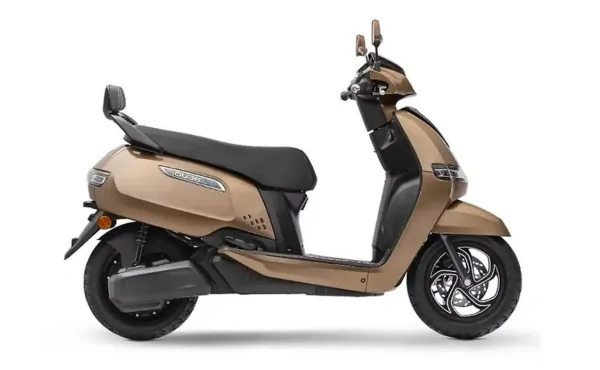
The revised decals with vibrant yellow strips are part of the Zest’s current styling package. These graphics add contrast to the painted panels, while the raised 3D Zest emblem provides a separate decorative detail. The decals give the scooter a fresh, dynamic, and sporty appearance.
These styling features are grouped, but the yellow stripes vary by colour and variant.
A dual-tone seat forms part of the current design. Its contrasting upholstery complements the exterior paint, and the Silveroak interior panels TVS highlights. The textured floorboard adds another surface finish within the rider-facing area.
The dual-tone seat should be distinguished from a dual-tone body colour. The regular range predominantly uses single-tone gloss or matte paint with complementary graphics. The seat’s two-colour treatment does not make every Zest a dual-tone-painted scooter.
The Zest features an LED tail lamp, which TVS includes in its styling section. It provides a distinct rear lighting element alongside the body graphics and raised badging. The manufacturer’s description specifically confirms an LED tail lamp, not an all-LED lighting package.
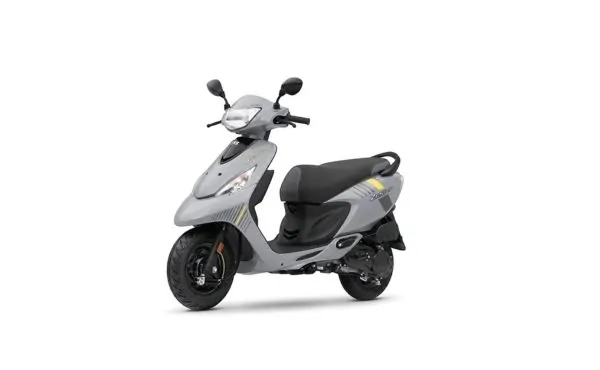
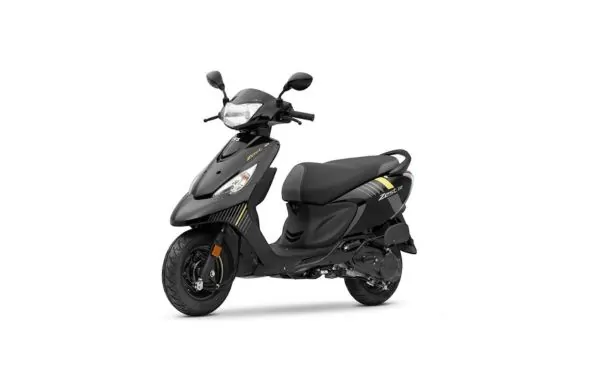
The SXC’s Bold Black and Graphite Grey schemes use contrasting decals and bodywork to create a “dual-tone touch.” Their distinction comes from the contrast between the paint, graphics and surrounding panels.
The Bluetooth-enabled digital console also changes the appearance of the SXC’s instrument area. This separates its rider-facing presentation from the conventional instrument arrangement associated with the regular versions.
Colour Options And Variants
There are three variant names, with Bold Black and Graphite Grey for the SXC. A discrepancy involving Matte Red is explained separately below rather than silently adding it to a variant.
| Variant |
Listed colours |
| Gloss |
Pearl White, Turquoise Blue. |
| Matte Series |
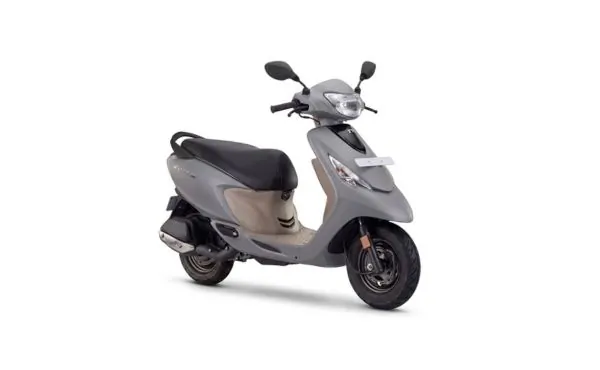
Matte Black, Matte Blue, Purple, Titanium Grey. |
| SXC |
Bold Black, Graphite Grey. |
The Gloss variant is available in Pearl White and Turquoise Blue. Both names apply to these shades.
These are the Gloss series choices and should not be relabelled as matte finishes. Their finish is the principal colour distinction from the Matte Series.
The Matte Series includes Matte Black, Matte Blue, Purple, and Titanium Grey. Matte Black, Matte Blue and Titanium Grey are named, and Purple is also featured.
Purple and Titanium Grey are in the Matte Series secondary list, but they aren’t always called “Matte Purple” or “Matte Titanium Grey.”
Bold Black differs from Matte Black, and Graphite Grey differs from Titanium Grey. Mixing these names would blur the difference between the SXC and Matte Series colours.
Gloss is the entry variant among the three. Its Pearl White and Turquoise Blue options provide the range’s gloss-finish selection. It is listed separately from both Matte Series and SXC.
Its place in this styling overview rests on its paint finish and colour options. TVS does not describe a separate body shape for the Gloss version.
The Matte Series sits in the middle of the variant lineup. Its palette comprises Matte Black, Matte Blue, Purple and Titanium Grey. This gives it a broader colour selection than the two-colour Gloss version.
Don’t confuse the Matte Series with the SXC just because both include dark or grey finishes. Matte Black and Titanium Grey are listed separately from the SXC’s Bold Black and Graphite Grey.
The SXC is the connected version explicitly identified by TVS. Its styling distinctions include Bold Black or Graphite Grey paint, contrasting graphics and a digital instrument console.
These provide a different exterior and instrument-area presentation without TVS claiming an entirely different body design.
Decals and bodywork create a dual-tone look, but not every body panel has two-colour paint.
| Variant |
Principal styling distinction |
Colour selection |
| Gloss |
Gloss-finish paint selection |
Pearl White, Turquoise Blue. |
| Matte Series |
Matte-series paint selection |
Matte Black, Matte Blue, Purple, Titanium Grey. |
| SXC |
Contrasting graphics and digital-console presentation |
Bold Black, Graphite Grey. |
Value For Money And Pricing
The Gloss is the least expensive of the three listed variants at ₹ 85,788 ex-showroom. It offers the lowest-cost entry into the Zest range without the SXC’s SmartXonnect package. TVS lists the Gloss separately from the Matte Series and SXC in its current price section.
Its lower purchase price appeals to buyers who want the Zest’s everyday utility rather than smartphone-linked functions. TVS’s core package includes 19-litre underseat storage, a front glove box, a parking brake and an E-Z centre stand, while its connectivity description specifically identifies the SXC.
A New Delhi on-road price of ₹85,788 is given for the Gloss. Buyers are advised to obtain an up-to-date quotation from an authorised dealer in their city. These amounts are not fixed nationwide prices.
The on-road amount comprises the ex-showroom price, registration and road tax, insurance, and any applicable accessory or other charges. Optional accessories are separated from the main on-road total.
A quotation that includes additional packages will not necessarily match another quotation for the same variant.
The Gloss is the best value for buyers who want the lowest price. It costs ₹7,050 less than the SXC but still has the main features like the 19-litre underseat compartment and front glove box. If you don’t need navigation or phone alerts, the lower price makes sense.
That assessment concerns purchase price and published equipment. The Zest is described as a low-maintenance scooter, but it doesn’t list a scheduled-service cost total or compare lifetime ownership expenditure against competitors.
The Matte Series suits buyers who prefer its colours and finish. It costs ₹3,750 more than the Gloss but doesn’t include the SXC’s connected features. So, its value is more about looks than extra functions.
The SXC is only ₹3,300 more than the Matte Series. If you want a digital connected console, it’s a clear upgrade, instead of paying for the Matte Series and not getting those features.
The SXC provides the broadest confirmed equipment package within the Zest range. The ₹3,300 premium over the Matte Series adds Bluetooth connectivity, navigation, communication alerts and ride-data access. For buyers who will use those functions, this is a stronger functional upgrade than the Gloss-to-Matte price step.
The SXC isn’t the best choice for everyone. Its connected features require a smartphone, so if you don’t need them, you can save ₹7,050 by choosing the Gloss. The value depends on whether you’ll use the extra features.
The Zest carries a standard warranty of five years or 50,000 km, whichever comes first. This should not be interpreted as five years of free servicing or coverage for every consumable and wear item. Those are not included benefits.
Finance, exchange and promotional schemes are mentioned, but there is no confirmation of a fixed current discount or universally applicable interest rate. A reduced purchase price or monthly EMI should not be advertised without a specific dealership and lender quotation.
Competitor Models in India of the TVS Zest 110 are
- Hero Pleasure Plus XTEC
- Hero Xoom 110
- Honda Dio 110
- TVS Jupiter 110